

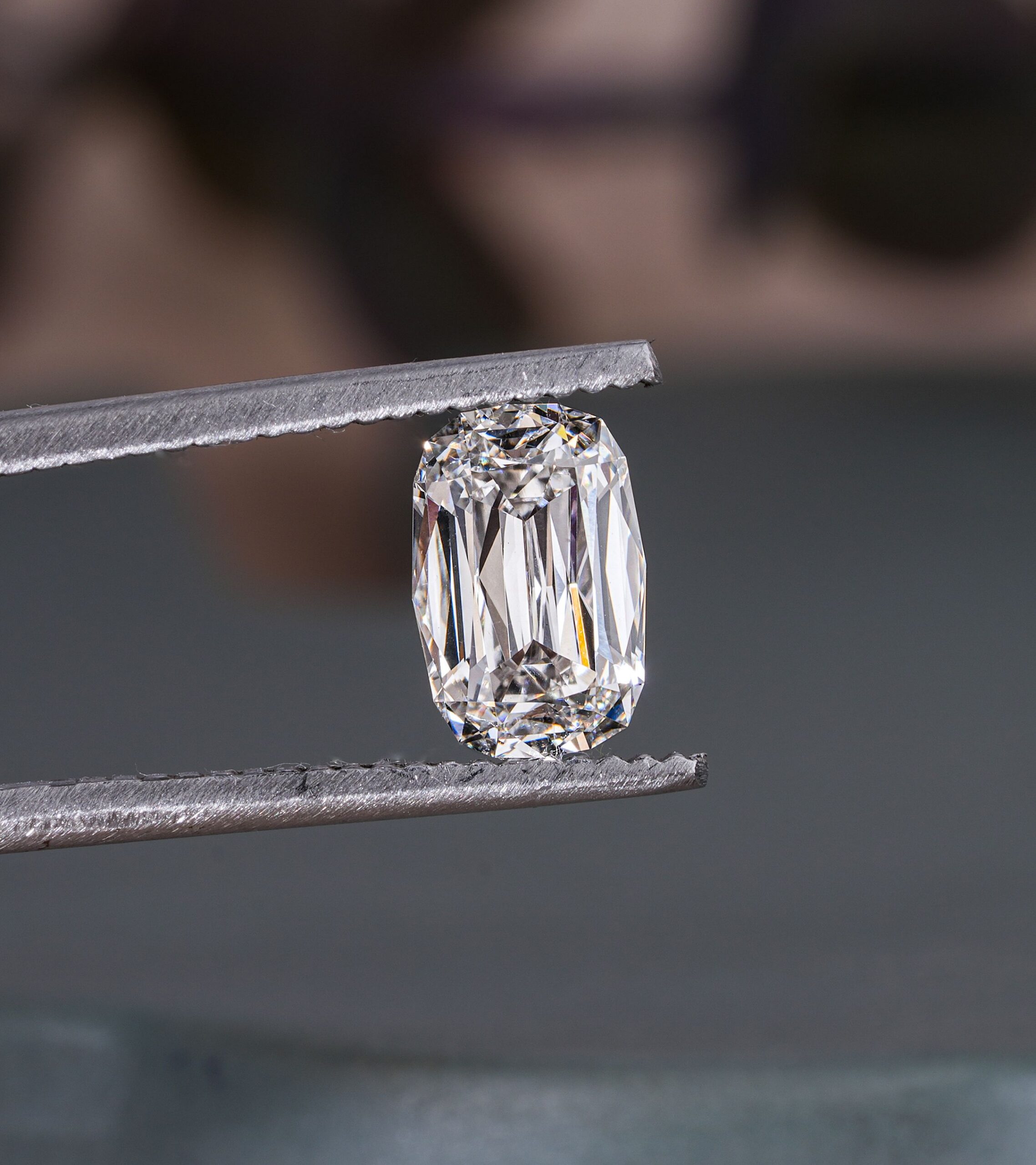
Read the map, then inspect the stone
Diamond Clarity Plot Symbols Explained: Feather, Crystal, Cloud and Needle
Understand what common clarity symbols represent, how a laboratory records their approximate position and why the plot must be read together with the clarity grade, comments and the diamond itself.
A diamond clarity plot can look like a small technical drawing covered with lines, dots and shaded marks. It is not a photograph of the stone. It is a laboratory map that identifies selected internal and external clarity characteristics and shows where the grader observed them.
Plotting conventions and report formats vary between laboratories and report products. Some reports provide crown and pavilion diagrams; others list important characteristics without a full plot. Always use the key printed on the exact report you are reading. If you first need to understand the other sections, Laxmi Jewellers’ guide to what is included in a diamond grading report explains the broader document.
A map of selected features
What a diamond clarity plot records
Clarity characteristics are features observed inside a diamond or on its surface. Internal features are commonly called inclusions; external features are commonly called blemishes. A plotted report uses a diagram shaped like the relevant cutting style and adds symbols at the approximate places where selected characteristics were found.
GIA explains that its graders examine a cleaned diamond systematically under 10× magnification, then draw clarity characteristics to scale in their approximate shape and location. The key words are to scale and approximate: the drawing is a practical record, not a microscopic reproduction with photographic precision. GIA plots commonly provide a crown view from above and a pavilion view from below so that the reader can relate the marks to the stone’s facet arrangement.
The plot supports the clarity grade and can contribute to identification because the pattern of characteristics is distinctive. It does not replace the rest of the report. The clarity grade, comments, measurements, report number and any inscription each provide a different part of the record.
Name the characteristic accurately
Feather, crystal, cloud and needle symbols
The name tells you the nature of a characteristic, but not its full effect. Graders also consider size, number, position and relief—the degree to which a feature stands out against the surrounding diamond. Two stones can list the same word and still look different or receive different clarity grades.
GIA defines a feather as a general trade term for a break in a gemstone, often white and feathery in appearance. It may be small or extensive, internal or surface-reaching. The name alone does not establish a durability problem; location, depth, orientation and the laboratory’s overall assessment matter.
A crystal is a mineral crystal contained within the diamond. It can appear colourless, transparent, light or dark depending on the material and viewing conditions. A plotted crystal may be easy or difficult to see through the facets; the diagram is the starting point for locating it.
A cloud is a group of tightly spaced pinpoints that may be too small to distinguish individually and can create a hazy appearance together. A small local cloud and a widespread cloud are not equivalent, so read the plot and comments rather than drawing a conclusion from the word alone.
A needle is a thin, elongated crystal that resembles a tiny rod under 10× magnification. Its visibility depends on its colour or relief, length, orientation and position. A needle viewed through several facets may appear different as the stone is rotated.
Why the list order is useful
On a GIA plot, the key lists characteristics in an order related to their importance to the clarity grade, with specific disclosure rules for laser drill-holes. This can help you identify the grade-setting feature, but it is not a numerical score. Do not count symbols and assume that the diamond with fewer marks must have the higher grade. A single larger or more centrally placed characteristic can matter more than several minute ones.
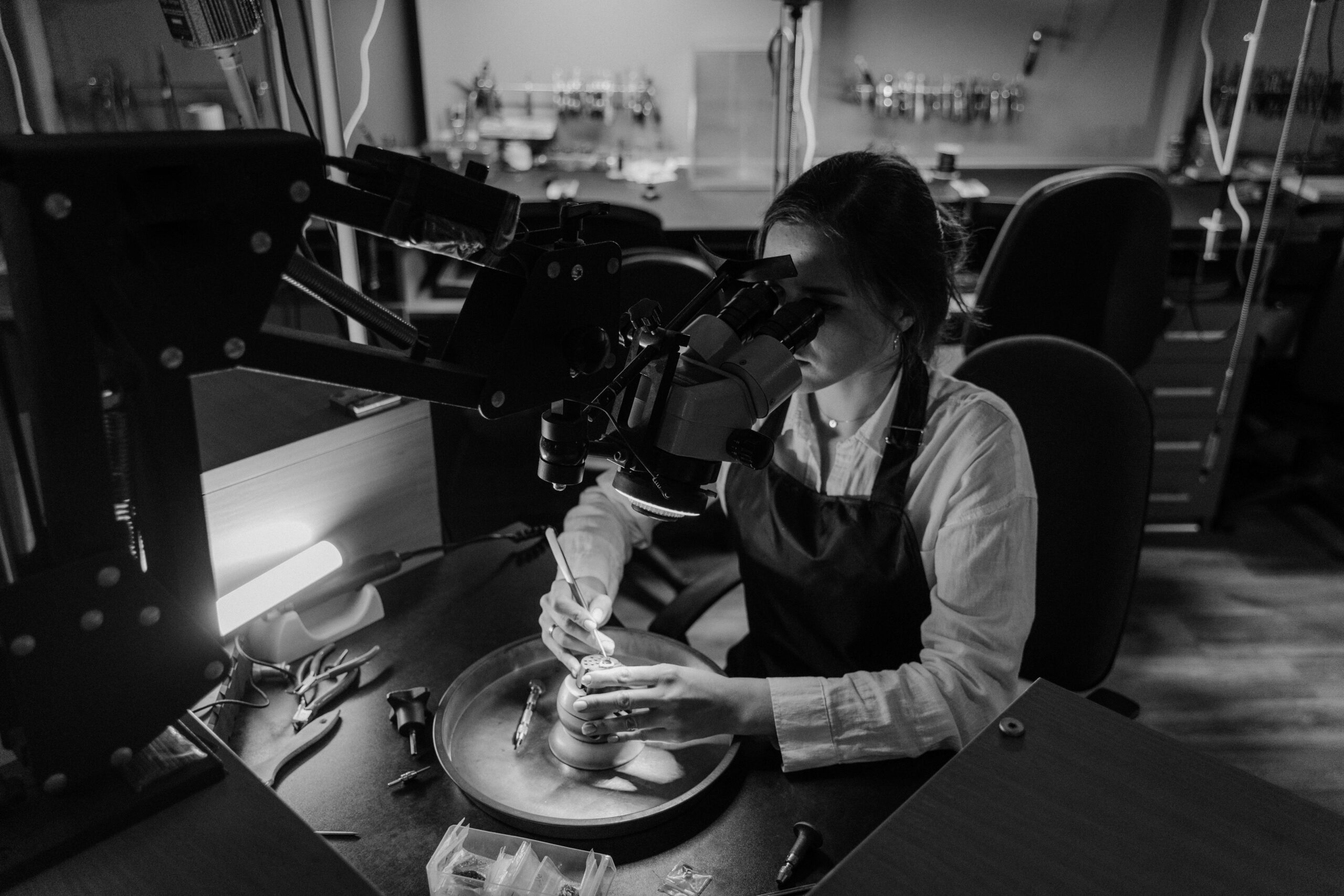
Position changes the viewing path
Why a symbol’s location matters
A mark near the centre of the crown view can sit beneath the table, where it may be easier to locate face-up. A feature near the girdle can be viewed through different facets and may be partly obscured by a future setting. Neither position is automatically good or bad; it changes how the characteristic is encountered.
Facet reflections complicate what you see. One inclusion can reflect in several places, creating the impression of multiple marks. Conversely, a feature shown clearly on the plot may be difficult to find without matching the viewing direction, lighting and magnification used by a trained observer.
For feathers and other breaks, proximity to an edge is one consideration, but the plotted outline cannot reveal the complete three-dimensional structure. If durability is a concern, ask a qualified gemmologist to examine the actual loose stone rather than trying to diagnose it from a two-dimensional symbol.
Relief is different from colour grade
In clarity grading, relief describes how strongly a characteristic contrasts with the surrounding diamond. A dark crystal may have high relief and be easier to locate; a transparent feature may blend more readily. Relief is one part of clarity assessment and should not be confused with the diamond’s separate colour grade.
Mounted diamonds add another layer
Prongs or a bezel can cover parts of the girdle and may make some plotted locations difficult to inspect. They can also create reflections. When matching a mounted diamond to a report, have a professional check the report number or inscription where applicable and compare several identifying details. A plot alone should not be treated as proof of identity.
A disciplined reading order
How to read a diamond clarity plot step by step
Begin with the document, not a magnified internet image. Confirm the issuing laboratory, report type, report number, shape and measurements. Then use a consistent sequence so a dramatic-looking symbol does not distract from the full assessment.
Confirm the report format
Identify whether the report includes a full plot, a list of characteristics, a digital image or another identification feature. A missing diagram does not necessarily mean clarity was assessed differently.
Read the printed key
Match every colour and symbol to the laboratory’s own legend. Note which entries are internal, external or combined, and do not transfer conventions from a different issuer.
Orient crown and pavilion views
Find the table, girdle and lower facets, then relate the top and bottom diagrams. The same characteristic may be represented from the view that shows it most usefully.
Find the grade-setting entries
Review the order in the key and any comments. Note whether a cloud, internal graining or another feature is mentioned in text rather than fully drawn.
Inspect under sensible conditions
Use clean surfaces, neutral lighting and appropriate magnification. First locate the feature with help, then look face-up at normal viewing distance without assuming every plotted mark must be visible unaided.
Compare the whole diamond
Consider clarity with cut, colour, carat weight, proportions and the intended jewellery design. A plot is evidence for one quality factor, not a complete buying decision.
Avoid over-reading the diagram
What a clarity plot cannot tell you by itself
| Question | What the plot helps with | What still needs checking |
|---|---|---|
| Where is the characteristic? | It maps an approximate location and shape on the crown or pavilion view. | The exact three-dimensional depth, orientation and appearance in motion require inspection. |
| Will I see it without magnification? | The type and position give clues about where to look. | Actual visibility depends on size, relief, facet reflections, lighting, viewing distance and eyesight. |
| Is the diamond durable? | It can flag the location of a feather, cavity, chip or other relevant feature. | A qualified assessment of the loose stone and its intended setting is needed; the symbol name alone is not a verdict. |
| Is this the same diamond? | The pattern can support identification when compared carefully. | Match the report number, measurements, inscription when present and other report data; use professional verification for certainty. |
| Is it a good choice? | It explains part of the clarity story. | Balance the complete 4Cs, light performance, budget, design, security and personal preference. |
A plot also may not display every feature seen during grading. GIA notes that widespread, faint or non-identifying characteristics may be mentioned in Comments rather than drawn, and some report products list important characteristics without a diagram. Absence of a symbol should therefore be read in the context of that report’s format, not as evidence that the stone has no clarity characteristics.
Most importantly, the apparent size of a mark on a printed or enlarged digital report can be misleading. A line must be visible enough to read. Enlarging the page enlarges the ink, not the physical inclusion. Use the diagram to locate and discuss the characteristic, then judge the actual diamond under appropriate conditions.
Questions for a useful comparison
What to ask when two diamonds have similar clarity grades
- Which characteristic has the greatest influence on each clarity grade?
- Can you show me that feature under 10× magnification, then let me view the diamond face-up without magnification?
- Is any feature surface-reaching or close to a corner, point, girdle edge or other vulnerable area?
- Does the report include comments that are not represented fully on the plot?
- Will the intended setting cover, protect or make access to that location more difficult?
- Do the report number, measurements and any girdle inscription match the stone?
These questions keep the discussion factual. They also avoid treating clarity as a contest for the cleanest diagram. A higher grade is a laboratory assessment of relative freedom from characteristics under standard conditions; it does not guarantee that a particular lower-graded stone will look noticeably different in normal wear.
Common report-reading questions
Diamond clarity plot FAQs
Does a feather mean a diamond will crack?
No. “Feather” names a break within the gemstone, but feathers vary greatly in size, position, depth, orientation and relief. The word alone is not a durability diagnosis. Ask a qualified gemmologist to inspect any feature that reaches the surface or lies near a vulnerable edge or point.
Is a cloud worse than a crystal?
Neither term is automatically worse. A cloud can be tiny and local or more widespread; a crystal can be minute or more noticeable. The clarity effect depends on the feature’s size, number, position, nature and relief, together with the rest of the stone.
Why can I not find the plotted inclusion with a loupe?
The feature may have low relief, be minute, sit at an unfamiliar depth or reflect through several facets. The stone may also be oriented differently from the diagram. A trained viewer can first show you the location under controlled lighting and magnification.
Why does my report list characteristics but show no plot?
Report products differ. Some laboratories offer formats that list significant characteristics, include a digital image or use an inscription for identification without printing a full plotting diagram. Check the issuer’s description of that exact report type.
Can a clarity plot confirm a diamond’s identity?
A distinctive plot can support identification, but it should be compared with the report number, measurements, proportions, comments and any laser inscription. For a mounted or valuable stone, obtain professional verification rather than relying on the plot alone.
Authoritative references
Definitions and plotting guidance were checked against the GIA guide to clarity plotting diagrams, GIA’s inclusion definitions and the IGI diamond clarity overview. Laboratory conventions and report products can change, so confirm the legend and notes on the report in front of you.
From report to complete design
Compare the diamond and its setting together
Use the clarity plot to ask precise questions, then consider how the complete ring presents and protects the stone. Explore Laxmi Jewellers’ engagement-ring designs and confirm the grading details for the specific piece you are considering.
