

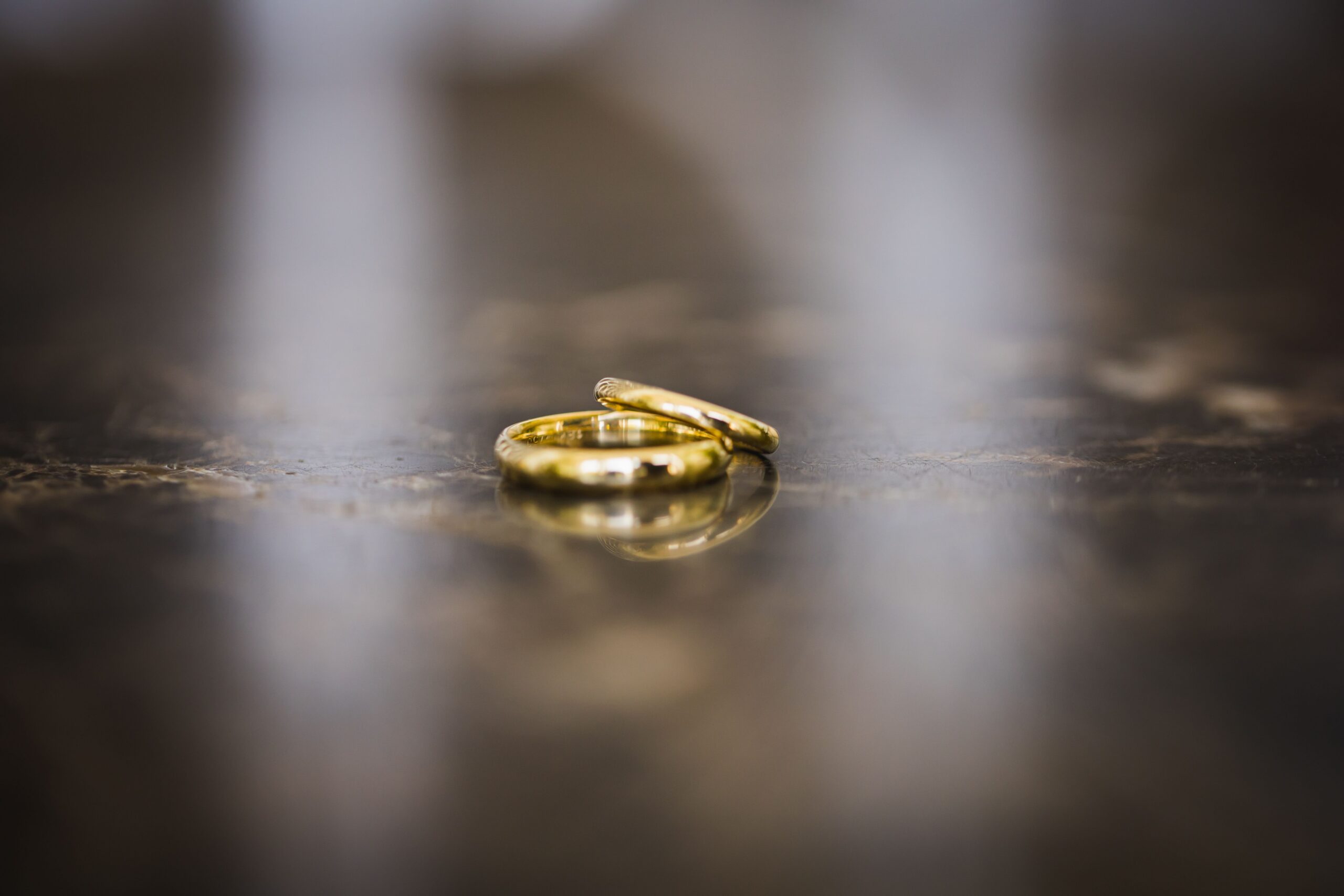
Surface character for everyday rings
Wedding Ring Finishes: Polished, Satin, Brushed or Hammered
Compare how common surface treatments reflect light, develop wear and influence the look of a wedding band before choosing the final specification.
The finish is the final surface character of a wedding ring. It can make the same band look mirror-bright, softly muted, directionally textured or deliberately irregular. Because a wedding band is handled and worn often, the chosen surface will also change with use.
A surface finish is not the same as metal colour, alloy, rhodium plating, engraving or diamond setting. Those decisions may interact, but each needs its own specification. This guide focuses only on the outside surface treatment and how to compare it responsibly.
Texture changes light, not the underlying alloy
What a wedding ring finish changes
A polished surface is smoothed to reflect light clearly. A satin or brushed surface contains fine, deliberately created marks that scatter reflection. A hammered surface uses repeated depressions or facets to create visible relief. These effects can make identical band dimensions appear different even when the metal and profile are unchanged.
Finish can influence perceived colour. Highly reflective yellow gold may pick up surrounding colours, while a diffuse surface can appear quieter. White metal may look brighter under polish and greyer under a matte treatment. This is an optical effect; the finish does not convert one alloy into another.
Width and profile also affect how much of the texture is visible. A broad, flat band presents a larger uninterrupted surface than a narrow rounded band. Before treating finish as an isolated sample, compare it on a ring close to the intended width and shape. Laxmi Jewellers’ wedding band width guide explains how width changes presence and fit.
Four useful starting points
Compare polished, satin, brushed and hammered surfaces
High polish
A high-polish finish aims for a smooth, mirror-like surface with strong highlights. GIA’s quality-assurance guidance describes progressive prefinishing, polishing and buffing steps used to remove increasingly fine marks and produce a bright platinum surface.
Polish suits a classic, crisp appearance and can emphasise a rounded profile. Fine scratches may contrast clearly at first, but over time many small marks can blend into a softer wear pattern.
Satin
Satin creates a soft, low-reflection surface through fine controlled abrasion. It usually looks smooth from a distance, with a subtle texture visible closer up. Stuller’s finishing guide describes a satin or brush effect as fine straight-line scratching created with an abrasive tool.
Because workshop terminology varies, confirm whether the requested satin is very fine, visibly linear or closer to a uniform matte appearance.
Brushed
A brushed finish normally shows a more directional grain. The lines may run around the circumference, across the band or along a selected panel. Direction matters: inconsistent strokes or repairs across only one section can be conspicuous.
Brushing can reduce mirror reflection and often makes individual hairline marks less immediately dominant, although cross-direction scratches may still stand out.
Hammered
A hammered finish uses repeated tool impressions as a visible design element. The scale, depth and regularity can range from fine faceting to bold irregular texture. Stuller notes that hammering can affect ring size, so sequence and final measurement should be planned by the maker.
Hammered does not mean rough against the skin. Edges and the inner surface should still be finished appropriately for comfort.
Other workshop finishes include sandblasted, bead-blasted, Florentine, ice and stone textures. Those can be attractive, but adding more names does not improve the decision unless the exact sample, tools and service expectations are understood. Begin with the visual effect, then document how it will be produced.
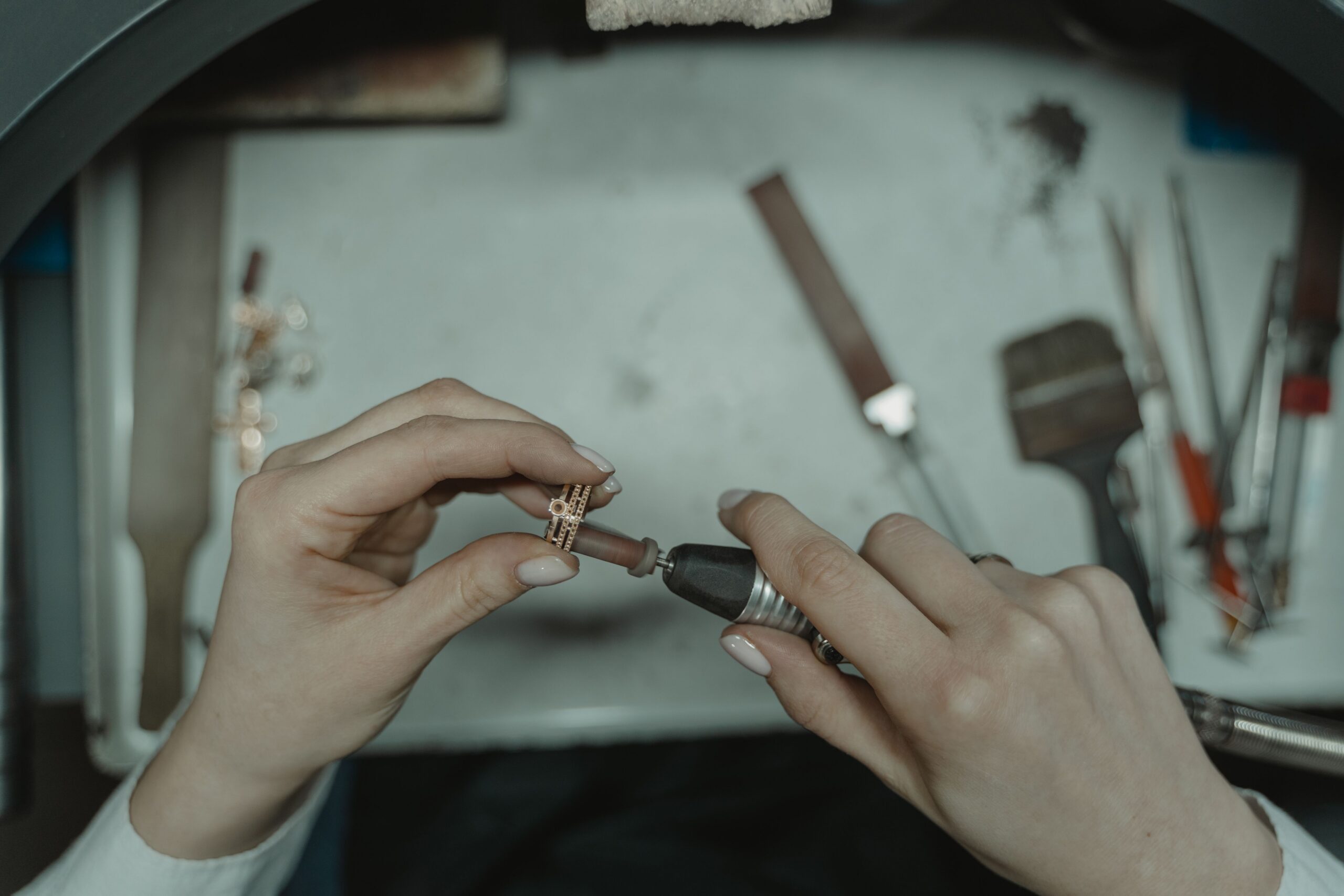
Every surface records use
Scratches, burnishing and patina
No frequently worn wedding ring remains factory-fresh. Contact with desks, handles, tools, other jewellery and daily objects adds marks. On a polished band, the first fine scratches can appear obvious because they interrupt an even reflection. On a satin or brushed band, wear may flatten or brighten the texture in high-contact areas.
A hammered surface can visually break up small marks, but the raised facets can also become smoother with time. Deep impacts are not the same as normal patina and should be assessed professionally, especially if the ring becomes distorted.
Patina is the cumulative surface character created by wear. Some people value it as part of the ring’s history; others prefer periodic restoration. Decide which view suits you before choosing a finish that requires frequent renewal to look as expected.
Finish sits on top of other design decisions
Consider metal, plating, engraving and stones separately
Metal colour and surface finish are different
Yellow, white and rose describe colour families; polish, satin and hammered describe surface treatment. Two bands in the same alloy can look different under different finishes. Conversely, similar texture does not make two alloys identical in colour, hardness or maintenance.
Rhodium plating is a coating
Many white-gold pieces are rhodium plated for a bright white appearance. Surface finishing and plating order must be planned together because polishing or abrasion can affect a coating. Laxmi Jewellers’ rhodium plating guide covers coating wear and maintenance in more detail. Do not assume that recreating a texture automatically restores the plated colour.
Engraving needs protected detail
Engraving adds cut or formed detail rather than an overall finish. Aggressive refinishing can soften shallow lines, crisp edges or personal inscriptions. If the ring will carry an inside date, motif or fingerprint-style design, discuss the sequence with the jeweller. The guide to wedding band engraving explains what to document before personalisation.
Diamond-set bands limit access
Settings, milgrain and small stones create edges that cannot always be refinished like a plain uninterrupted band. Tools and compounds must be controlled around stones and setting details. Ask which surfaces can be renewed, whether the finish will stop at a defined border and whether inspection of the settings is part of the service.
Preserve the intended surface
Cleaning and professional refinishing
Routine cleaning should remove dirt without deliberately changing texture. Use the care method recommended for the ring’s metal, stones and any plating. Avoid random abrasive pads, household polishing compounds or tools: they can create an uneven patch, erase directional grain, alter edges or disturb coatings and settings.
Professional refinishing is more than making the ring “shiny again.” The jeweller may need to inspect shape, thickness, stones, engraving and plating before recreating the surface. GIA’s polishing benchmark shows that professional bright finishing uses staged abrasives and separate tools to control scratch removal. A satin, brushed or hammered restoration requires a different controlled process.
Repeated refinishing removes or redistributes small amounts of surface material, so it should be purposeful rather than automatic. Ask what will be done, which areas will remain untouched and how often the workshop recommends service for that particular construction. A well-worn ring may be better cleaned and inspected while keeping its patina.
When to request inspection first
Seek assessment before cosmetic work if the ring is bent, cracked, unusually thin, has loose stones, sharp damaged areas or a coating that is wearing unevenly. Restoring appearance should not conceal a structural problem. Remove the ring during activities where impact, chemicals or machinery create avoidable risk, following the jeweller’s guidance for the specific piece.
Compare the look and the service plan
Which wedding ring finish fits your priorities?
| Priority | Finish direction to explore | Question to ask |
|---|---|---|
| Bright, classic reflection | High polish | How will fine marks look on this alloy and profile, and what does repolishing involve? |
| Soft, understated surface | Fine satin | How fine is the texture, and can the workshop reproduce the same sample later? |
| Visible directional grain | Brushed | Which direction will the lines run, and where will the finish stop at edges or stones? |
| Deliberate dimensional texture | Hammered | What scale and regularity will the impressions have, and when is final sizing performed? |
| Mixed visual contrast | Polished borders with a textured centre | How will the boundary remain crisp during future service? |
- View a real sample. Screen brightness and studio lighting can misrepresent reflectivity.
- Compare on similar dimensions. Texture reads differently on broad, narrow, flat and domed bands.
- Try it in several lights. Look under daylight and normal indoor lighting, not only a display spotlight.
- Discuss daily wear. Explain work, hobbies, other rings and how you feel about patina.
- Mark finished areas. Specify the outside, edges, grooves and any polished contrast zones.
- Confirm the final size. Ask when sizing occurs relative to hammering, texturing, setting and plating.
- Record future service. Note whether the texture can be matched and which details may limit refinishing.
A finish should support the ring rather than compensate for the wrong width, profile or fit. Make those structural choices first, then use surface treatment to shape the final visual character.
Surface questions answered
Wedding ring finish FAQs
Which wedding ring finish hides scratches best?
Textured surfaces can make some fine marks less immediately obvious, but no finish prevents wear. Cross-direction scratches may stand out on brushed grain, and satin or hammered areas can become smoother at contact points. Choose the appearance you like and accept a realistic patina.
Are satin and brushed finishes the same?
The terms sometimes overlap. Satin often means a finer, softer texture, while brushed may show a more directional grain, but workshops can use the names differently. Approve a sample and record direction and intensity.
Can a polished wedding band be changed to satin later?
Often a plain band can be refinished, but feasibility depends on thickness, profile, stones, engraving, coatings and previous work. A jeweller should inspect the actual ring and explain the material and service implications.
Does a hammered finish feel rough?
The visible outside can be textured while the inside and edges are finished for comfort. Try the completed ring and check that no sharp features contact adjacent fingers. Texture depth should be agreed before production.
How often should a wedding ring be refinished?
There is no universal schedule. Refinish when the appearance matters to you and a professional confirms the ring can be serviced safely. Cleaning and structural inspection may be appropriate without erasing normal patina.
Technical references
Process and terminology were checked against Stuller’s trade guide to finishing a band, GIA’s quality-assurance benchmark for prefinishing, polishing and buffing, and the Gem & Jewellery Skill Council of India’s retail jewellery training handbook.
Choose the complete specification
Explore wedding bands by profile, width and finish
Compare the ring in real light and ask how its intended surface will be made, worn and maintained.
