


Measure the complete worn profile
Drop Earring Length Guide: Measure Movement, Fit and Comfort
A useful length is not a universal number. It is the distance, movement and clearance that work with your piercing position, jawline, clothing and routine.
Drop earrings extend below the earlobe, but two pairs with the same listed length can sit very differently. A hook, hoop or stud top changes the starting point; articulated links change movement; and the wearer’s piercing position changes where the design finishes.
This approach is more dependable than choosing “short”, “medium” or “long” from a label alone. Those words are relative, while a millimetre measurement and a worn check give you repeatable information.
Start with one repeatable reference
How to measure drop earring length
Use a flexible tape measure marked in millimetres. Stand naturally in front of a mirror and place the zero point at the centre of the piercing you will use. Let the tape hang vertically rather than following the curve of the jaw. Note the distance to the preferred lowest point.
First and second lobe piercings sit at different heights, so measure the exact position that will hold the earring.
Decide whether the design should finish above the jaw, alongside it, below it or near a collar.
Ask whether the stated length is overall length or the drop below the fitting, and whether it includes a hook or hoop.
A jewellery listing often gives overall dimensions, but measurement conventions are not identical across every maker. One brand may measure a shepherd hook from its highest point; another may list only the decorative drop. A product photograph is not a reliable ruler because cropping, model proportions and screen size can all change perceived scale.
Measure the pair, not only one component
The decorative element may be 25 mm long while the complete earring measures more once the hook, top setting or connecting ring is included. For a stud-top drop, the distance from the post to the last stone is especially useful because the post is close to the worn starting point. For a hook design, note where the wire settles in the piercing before estimating the visible drop.
Width matters too. A narrow line may clear the cheek at a length where a broad cluster brushes it. Record both length and maximum width when comparing substantially different silhouettes.
Bodies differ; the method stays consistent
Use your own landmarks instead of a universal chart
Face shape labels do not determine one correct earring length. Piercing height, lobe shape, neck length, posture and the physical design all affect the result. Use landmarks as fitting zones rather than rules.
Above the jawline
A compact drop keeps movement close to the ear. Check that the decorative section does not fold beneath the lobe and that the back or hook remains easy to operate.
Alongside the jaw
This zone makes side-to-side movement more noticeable. Turn your head and smile to see whether the earring repeatedly taps the cheek.
Below the jaw
Longer designs can move through a wider arc. Check the distance from scarves, high collars and loose hair as well as the visual line.
Near the neckline
Statement drops need a full outfit test. A clear gap from fabric is usually more predictable than a tip that constantly catches a collar edge.
Photograph the front and side views at eye level if you are comparing options. A side view often reveals projection, fastening angle and clearance that a front-facing mirror hides.
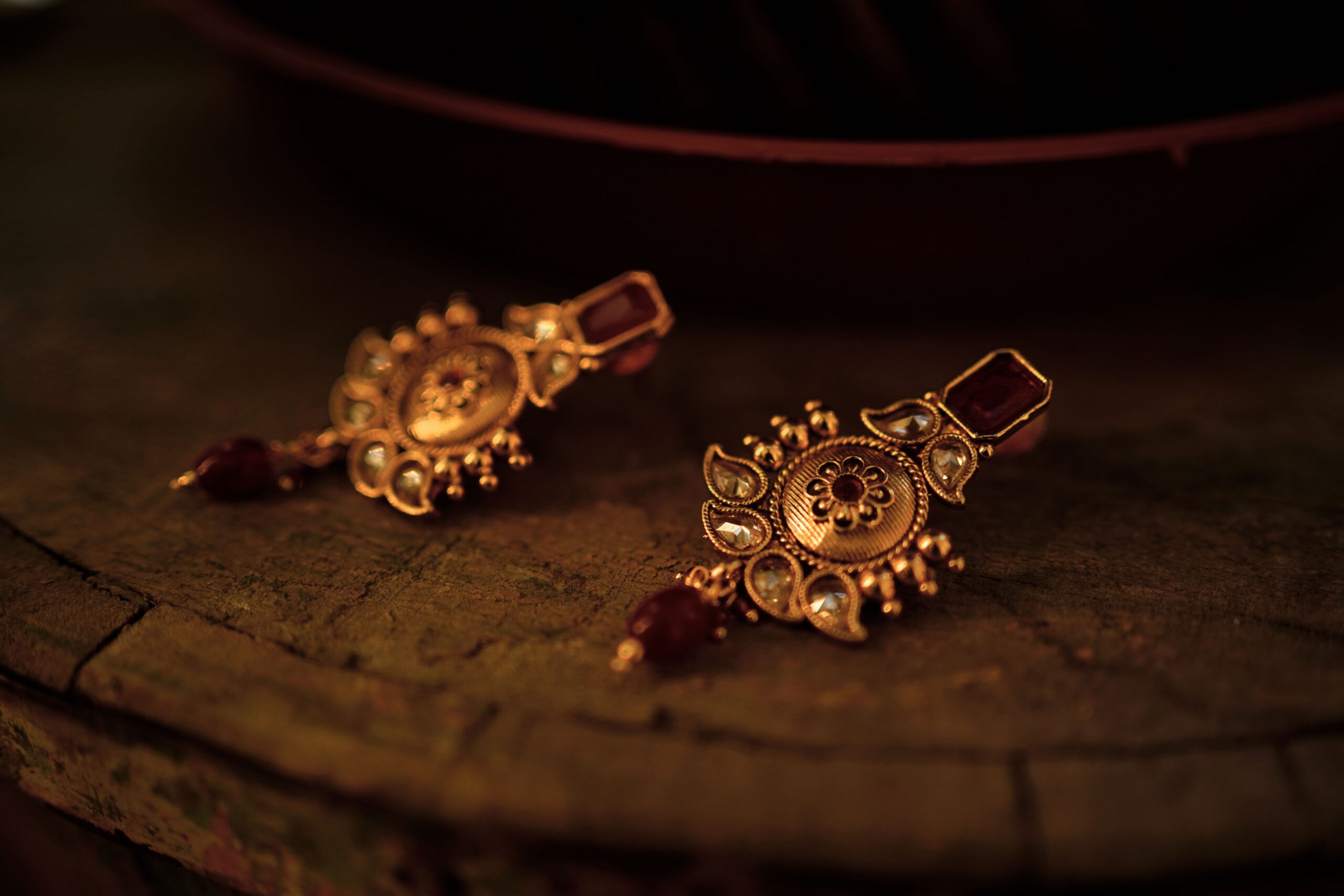
A dimension does not describe behaviour
Length and movement are separate decisions
A rigid bar, a single suspended stone and a multi-link drop can share the same overall length yet behave differently. Articulated joints allow sections to swing independently. A fixed frame moves more as one unit. A chain drop may twist as well as swing.
Movement can create changing reflections, but it also changes clearance. Look at the number and position of joints, the size of the lowest element and whether the pair is designed to face forward after motion. The relevant question is not simply “Does it move?” but “Where can it move during my normal day?”
Support begins at the top
Fastening, weight and balance affect the worn length
The top fitting decides where the design begins and how it is supported. A post-and-back can provide a defined starting point. A leverback closes around the wire and may place the drop slightly below the piercing. A hook is visually light, but its curve and any stopper affect where it settles. A small hoop creates its own diameter before the suspended element begins.
| Top fitting | What changes in the measurement | What to check in person |
|---|---|---|
| Stud top with post | Measure from the post position to the lowest point. | Back tension, post length, lobe support and whether the top sits level. |
| Leverback | The decorative drop begins below a closed hinged fitting. | Positive closure, hinge movement and comfortable space around the lobe. |
| Shepherd hook | Overall wire length may differ from the visible drop below the piercing. | How deeply the curve settles, whether a stopper is supplied and hair clearance. |
| Hoop or huggie top | The hoop diameter contributes to total worn length. | Hinge alignment, closure and whether the suspended element turns freely. |
Weight cannot be judged from length alone. Metal thickness, stone size, construction and how weight is distributed all matter. There is no single gram limit that suits every wearer. If the lobe is pulled downward, the top rotates, or discomfort builds during a short fitting, choose a lighter or differently balanced design rather than assuming you will adapt.
Fastening security also depends on condition and correct use. The earring-back comparison guide explains two common post systems; hooks and leverbacks need their own closure checks. Never substitute a back that does not match the post or force a hinge that no longer aligns.
Test the situation, not only the mirror pose
A seven-point drop earring try-on check
- Face forward. Confirm that both earrings finish at the intended landmark and that the pair appears level.
- Turn left and right. Notice contact with the cheek, jaw, neck or glasses chain.
- Look down briefly. Check whether the drop swings into the face or catches beneath the jaw.
- Move your hair. Try the hairstyle you expect to wear and check hooks, links and prongs for snagging.
- Add the neckline. Test a collar, scarf or embellished fabric rather than imagining its position.
- Wear both earrings for several minutes. A balanced pair can feel different from holding one earring in your hand.
- Operate the fastening yourself. Security is only useful if you can close and release the mechanism correctly without pulling the decorative section.
When shopping online, use the stated dimensions to reproduce the length with a strip of paper or thread held beside—not inserted into—the piercing. This is a visual approximation only, but it is more useful than viewing a magnified product image. For an exact decision, compare the actual pair.
Browse Laxmi Jewellers’ current drop earring collection with the measurement in mind. Product carat weight describes diamond weight, not earring length or total metal weight, so treat those specifications separately.
Compare length without changing the search intent
If you decide that a swinging drop is not practical for the intended routine, a close-fitting hoop or huggie may be a different product direction. The hoop versus huggie guide explains those profiles. It does not replace measuring a drop earring; it helps when the required movement is fundamentally different.
Protect the moving parts
Care and storage for longer earrings
Handle a drop earring by its supported top or solid frame, not by pulling the lowest stone or chain. Before each wear, look for an open connecting ring, a bent hook, a loose back, a leverback that no longer closes positively or a section that hangs at a new angle. Stop wearing the pair if the two sides behave differently.
Put earrings on after clothing, hair styling and cosmetics, and remove them before changing over a tight neckline. This reduces snagging and contact with products. Cleaning must match the metal, stones and construction; an ultrasonic cleaner is not automatically suitable for every set piece or treated gem.
GIA’s jewellery-care guidance recommends caution with chemicals and ultrasonic cleaning, plus separate, padded storage to reduce scratches and impact. For a multi-part drop, lay the pair so chains and articulated sections are not knotted or trapped beneath heavier jewellery. The Laxmi diamond jewellery care guide provides a broader care routine.
Keep the two earrings in separate soft compartments if their stones or metal edges can touch. Close hooks, hoops and leverbacks only if the storage position does not place tension on the mechanism. Do not hang a heavy pair by delicate links for long-term storage unless the maker specifically designed the holder for that use.
Questions before you choose
Drop earring length FAQs
Where should drop earring length be measured from?
For personal fit, measure from the centre of the piercing to the intended lowest point. For a product, confirm whether the seller’s dimension is overall length or only the decorative drop, and whether the hook, hoop or top fitting is included.
Is there one ideal drop earring length for every face shape?
No. Face-shape labels do not account for piercing height, lobe position, neck length, earring width or movement. Use your own jawline and neckline as landmarks, then assess the actual design.
Are longer drop earrings always heavier?
No. A long fine chain may weigh less than a compact solid cluster. Ask for total earring weight when available and try both earrings, because construction and weight distribution affect comfort.
What is the difference between drop and dangle earrings?
The terms are often used interchangeably. Some sellers use “drop” for a relatively fixed suspended element and “dangle” for a more articulated moving design, but naming is not universal. Dimensions and construction are more dependable than the label.
How can I check drop earring length when buying online?
Read the dimensions and fastening description, ask where the measurement begins, and reproduce the distance beside your ear with paper or thread. Check the return terms and inspect the actual pair before extended wear.
Editorial reference
Care and storage recommendations were checked against GIA’s current tips for caring for jewellery. Product dimensions, closure construction and piece-specific cleaning instructions should always be confirmed for the exact earrings.
Choose with a measurement, then confirm in motion
Explore drop earrings with length and movement in mind
Compare the complete worn profile—from the fitting at the ear to the lowest moving element.
