

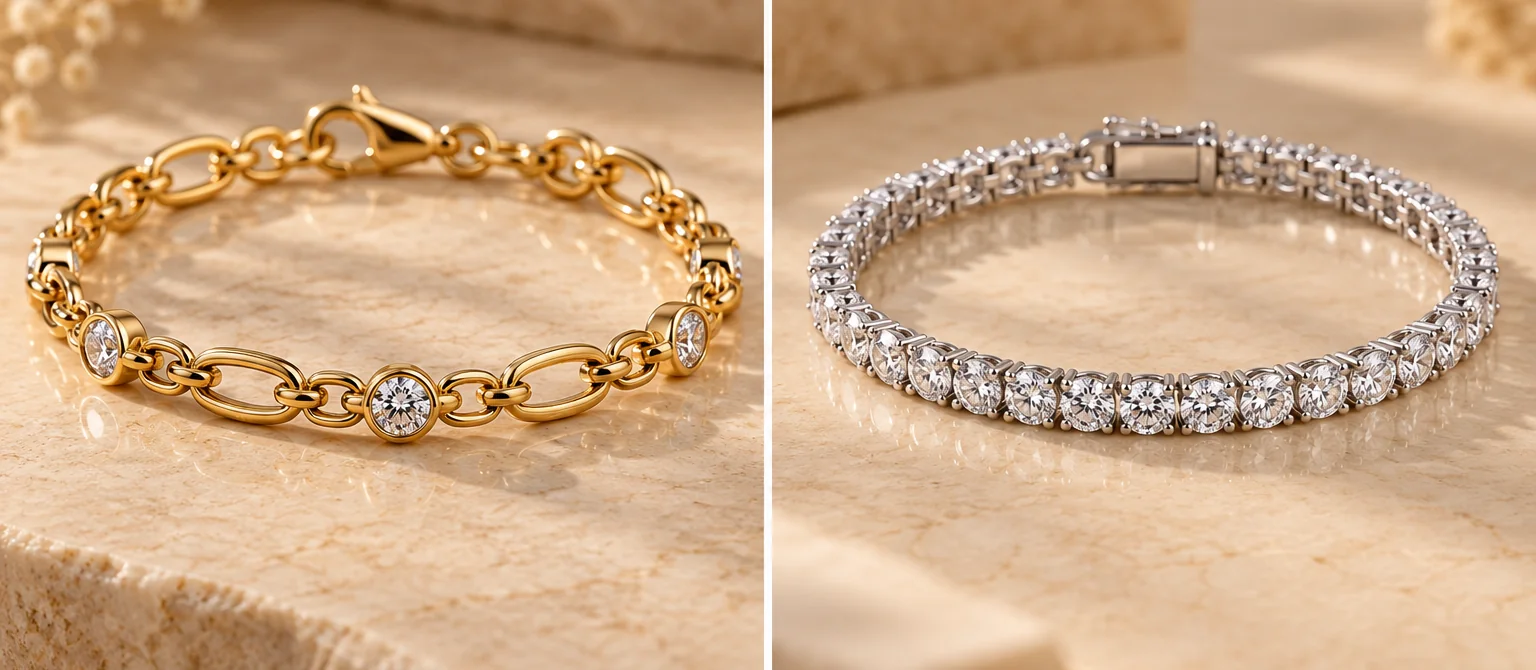
A diamond chain bracelet makes its linked metal structure part of the visible design, while a tennis bracelet is built to read as a continuous line of individually set stones. The better choice depends on whether you want link rhythm and visible metal or a more consistent diamond-led outline.
Diamond chain bracelet vs tennis bracelet: the key difference
The difference in one sentence: look at what creates the bracelet’s visual rhythm. In a chain design, connected links remain recognisable and diamonds decorate selected links, stations or focal elements. In a tennis design, articulated stone settings repeat around the bracelet so the eye follows an almost uninterrupted line of diamonds or gemstones.
That distinction is useful, but it is not a rigid formula. A diamond-rich chain bracelet can have considerable sparkle, while a tennis bracelet may show more metal through bezels, channels or decorative connectors. Product naming also varies, so the soundest comparison is between complete designs rather than labels alone. Laxmi Jewellers maintains separate chain bracelets and tennis bracelets within its wider diamond bracelet collection, making both approaches easy to compare.
| Design point | Diamond chain bracelet | Tennis bracelet |
|---|---|---|
| Core structure | Visible interconnected links form the main framework. | Linked stone settings form a continuous row around the wrist. |
| First visual impression | Metal shape, spacing and diamonds work together. | Repeated stones usually create the dominant visual line. |
| Diamond placement | Diamonds may accent selected links, stations or a central motif. | Stones generally repeat from one articulated setting to the next. |
| Visible metal | Often an intentional, prominent part of the design. | Often quieter, although setting style can make it more noticeable. |
| Overall rhythm | May alternate metal, negative space and diamond accents. | Usually regular and stone-led, with a consistent sequence. |
| Best starting question | Do I want the link architecture to be seen? | Do I want a continuous diamond line to lead the design? |
What defines a diamond chain bracelet?
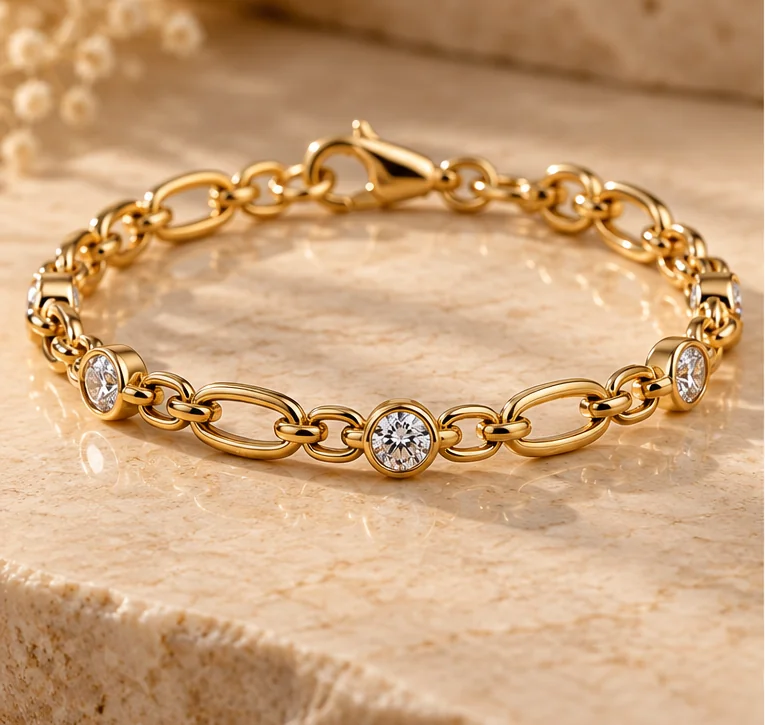
A chain bracelet is flexible because separate metal links connect to one another, but those links are not merely hidden engineering. Their outline, scale and spacing contribute to the finished appearance. Some designs use open links with generous negative space; others use compact links that sit closer together. Diamonds can be introduced at intervals, set into individual links or concentrated in a focal section.
The Jewelers of America chain guide shows how link geometry can change the character of a chain. This article does not attempt to catalogue every link family; the practical point is simpler: when the eye still notices the linked metal pattern, the chain construction remains central to the design.
Diamonds can support the links rather than replace them
In a diamond chain bracelet, sparkle and metal architecture can share attention. A small diamond station may interrupt a run of polished links, or selected links may carry pavé or individually set stones. The exact balance varies, which is why a chain bracelet should not be judged only by total stone coverage. Consider whether the diamonds clarify the link pattern, create a focal point or visually connect several sections.
To see how that balance changes across current pieces, browse Laxmi Jewellers’ diamond chain bracelet designs and look at the relationship between stone placement and visible metal.
Diamond chain bracelets in Dubai
Compare stone stations, metal finish, link spacing and bracelet width across Laxmi Jewellers’ current chain styles.
Browse chain bracelets →What makes a tennis bracelet distinct?
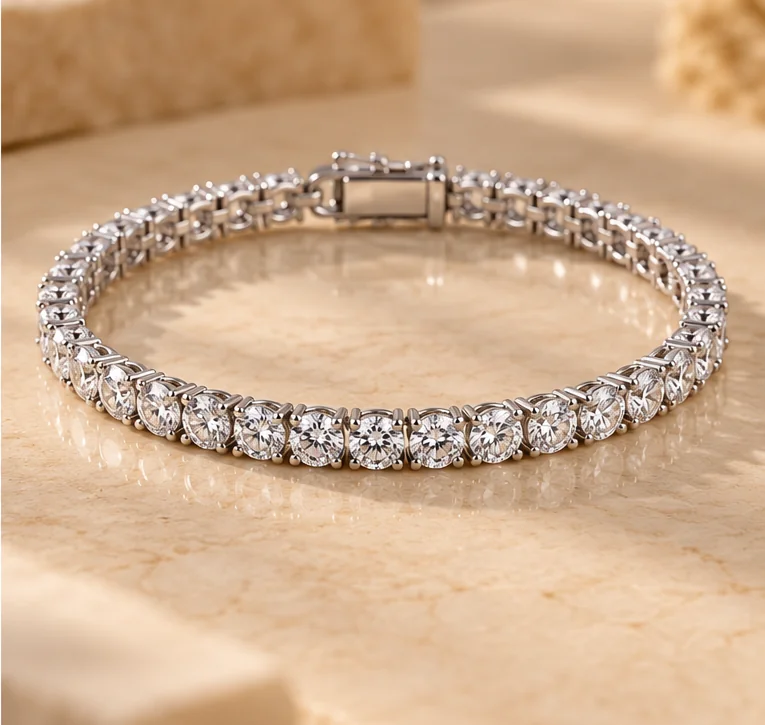
The Gemological Institute of America (GIA) defines a tennis bracelet as a flexible band with a continuous line of individually set diamonds or gemstones. That continuity is the key distinction: the repeated settings are connected so the stones read as one flowing sequence rather than as occasional decorations on a visibly separate chain.
Continuity does not mean every tennis bracelet looks identical. GIA’s tennis bracelet guide describes prong, bezel and channel settings, each of which changes how much metal is visible and how the stone row is outlined. Stone shape, setting scale and spacing also affect whether the finished line feels delicate, graphic or bold.
A continuous row can still have visible structure
A tennis bracelet is not a thread of unsupported diamonds. Each stone belongs to a setting, and those settings articulate together. Fine prongs may recede visually, whereas bezels or channels can frame the stones more clearly. The design still belongs to the tennis family when the repeated stone row remains the organising idea.
Laxmi’s diamond tennis bracelet collection provides examples of how stone shapes, widths and setting outlines can vary without losing that continuous visual rhythm.
Diamond tennis bracelets in Dubai
Compare delicate and bold stone rows, round and alternative diamond shapes, and the appearance of prong-set or other setting styles.
Browse tennis bracelets →Link-led composition vs continuous diamond line
Link-led composition
A chain bracelet can create a pattern through polished surfaces, open spaces and changes in link direction. Diamonds add points or areas of light within that metal rhythm. From a normal viewing distance, the shape of the links may be as important as the stones.
Stone-led composition
A tennis bracelet usually creates a steadier sequence of reflections because stones repeat around its length. The settings provide structure, but the intended first impression is commonly the continuous diamond line rather than a separate metal-link pattern.
Not necessarily. Avoid a universal “more sparkle” claim: the brightness of an individual bracelet depends on its diamonds, setting, proportions, finish and lighting. A category name alone cannot establish which of two specific pieces will appear brighter.
How to compare a diamond chain bracelet and tennis bracelet
Online photography can exaggerate small details and make unlike pieces appear directly comparable. A useful assessment controls as many visual variables as possible, then looks at the construction itself.
- Start at normal viewing distance. Decide whether your eye follows the link pattern or a continuous row of stones before enlarging the photograph.
- Compare a similar overall width. A very fine chain and a broad multi-row tennis design answer different style questions, regardless of category.
- Keep metal colour consistent. Contrasting colours can distract from the structural difference you are trying to evaluate.
- Notice spaces between elements. Open chain links create deliberate negative space; a tennis bracelet normally aims for a more regular sequence.
- Look at the side profile. Front-on images show the pattern, while an angled view reveals the depth of links and individual settings.
- Read the exact design details. Confirm stone arrangement, setting style and product dimensions instead of extending assumptions from the category label.
This approach keeps the decision focused on design. Questions about closures, wrist measurements, cleaning and long-term maintenance are separate topics and should be assessed for the exact bracelet rather than inferred from “chain” or “tennis” alone.
Should you choose a diamond chain bracelet or a tennis bracelet?
Consider a chain-led design if…
- You want precious metal to remain visually prominent.
- You enjoy a pattern made from links and open space.
- You prefer diamonds as accents, stations or highlights.
- You want link shape to give the bracelet its character.
Consider a tennis design if…
- You want a continuous sequence of stones.
- You prefer regular repetition to visibly open links.
- You want settings to support a diamond-led outline.
- You are comparing stone shapes, row widths or setting styles.
These are aesthetic starting points, not rules about occasion or quality. Either category can range from restrained to bold. The best comparison uses actual pieces with similar scale and asks which pattern remains appealing without relying on a highly magnified photograph.
Diamond chain bracelet vs tennis bracelet FAQs
Is a diamond chain bracelet the same as a tennis bracelet?
Not usually. A chain bracelet keeps a recognisable linked-metal structure, with diamonds added to parts of that structure. A tennis bracelet is organised around a continuous row of individually set stones. Some designs blur the boundary, so inspect the complete construction rather than relying only on the product name.
Can a chain bracelet still have substantial diamond coverage?
Yes. Diamonds can appear on many links or across a large focal section. The bracelet can still read as chain-led when the shape, spacing and movement of its metal links remain a strong visual feature.
Does a tennis bracelet always use round diamonds?
No. Round stones are common, but tennis bracelets can use other shapes or a planned combination. The continuous sequence of articulated stone settings, rather than one compulsory diamond shape, defines the design.
Which type normally shows more precious metal?
A chain bracelet often makes more of its metal visible because the links are part of the decorative pattern. A tennis bracelet may appear more stone-led, although bezels, channels and wider connectors can make its metal outline more noticeable.
Does a tennis bracelet always sparkle more?
No universal comparison is reliable. Apparent sparkle depends on the stones, setting, surface condition, proportions and lighting. Tennis construction creates a more continuous stone sequence, but a particular diamond chain bracelet may still have strong brilliance.
What is the most useful detail to compare online?
Begin with the full-bracelet view. It shows whether the eye reads visible links and diamond accents or one continuous stone line. Then use angled and close-up views to examine the setting and depth without letting magnification distort the overall impression.
Sources and further reading
For independent explanations of bracelet styles, chain architecture and tennis-bracelet settings:
- Gemological Institute of America: Tennis Bracelet Buying Guide
- Jewelers of America: Bracelet Style Guide
- Jewelers of America: Chain Style Guide
All bracelet photographs in this guide are illustrative examples. Check individual product photos and descriptions before purchasing.
