

What Is a Trilogy Ring? Three-Stone Meaning, Settings & Buying Guide
Three stones, one balanced design. Learn how a trilogy diamond ring works, what its three stones symbolise, and how to compare proportions, carat weight and settings.
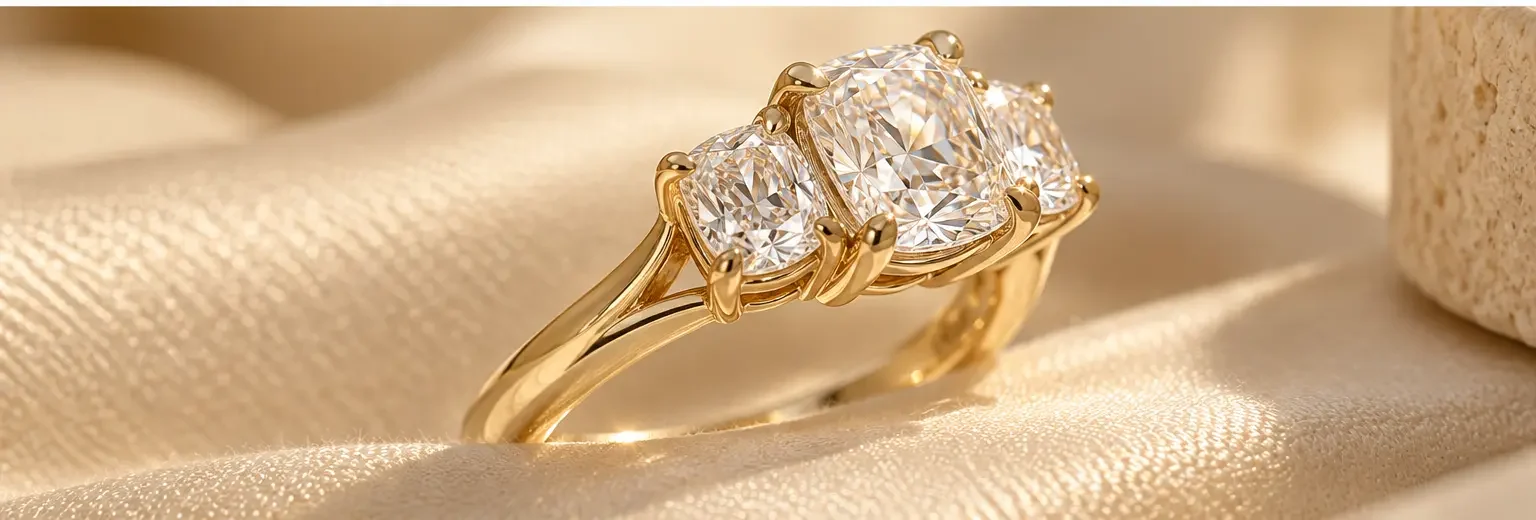
A trilogy ring is a three-stone design: one centre gem is flanked by one stone on each side. The arrangement can create a clear centre focus or a more continuous line of light, depending on the stones’ scale, shape, height and spacing.
The phrase describes the layout, not one particular way of holding the stones. A trilogy ring may use prongs, bezels, bars or a combination of setting methods. Its side stones may closely match the centre or deliberately contrast with it. That flexibility is why two rings with the same three-stone label can look and feel very different.
This guide explains how to read that design without turning it into a general ring-shape or anatomy lesson. You will learn how the three focal stones work together, how to interpret carat information, and which practical details deserve attention before you compare the available trilogy-ring designs in Dubai.
What defines a trilogy ring?
A trilogy ring, also called a three-stone ring, has a centre gemstone with one supporting stone on its left and one on its right. The centre is usually the largest and therefore the main visual focus. The side stones extend the design across the finger and can make the composition feel broader than a single-stone ring.
It is useful to separate style from setting. “Three-stone” describes how the focal gems are arranged. “Prong-set”, “bezel-set” and “bar-set” describe how metal secures them. A seller should be able to explain both, because the first shapes the appearance while the second affects exposure, maintenance and everyday wear.
Centre stone
Usually establishes the main shape, scale and visual direction of the ring.
Side-stone pair
Frames the centre, adds width and determines whether the transition looks soft or architectural.
Shared composition
Spacing, height, metal and setting style make the three elements read as one design.
A halo surrounds a centre stone with a frame of smaller gems, while a trilogy has three principal focal stones in a left-centre-right arrangement. Small pavé stones may also appear on a trilogy ring, but they do not replace its three main gems.
What are the three stones said to mean?
Three-stone rings are often said to represent a couple’s past, present and future. It is a familiar romantic interpretation, but it is not a technical definition or a rule that every wearer must adopt. The same design can mark family members, important milestones or an anniversary, or it can simply be chosen because its balanced outline is appealing.
That distinction matters when comparing rings. Symbolism can make a design meaningful, but it should not distract from the physical details that determine comfort and suitability. The ring still needs secure settings, sensible proportions and a profile that works for the wearer’s routine. Choose the story freely; assess the object carefully.
How centre and side stones create proportion
There is no universal side-stone percentage that makes every trilogy ring balanced. Carat is a measure of weight, not a direct measurement of visible diameter or surface area. Shape, depth and setting height influence how large each stone appears from above. Two side stones with the same stated weight can therefore create different visual results.
Begin with the hierarchy you prefer. A strongly graduated design uses noticeably smaller sides to keep attention on the centre. A gentler graduation creates a wider, more continuous spread. Compare the ring directly from above, then rotate it: the shoulders should meet the side settings cleanly, the gaps should look intentional, and the pair should mirror each other in position and orientation.
Matching and contrasting stones
The three gems do not have to share one shape. Matching outlines can create rhythm, while contrasting side shapes can frame the centre more distinctly. The key is purposeful transition rather than a list of “best” combinations. For a broader look at shape characteristics, see Laxmi Jewellers’ diamond-shape guide.
For an all-diamond ring intended to look cohesive, GIA’s side-stone selection guidance suggests keeping side-stone colour within about one or two grades of the centre when aiming for a consistent appearance. This is a practical comparison guideline, not an automatic guarantee: stone size, cut style, lighting and metal colour can all affect what the eye notices. Clarity grades need not be identical, but each diamond should be examined for visible characteristics and any durability concern near an exposed edge.
Inspection should cover the complete three-stone arrangement: alignment, stone security, exposed edges and the condition of every setting point.
Why the mounted ring must be viewed from several angles
A face-up photograph reveals overall balance, but it cannot show every practical detail. A side view helps you judge how high the centre and side stones sit, whether exposed edges project beyond the metal, and how the setting joins the shank. Looking at the ring in motion can also reveal a side stone that appears tilted or a gap that becomes more obvious away from a straight-on photograph.
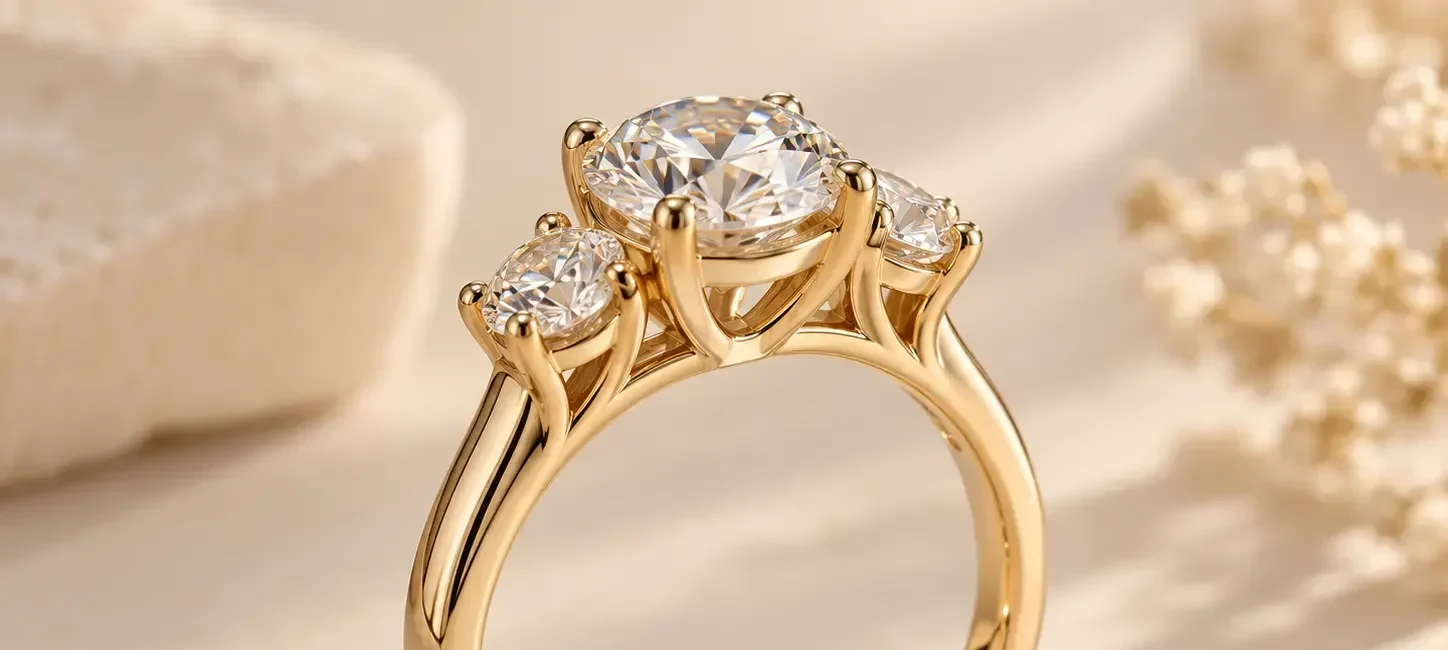
Pay particular attention to pointed corners and ends. GIA advises protective setting choices for vulnerable points, such as appropriately positioned V-shaped prongs. If any stone moves, rattles or shows a visible gap beneath a prong, stop wearing the ring and arrange a professional inspection rather than testing it repeatedly at home.
Centre carat, side-stone weight and total carat weight
Multi-stone jewellery makes weight terminology especially important. GIA distinguishes a single stone’s carat weight from total carat weight (tcw), which combines all diamonds in the piece. A trilogy listing may also state one combined weight for the two side stones. Those figures answer different questions and should not be treated as interchangeable.
| Specification | What it describes | What to confirm |
|---|---|---|
| Centre-stone weight | The weight of the main diamond or gemstone only. | Whether the figure belongs solely to the centre. |
| Side / accent weight | The side-stone pair, or occasionally each side stone. | Whether the number is per stone or combined. |
| Total carat weight | The combined weight of all diamonds included in the stated total. | Which stones the seller has counted, especially if the band has pavé. |
Do not work backwards from the headline total. Ask for the centre, the two sides and any additional accent diamonds to be identified separately. This makes comparison clearer even when two rings carry the same total weight.
How to read a real trilogy-ring listing
The 2.86 ct cushion diamond trilogy ring lists a 2.02 ct centre diamond and 0.84 ct of accent diamonds. This illustrates why the total and the centre-stone weight should be read separately. Product specifications may change; check the current listing when choosing a ring.
View ring details →How setting choice changes a three-stone ring
Prongs leave much of each gem visible and can create an open, light appearance. They also introduce several small metal contact points that should remain firmly seated against the stones. Bezels surround more of a gem’s edge, offering greater edge protection but showing more metal. Bar settings hold stones between vertical metal bars and reveal their sides, although those exposed sides may be more vulnerable to impact.
No setting label is automatically right for every wearer. Consider the stone shapes, how often the ring will be worn, whether gloves or fabrics are part of daily life, and how much maintenance the owner is comfortable arranging. The quality of execution matters as much as the category name.
Think about a wedding band before finalising the profile
A three-stone head can be wider than a solitaire head, and a low side basket may block a straight band from sitting flush. That gap is not necessarily a fault. Try the intended pair together and check for stone-to-metal contact, trapped pressure and a combined width that remains comfortable. See the Laxmi wedding band width and pairing guide for more on fit, profile and straight versus curved bands.
Routine care should focus on the actual construction. Keep the underside free from lotion and debris, store the ring separately, and have movement or damaged metal assessed promptly. For warning signs and professional repair considerations, use the diamond-ring prong inspection guide rather than relying on a fixed timetable for every ring.
A practical trilogy-ring buying checklist
Use the same sequence for every ring so that bright showroom lighting or one headline number does not dominate the decision.
- Confirm the centre-stone weight separately.
- Ask whether side weight is each or combined.
- Identify every stone included in total carat weight.
- Check that side stones mirror one another.
- Compare colour in neutral and ordinary lighting.
- View spacing and height from above and the side.
- Check how vulnerable corners and ends are protected.
- Inspect prongs or bezels for complete contact.
- Try the intended wedding band with the ring.
- Judge comfort during normal finger movement.
Trilogy ring FAQs
Are trilogy rings and three-stone rings the same?
They generally describe the same left-centre-right arrangement of three principal gemstones. Individual retailers may organise product categories differently, so confirm the actual construction rather than relying on the label alone.
Do the side stones have to match the centre stone?
No. Matching shapes and gem types create continuity, while contrasting shapes or colours can frame the centre. The choice should look deliberate, and any vulnerable corners or edges still need suitable protection.
Does a trilogy ring always sparkle more than a solitaire?
Not automatically. Three diamonds can provide a wider area of reflected light, but appearance also depends on each stone’s cut, size, shape, condition, setting and the lighting. Compare complete rings in more than one environment.
Is total carat weight the size of the centre diamond?
No. Total carat weight normally combines multiple diamonds in the piece. The centre stone should have its own weight, and the side-stone figure should state whether it is per stone or for the pair.
Can a trilogy ring be worn for something other than an engagement?
Yes. Three-stone rings may mark an anniversary, family or personal milestone, or be worn simply as a preferred design. The arrangement does not belong to one occasion.
Technical references
These independent gemological sources provide useful background on three-stone design, side-stone selection, gemstone setting considerations and carat-weight terminology.
Compare three-stone diamond rings with confidence
Review the centre, side and total diamond weights alongside shape, setting profile and ring size. Explore the designs available from Laxmi Jewellers in Dubai.
Explore trilogy ring designs →