

Diamond education · Laxmi Jewellers Dubai
Diamond Clarity Grades Explained: FL, IF, VVS, VS, SI and I
Understand the 11-grade clarity scale, what a trained grader examines at 10× magnification, and why a laboratory grade is not the same as unaided-eye appearance.
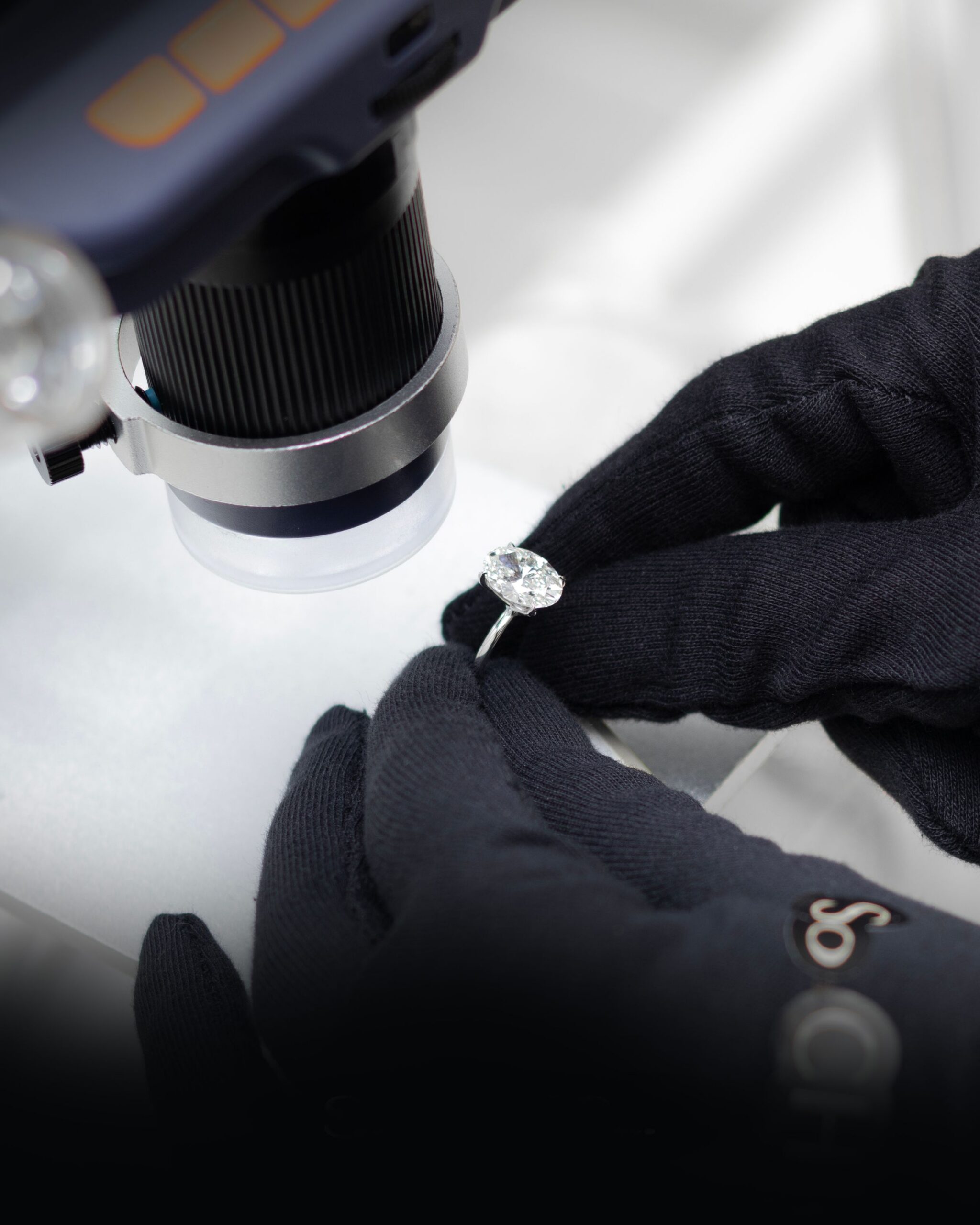
Diamond clarity describes the relative absence of internal characteristics called inclusions and surface characteristics called blemishes. A clarity grade records what a trained grader can resolve under standard examination conditions, principally at 10× magnification. It does not certify that a diamond will look flawless to every unaided eye, nor does it measure colour, cut quality or beauty.
The commonly used scale contains 11 grades, from Flawless (FL) through Included 3 (I3). Those letters are concise laboratory language. To use them well, it helps to understand both the grade definitions and the controlled context behind them.
A skilled grader examines a clean diamond at 10× and considers five linked factors: the size, nature, position, colour or relief, and quantity of its clarity characteristics. FL and IF sit at the top of the scale, followed by VVS1–VVS2, VS1–VS2, SI1–SI2 and I1–I3. The grade is repeatable shorthand for laboratory observation; unaided-eye visibility can still vary between individual stones.
The scale
From FL to I3: what the clarity letters mean
The scale moves from no clarity characteristics visible to a skilled grader at 10×, through increasingly apparent inclusions. The number within a family marks a relative position: VVS1 is above VVS2, VS1 above VS2, and so on. It does not describe a fixed inclusion count. One well-positioned characteristic can matter differently from several faint ones.
| Grade | Name | What a skilled grader observes at 10× |
|---|---|---|
| FL | Flawless | No inclusions or blemishes are visible. |
| IF | Internally Flawless | No inclusions are visible; only blemishes are visible. |
| VVS1, VVS2 | Very, Very Slightly Included | Inclusions are difficult for a skilled grader to see. |
| VS1, VS2 | Very Slightly Included | Inclusions are minor, ranging from difficult to somewhat easy to see. |
| SI1, SI2 | Slightly Included | Inclusions are noticeable under 10× examination. |
| I1, I2, I3 | Included | Inclusions are obvious and may affect transparency and brilliance. |
These are grading definitions, not a ladder of guaranteed unaided-eye outcomes. Two stones in the same grade can contain different characteristic types in different locations, yet both remain within that grade’s range. Likewise, neighbouring grades may be hard for an untrained viewer to distinguish without magnification.
Do not confuse the grade with the plot. The grade summarises the overall clarity assessment. A plot, when supplied, maps selected characteristics and uses its own symbols. Our guide to diamond clarity plot symbols explains that separate reading task.
Grading context
Why 10× magnification matters
Clarity is assessed within a controlled system rather than by glancing at a diamond in a jewellery counter. Laboratories use trained observation, a clean stone, suitable lighting and 10× magnification as the standard reference. Greater magnification can help identify a feature, but a characteristic must be considered in the 10× grading context when the clarity grade is determined.
This shared reference makes grade language useful across reports and transactions. Without it, one person’s “tiny” inclusion could be another person’s “obvious” inclusion. The standard does not remove judgement entirely; it gives qualified graders a consistent framework in which to exercise it.
Condition matters too. Dust, fingerprints, setting reflections and ordinary photographs can hide or imitate small features. A mounted diamond may also restrict the angles available for inspection. That is why neither a phone photograph nor a quick unaided look can independently establish a laboratory clarity grade.
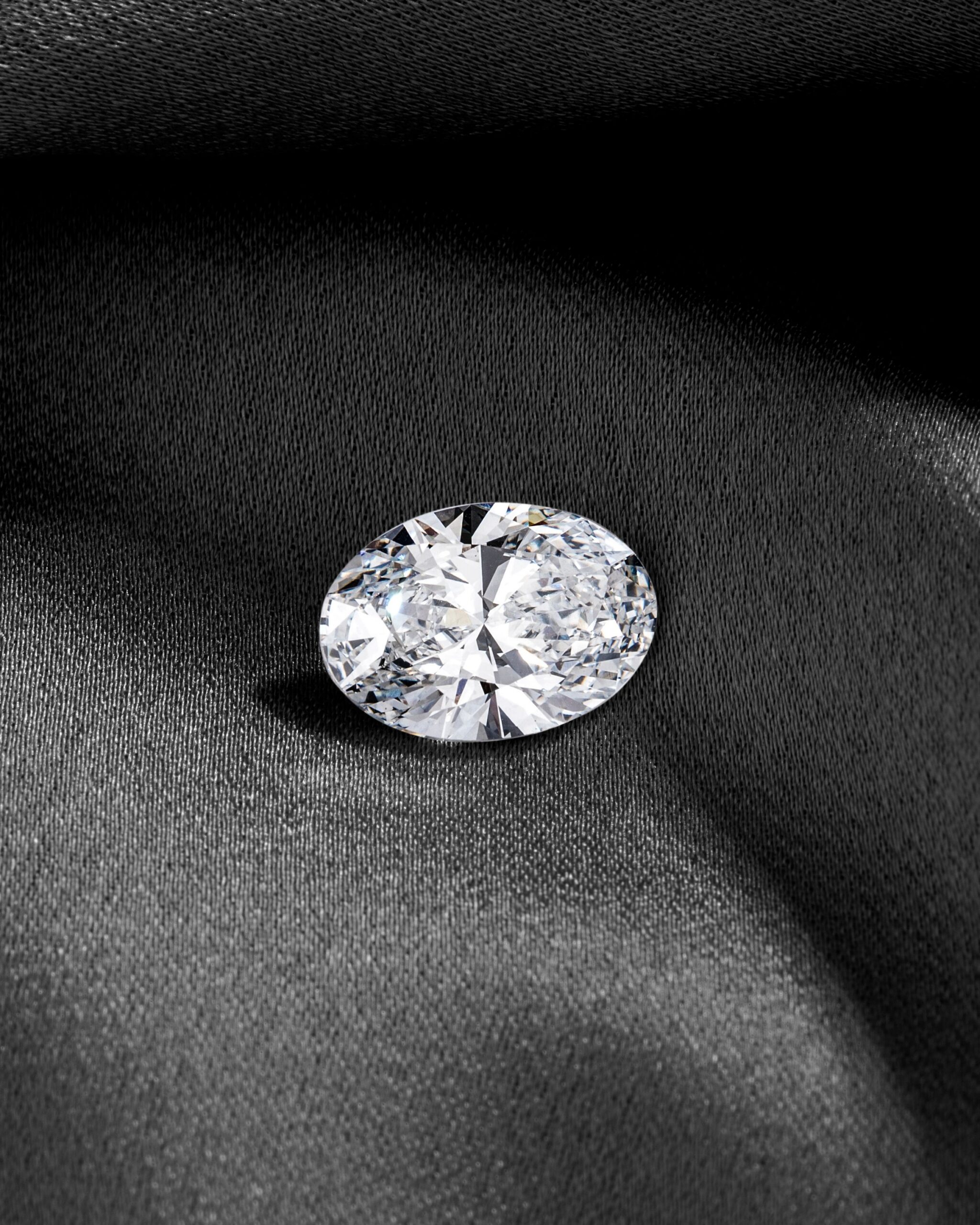
A grading report records the result produced by the issuing laboratory. It should be matched to the diamond and read as a complete document, not reduced to one line. If you are unfamiliar with the other fields, see what is included in a diamond grading report.
The five factors
How graders judge a clarity characteristic
Clarity is not calculated by simply counting marks. A grader considers how several factors work together. The same type of inclusion can have a different grading impact when its size, contrast or position changes.
1. Size
Larger characteristics are generally easier to resolve at 10× and may exert more influence than very small ones, all else being equal.
2. Nature
Nature means the type of characteristic and whether it is internal, reaches the surface, or is confined to the surface as a blemish.
3. Position
A feature beneath the table may be easier to locate than one near the edge or concealed by facet reflections. Position can also affect how often it is seen face-up.
4. Colour or relief
Relief describes how strongly a characteristic contrasts with the surrounding diamond. A high-relief feature can attract attention more readily than a faint one.
5. Quantity
The number of visible characteristics contributes to the assessment, but quantity is interpreted alongside the other four factors rather than used as a stand-alone tally.
That combined judgement explains why a grade cannot be reverse-engineered from a shopping-page image or a count of plot symbols. It also explains why two VS2 diamonds, for example, do not need identical inclusion patterns to receive the same grade.
Grade families
How to read FL, IF, VVS, VS, SI and I accurately
FL and IF
Flawless means a skilled grader sees neither inclusions nor blemishes at 10×. Internally Flawless means no inclusions are visible, although blemishes are. The difference is therefore not “perfect diamond” versus “damaged diamond”; it is a precise distinction within the laboratory system. Surface features, polishing history and the condition of the stone can be relevant to that distinction.
VVS1 and VVS2
Very, Very Slightly Included grades contain inclusions that are difficult for a skilled grader to see at 10×. The 1 and 2 subdivisions reflect relative ease of detection and overall impact within the VVS range. They are not statements that a viewer will see a particular mark without magnification.
VS1 and VS2
Very Slightly Included diamonds have minor inclusions. At 10×, these range from difficult to somewhat easy for a skilled grader to see. The family covers many possible combinations of type, relief and position, so the letters alone cannot describe the exact appearance of an individual diamond.
SI1 and SI2
Slightly Included means the inclusions are noticeable to a skilled grader under 10× magnification. “Noticeable at 10×” must not be automatically translated as “visible to everyone without magnification.” Unaided visibility depends on the individual stone, viewing distance, lighting, visual acuity, size and facet pattern.
I1, I2 and I3
Included grades contain inclusions that are obvious under 10× and may affect transparency and brilliance. The three subdivisions mark increasing overall impact. A report grade is still not a substitute for examining how the complete diamond looks and behaves in its intended setting.
Appearance
Clarity grade versus unaided-eye appearance
The phrase “eye-clean” is not one of the 11 laboratory grades and has no single universal test. Sellers and viewers may use different distances, lighting, viewing directions and eyesight standards. A claim made face-up at normal distance may not mean the same thing as an inspection from every direction at close range.
Shape and facet arrangement also influence what the eye notices. Some patterns can break up reflections and obscure a small feature; broad, open facets may make another feature easier to locate. Diamond size changes the physical scale of the view, while the setting may cover or reflect areas near the girdle. None of those variables rewrites the laboratory grade, but they can alter everyday perception.
Clarity should also be kept separate from colour. Colour grading describes the presence or absence of body colour under its own controlled conditions. The distinction is covered in our diamond colour grades D-to-Z guide. A diamond can have a high clarity grade and a different colour grade, or vice versa; one does not predict the other.
- Read the exact grade and confirm which laboratory issued the report.
- Review the diamond as an individual stone, because grade-mates need not share the same characteristic pattern.
- Use magnified media as orientation, not as independent proof of a grade or a promise of unaided-eye appearance.
- Keep clarity separate from colour and cut, then consider how the complete combination appears.
- Ask what an “eye-clean” statement means whenever that informal phrase is used.
Origin and reports
Does the scale apply to laboratory-grown diamonds?
Major gem laboratories assess clarity in both natural and laboratory-grown diamonds, and the familiar clarity terminology may appear on reports for either origin. Clarity describes observable characteristics; it does not determine how the diamond formed. Origin disclosure is a separate part of identification and reporting.
Always read the actual report rather than assuming that every document uses identical wording, layout or disclosure practices. For buyers exploring laboratory-grown diamond jewellery, the practical sequence is the same: match the report to the stone, read the clarity grade in context, and inspect the finished piece as a whole.
Frequently asked questions
Diamond clarity grade FAQs
Is FL the same as IF?
No. At 10×, an FL diamond has no inclusions or blemishes visible to a skilled grader. An IF diamond has no visible inclusions, but blemishes are visible. Both definitions belong to the controlled grading system.
Does a VS2 grade guarantee that a diamond is eye-clean?
No. “Eye-clean” is informal and depends on viewing conditions, eyesight and the individual diamond. VS2 describes minor inclusions in the 10× laboratory context; it is not a universal unaided-eye promise.
Does a higher clarity grade mean more sparkle?
Not by itself. Clarity and light performance are different ideas. Included-grade characteristics may affect transparency or brilliance in some diamonds, but the clarity letters alone do not measure sparkle.
Can a close-up photograph prove a clarity grade?
No. Photography varies in magnification, focus, lighting, angle and processing. It can help a viewer locate a feature, but a laboratory grade requires controlled examination by trained graders.
Why are there two grades within VVS, VS and SI?
The numbered subdivisions express relative position within each family. They reflect the combined visibility and impact of the characteristics, not a fixed number of inclusions.
Are clarity and colour graded together?
They appear on the same report but measure different properties. Clarity concerns inclusions and blemishes; colour grading assesses body colour under separate comparison conditions.
Authoritative references
Sources used for this guide
Compare complete specifications
Explore laboratory-grown diamond jewellery with clarity in context
Use the report as a reference, then consider the diamond, setting and finished design together.
