

Diamond sourcing framework · Laxmi Jewellers Dubai
Kimberley Process Explained: Rough Diamonds, Retail Jewellery and the UAE
Understand where a Kimberley Process certificate exists, what happens when rough diamonds become polished, how the UAE administers the scheme and why responsible-sourcing paperwork is not a grading report.
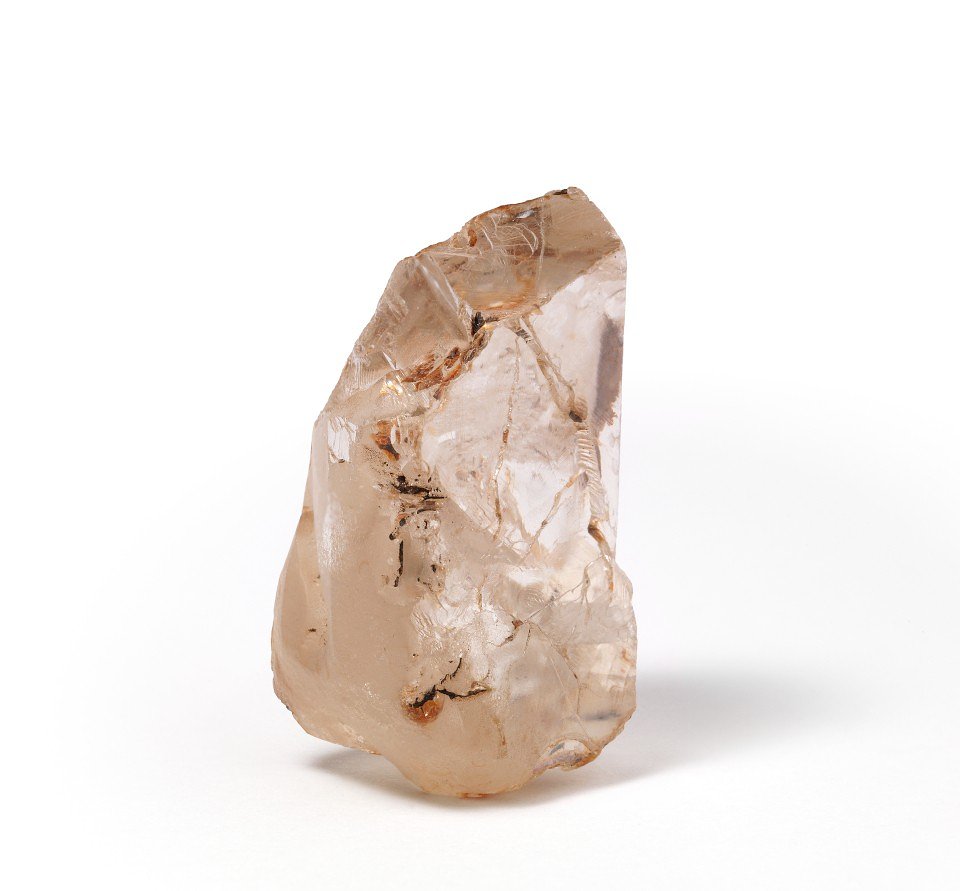
The Kimberley Process Certification Scheme applies to international shipments of rough diamonds, not to an individual polished diamond at a jewellery counter. A valid government certificate accompanies an eligible rough-diamond shipment between participating economies. After the stones are polished or set into jewellery, the downstream trade uses business records—including the World Diamond Council’s System of Warranties—to carry a different form of assurance through business-to-business transactions.
If someone asks for “the Kimberley certificate” belonging to a finished ring, the technically accurate answer is that there normally is no individual KP certificate attached to that polished stone. The certificate belonged to an international shipment of rough diamonds at an earlier stage. Retail buyers can instead ask what responsible-sourcing policy, supplier due diligence and transaction records support the finished item. A laboratory grading report answers another question: it records gemmological findings about the examined stone, not the rough-shipment control.
What the Kimberley Process actually controls
The Kimberley Process brings governments, the diamond industry and civil-society observers into an international framework designed to prevent conflict diamonds from entering the legitimate rough-diamond trade. Its certification scheme operates at national borders. The official Kimberley Process guidance for business states that every shipment of rough diamonds must be accompanied by a valid KP certificate.
That sentence contains the important boundaries. The controlled object is a shipment, the material is rough diamond, and the control is used in international trade between participants. The certificate records shipment information and is checked by the relevant import and export authorities. It is not designed as a permanent card for every crystal inside the parcel, and it is not transferred into a jewellery box when a stone is cut and mounted.
Why the certificate travels with a sealed rough-diamond parcel
Rough diamonds are commonly sorted, combined and traded in parcels before cutting. A government-issued certificate therefore relates to the declared contents of the shipment rather than assigning a lifelong number to every crystal. Importing and exporting participants check that the package and certificate meet the scheme’s minimum requirements. The certificate is surrendered, validated or otherwise handled through the competent authority’s procedure; it is not intended to circulate indefinitely with polished goods.
The official KP frequently asked questions and enforcement material should be used for the current legal and administrative position. Procedures can depend on the participating economy, the shipment and its documentation. A consumer article cannot replace instructions from the relevant authority, customs office or specialist adviser.
Inside KPCS scope
- International trade in rough diamonds.
- A shipment moving between KP participants.
- A valid certificate issued or checked by competent authorities.
- Controls for declared rough-diamond parcels.
Not the certificate’s job
- Grading a polished diamond’s colour or clarity.
- Proving that a report matches a mounted stone.
- Assigning a retail value.
- Providing a complete mine-to-finger history for one finished piece.
How the UAE administers rough-diamond imports and exports
In the UAE, the Kimberley Process falls under the Ministry of Economy, which has authorised DMCC to manage the country’s import and export procedure for rough diamonds. The DMCC Kimberley Process office describes its role in reviewing and verifying rough-diamond shipments entering or leaving the UAE and in issuing UAE certificates for eligible exports.
DMCC’s current KP questions and answers also show why material status matters. It treats semi-polished diamonds as within KPCS, while material already set into jewellery is treated as jewellery rather than as a rough-diamond shipment. Those examples clarify scope; they should not be used as a substitute for a case-specific customs decision.
For a retail customer in Dubai, the practical point is not to request an export certificate that was created for an upstream parcel. It is to ask the seller how its suppliers are approved, what declarations or warranties accompany diamond purchases and which product-specific documents are available. The answer should distinguish formal evidence from broad marketing language.
The System of Warranties carries assurance downstream
Once rough diamonds have been divided, cut and polished, an original shipment certificate cannot follow every resulting stone. The World Diamond Council developed the System of Warranties, or SoW, to complement the KPCS. Its current guidance says professional buyers and sellers include a warranty statement on business-to-business invoices or memos when rough diamonds, polished diamonds or diamond-set jewellery change hands.
The SoW is not a second government certificate and is not a laboratory report. It is an industry self-regulatory chain of statements supported by due diligence and record keeping. The revised warranty also refers to responsible business expectations involving human and labour rights, anti-money laundering and anti-corruption. DMCC’s System of Warranties overview describes the statement as something added to B2B invoices or memos each time relevant goods change hands.
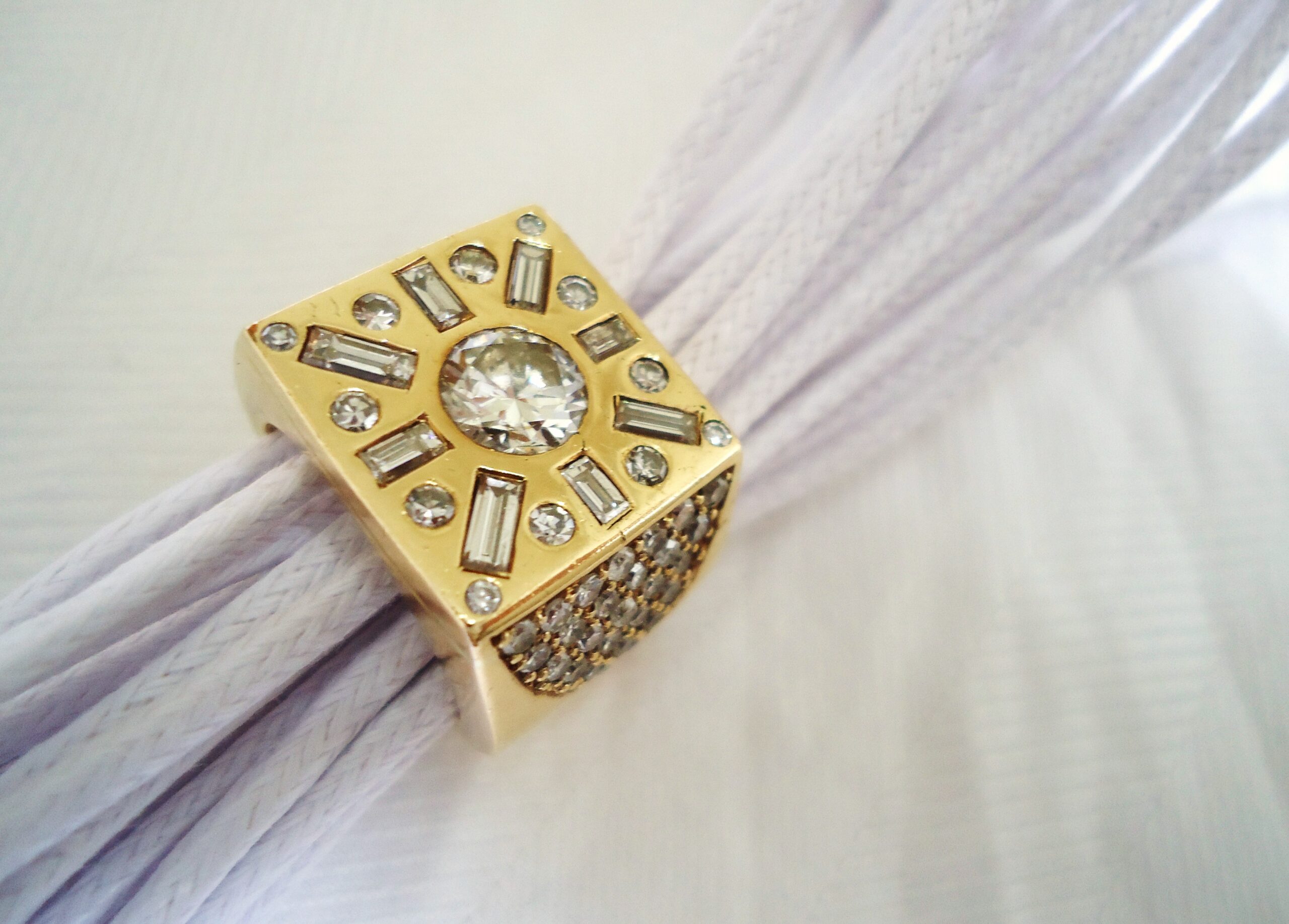
The WDC’s September 2026 article, “Where Is the Kimberley Certificate?”, addresses the common retail question directly: KP certificates accompany international rough-diamond shipments, while the SoW carries assurance through downstream B2B transactions. It also warns against collapsing several different systems into one promise that none was designed to make alone.
What KPCS and the SoW do not prove on their own
The Kimberley Process has a defined conflict-diamond mandate and a defined rough-trade mechanism. It should not be presented as a universal certificate for every environmental, labour, political, origin and community-impact question a buyer might ask. The SoW extends assurance and responsible-business commitments into downstream trade, but it is still not identical to product-level traceability, an independent sustainability assessment or a mine-of-origin record for one polished stone.
Clear boundaries make the information more useful. A seller can explain which scheme applies, which documents exist at that stage and whether additional provenance information is available. If a claim goes beyond the framework—such as naming a mine, asserting a quantified environmental benefit or promising complete traceability—it needs separate evidence that specifically supports that claim.
| Evidence or record | Primary subject | What it does not replace |
|---|---|---|
| KP certificate | An eligible international shipment of rough diamonds. | A grading report or an individual polished-stone certificate. |
| System of Warranties statement | B2B transaction assurance for rough, polished or diamond-set goods. | Government border certification or complete product-level provenance. |
| Laboratory grading report | Gemmological findings for the item examined by that laboratory. | Responsible-sourcing due diligence or proof of legal ownership. |
| Retail invoice | The customer’s transaction, item description and seller terms. | A laboratory examination or upstream chain-of-custody system. |
A grading report answers a different set of questions
A laboratory report may record measurements, carat weight, colour, clarity, proportions and identification conclusions for the submitted stone, depending on the laboratory and report type. Laxmi’s diamond grading report guide explains how to read those fields and why the report number should be checked against the document and item where practical.
That report does not become a Kimberley certificate merely because both concern diamonds. Conversely, responsible-sourcing paperwork does not tell a buyer the stone’s clarity grade or whether a mounted item matches a laboratory document. Ask both kinds of question when both matter: “What does the laboratory record about this stone?” and “What sourcing controls support the supply chain?”
Natural and laboratory-grown diamonds also need precise language. KPCS is concerned with rough natural diamonds in international trade, not laboratory-grown diamond production. For the material differences, disclosures and report terminology, use Laxmi’s lab-grown versus natural diamond guide rather than trying to make the Kimberley framework answer an origin-identification question it was not built to answer.
A practical checklist for a finished jewellery purchase
- Ask which item-specific documents are supplied. Confirm the invoice description and whether a laboratory report accompanies the relevant diamond.
- Ask how suppliers are approved. A clear answer should refer to sourcing policy, due diligence and transaction records rather than suggesting a loose polished stone has its own KP export certificate.
- Ask what a sourcing statement covers. Does it refer to KPCS compliance, the WDC SoW, another chain-of-custody programme or additional provenance information?
- Keep different claims separate. Identity, grading, legal title, responsible sourcing, geographic origin and environmental impact each require evidence suited to that claim.
- Request clarification in writing when needed. If a term is broad, ask the seller to define it and identify the supporting document or policy.
A responsible answer can include limits. “This is what the record confirms, and this is what it does not confirm” is more useful than a sweeping assurance. Retain the invoice, any grading report and any written product statement together so that future servicing, insurance or resale conversations begin with the same evidence.
Kimberley Process FAQ
Does every polished diamond have its own Kimberley certificate?
No. A KP certificate accompanies an eligible international shipment of rough diamonds. It is not an individual grading-style certificate assigned to each polished stone created from that parcel.
Does a ring need a KP certificate at UAE customs?
DMCC’s published FAQ distinguishes rough or semi-polished diamond shipments from diamonds already set into jewellery. Customs and documentary requirements can depend on the actual movement and item, so obtain current case-specific guidance rather than relying on a general article.
What happens to assurance after a diamond is polished?
The WDC System of Warranties complements KPCS by using statements on B2B invoices or memos when rough diamonds, polished diamonds or diamond-set jewellery change hands, supported by the industry member’s due diligence and records.
Is the System of Warranties a government certificate?
No. It is an industry self-regulatory mechanism. KPCS operates through government controls on international rough-diamond shipments; the SoW carries a related warranty through downstream business transactions.
Does “Kimberley compliant” tell me a diamond’s country or mine of origin?
Not by itself. The framework controls eligible rough-diamond trade under its mandate. A claim identifying a particular country, mine or custody path needs additional evidence that specifically supports that provenance statement.
Is a grading report proof of Kimberley Process compliance?
No. A grading report records laboratory findings for the item examined. Responsible-sourcing and rough-shipment controls use different records and systems.
Does KPCS cover laboratory-grown diamonds?
KPCS is a control for international trade in rough natural diamonds. Laboratory-grown diamonds should be disclosed and documented under the relevant product, laboratory and legal requirements, not described as having a KP certificate.
Primary references reviewed
This guide was checked against the Kimberley Process business guidance and official FAQ; DMCC’s UAE KP overview, operational FAQ and SoW page; and the World Diamond Council’s System of Warranties FAQ and September 2026 retail explanation.
Research and image licence pages were checked on 4 November 2026. Procedures, participants and wording can change. Use the competent authority’s current instructions for an actual rough-diamond import or export, and ask a retailer to substantiate any product-specific sourcing or provenance claim.
Ask what each document is designed to prove
Bring the product description, invoice and any laboratory report into the same conversation. Laxmi Jewellers can explain the documents available for a piece and keep sourcing language separate from gemmological grading.
