

Diamond science guide · Laxmi Jewellers Dubai
Diamond Types Ia, Ib, IIa and IIb Explained: Nitrogen, Boron and What the Labels Mean
Learn how laboratories group diamonds by measurable nitrogen and boron, how Type Ia differs from Type IIa, and why a type label cannot by itself prove origin, beauty or value.
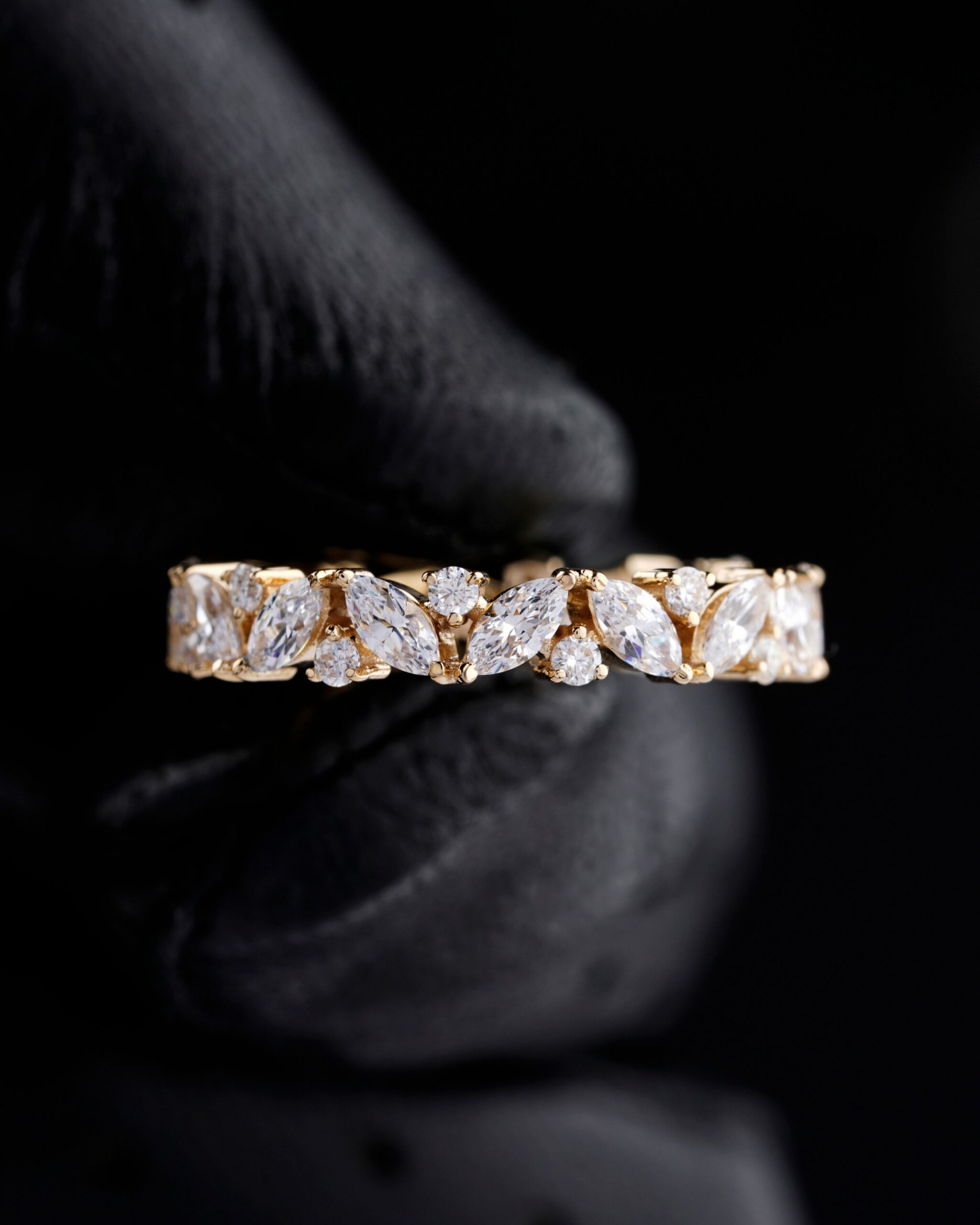
Diamond type is a scientific classification based mainly on how measurable nitrogen or boron occurs within the crystal lattice. It is not one of the familiar 4Cs, and it is not a retail quality rank. Laboratories use analytical instruments to observe absorption patterns that the unaided eye, a photograph and a basic handheld tester cannot provide.
Type I diamonds show measurable nitrogen-related features: Type Ia has nitrogen atoms grouped into aggregates, while Type Ib has mostly isolated nitrogen atoms. Type II diamonds show no measurable nitrogen by the classification method: Type IIa has no measurable nitrogen or boron, while Type IIb has measurable boron. These categories describe crystal chemistry—not whether a diamond is attractive, natural, laboratory-grown, treated, high clarity or valuable.
Diamond type is about lattice impurities, not a hierarchy
Pure diamond is a crystal of carbon, but real diamonds can contain trace elements and lattice defects. Nitrogen is the most common atomic impurity used in the type system; boron defines a separate Type II subgroup. The classification begins with a broad split. Type I shows measurable nitrogen-related absorption. Type II does not show measurable nitrogen under the analytical conditions used.
The letters and numbers then describe the form of those trace elements. “Ia” and “Ib” are not grades above or below each other. Likewise, the Roman numeral II does not mean a diamond is automatically better than Type I. The labels answer a narrow laboratory question: which relevant impurity-related pattern is detectable, and in what structural arrangement?
Ia, Ib, IIa and IIb at a glance
The table gives a careful consumer-level summary. Real spectra can be more complex than a four-row chart: a diamond may contain several defect features, and laboratories may use subcategories or additional descriptors. The core labels remain useful when their scope is not stretched.
| Diamond type | Primary classification signal | What the label can say | What it cannot prove |
|---|---|---|---|
| Type Ia | Measurable nitrogen mainly in aggregated forms within the lattice. | Nitrogen atoms have combined into groups during the diamond’s history. | Natural origin, colour grade, clarity, treatment status, quality or value. |
| Type Ib | Measurable nitrogen mainly as isolated atoms rather than large aggregates. | The nitrogen-related structure differs from the aggregated Type Ia pattern. | That every stone will look strongly yellow, or that growth origin is settled. |
| Type IIa | No measurable nitrogen or boron in the type-classification result. | The tested crystal shows no measurable signal from those impurities by the method. | Exceptional quality, colourlessness, natural origin or absence of treatment. |
| Type IIb | Measurable boron-related features; electrical conductivity may occur. | Boron is involved in the crystal chemistry and can affect physical behaviour. | A particular blue colour, natural origin, rarity-based value or overall identity. |
“No measurable” is the safer phrase than “absolutely none”. Every analytical method has detection limits. Type IIa therefore means that nitrogen and boron are not measurable in the relevant classification result, not that someone has counted every atom and proved perfect chemical purity.
Why Type Ia and Type Ib are different
In Type Ib diamond, nitrogen occurs primarily as isolated substitutional atoms: individual nitrogen atoms occupy positions in the carbon lattice. In Type Ia diamond, nitrogen has moved into aggregated arrangements. GIA’s type-classification review describes Type IaA material with paired nitrogen and Type IaB material with larger nitrogen aggregates associated with a vacancy. Many natural diamonds contain mixtures of these aggregate-related features, so a laboratory may use more detailed language than the simple Ia label.
Aggregation is connected with a diamond’s thermal and geological history. Over long periods at suitable temperatures, isolated nitrogen can combine into more complex arrangements. That helps explain why Type Ia is common among natural diamonds while pure Type Ib natural diamonds are unusual. It does not create a shopping ladder: aggregation does not tell a buyer that one finished diamond has a superior cut, cleaner appearance or better durability than another.
What nitrogen may influence
Nitrogen-related defects can interact with light absorption and contribute to colour behaviour. A laboratory interprets those signals with other observations rather than assigning appearance from the type label alone.
Why appearance is insufficient
Two diamonds in one broad type can differ in colour, clarity, fluorescence, cut and treatments. Conversely, diamonds in different types can look similar under ordinary room light.
Type IIa does not mean “automatically natural” or “automatically best”
Type IIa diamonds lack measurable nitrogen and boron by the classification method. Some famous natural diamonds fall in this group, which has helped the label acquire a prestige association. That association should not be converted into a universal quality claim. A Type IIa diamond can still have colour, clarity characteristics, strain, treatments or cutting decisions that require separate assessment.
Type is also not a conclusive origin test. GIA’s laboratory-grown diamond updates note that nearly all colourless laboratory-grown diamonds are Type IIa, while Type IIa also exists as a small natural population. A Type IIa result can therefore be a useful screening clue within a larger identification process, but it cannot alone decide whether growth occurred in the earth or in a manufacturing facility. Laboratories combine spectroscopy, fluorescence imaging, growth features, inclusions and other evidence.
Type IIb contains measurable boron-related features. Boron can act as an electron acceptor, and Type IIb diamond may show electrical conductivity. It can also contribute blue or grey-blue colour, but the label does not promise a visible blue appearance, nor does every blue diamond share the same cause. Colour origin and treatment questions still require their own laboratory work.
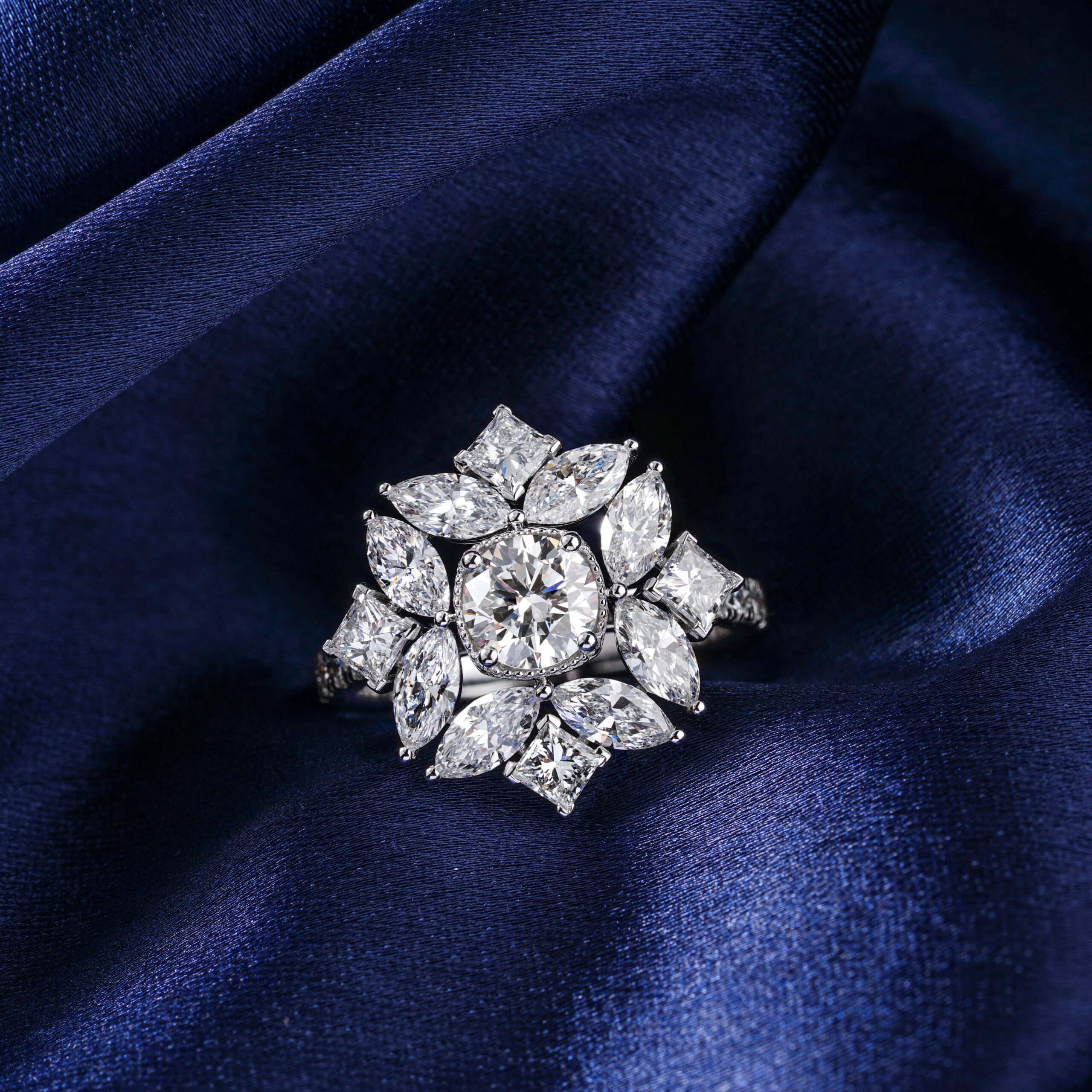
What FTIR spectroscopy contributes
Fourier-transform infrared spectroscopy—usually shortened to FTIR—measures how a diamond absorbs infrared light across a range of wavelengths. Particular absorption features are associated with nitrogen in isolated or aggregated configurations and with other lattice-related phenomena. The resulting spectrum allows a trained gemmologist to classify the type and investigate evidence that is invisible in a standard jewellery photograph.
FTIR is powerful because the spectrum contains information about the crystal, but it is not a one-button value calculator. Sample orientation, instrument conditions, detection limits, overlapping features and the question being investigated all matter. Laboratories may add ultraviolet-visible-near-infrared spectroscopy, photoluminescence, imaging and microscopic examination when determining origin, treatment or colour cause.
A basic thermal or electrical “diamond tester” answers a different question. It may help separate some diamonds from some simulants, but it does not produce a complete defect spectrum or prove natural origin. Laxmi’s guide to what a diamond tester can and cannot detect explains why a pass, refer or beep should not be treated as a type or origin report.
How to use a diamond type statement in practice
Not every consumer grading report prints a diamond type, and its absence is not a defect. A laboratory may use type internally as part of identification without presenting it as a headline consumer grade. If a report or specialist letter does state Type Ia, Ib, IIa or IIb, read the wording alongside the report number, stone description, growth-origin conclusion, colour, clarity, treatments and any comments.
- Match the document to the stone. Check identifying details and use inscription matching only where the report says an inscription exists.
- Separate type from growth origin. Look for an explicit natural or laboratory-grown conclusion; do not infer it from Type IIa or another type alone.
- Separate type from treatment. A type result does not by itself exclude HPHT processing, irradiation, coating or other disclosed treatments.
- Read colour and clarity independently. The type label cannot substitute for the reported grades or a face-up visual comparison.
- Note the method and limitations. Specialist reports may specify FTIR or other tests and may qualify borderline or mixed features.
- Verify with the issuing laboratory. Use the laboratory’s own report-check service rather than a copied image or marketplace summary.
For buying decisions, type is usually background gemmological information rather than a standalone selection target. Compare the complete diamond, report and setting. If origin matters, read Laxmi’s separate laboratory-grown versus natural diamond guide; if appearance matters, keep the D-to-Z colour grade distinct from atomic type.
Five conclusions a type label cannot support alone
- Natural or laboratory-grown origin: some type patterns are more common in one population, but overlap means a laboratory must use multiple observations.
- Untreated status: treatments can alter colour or defects, and identifying them needs specific evidence beyond the broad type group.
- Beauty or brilliance: face-up appearance depends strongly on cut, optical proportions, contrast, lighting and the complete stone.
- Quality or rarity value: market value depends on many characteristics, documentation, demand and the actual item—not a Roman numeral in isolation.
- Identity from a photograph: the two images in this article are illustrative. Neither visible colour nor shape permits a type determination.
Diamond types Ia, Ib, IIa and IIb FAQ
Is Type IIa the highest quality diamond type?
No. Diamond type is not a quality scale. Type IIa indicates no measurable nitrogen or boron in the classification result. Cut, colour, clarity, carat, treatments, origin and visual appeal are assessed separately.
Does Type IIa mean a diamond is natural?
No. Some natural diamonds are Type IIa, and nearly all colourless laboratory-grown diamonds are Type IIa. Laboratories use multiple spectroscopic, imaging and microscopic observations to determine growth origin.
What is the difference between Type Ia and Type Ib?
Both are Type I because measurable nitrogen-related features are present. In Type Ia, nitrogen is mainly aggregated into groups; in Type Ib, nitrogen is mainly present as isolated atoms.
Are all Type Ib diamonds yellow?
No. Isolated nitrogen can influence absorption and colour, but a type label does not guarantee one visible colour or grade. Other defects, concentrations, treatments and viewing conditions also matter.
Are all Type IIb diamonds blue?
No. Boron-related features can contribute blue or grey-blue colour and electrical conductivity, but the type label alone does not promise a visible blue appearance or explain every colour cause.
Can a handheld diamond tester identify Ia, Ib, IIa or IIb?
Not a basic thermal or electrical tester. Type classification normally relies on analytical spectroscopy such as FTIR, interpreted by a trained laboratory together with other evidence when origin or treatment is at issue.
Will my grading report show the diamond type?
Not necessarily. Some laboratories use type information internally or include it only on certain specialist services. Read the exact report fields and never infer a missing type from colour, origin or appearance.
GIA references reviewed
This guide was prepared from GIA’s diamond type classification review, its Winter 2024 explanation of infrared spectroscopy in gemmology, the Summer 2024 update on laboratory-grown diamonds, and GIA’s review of natural D-to-Z diamonds. The sources show why type is valuable laboratory evidence without making it a substitute for full identification or grading.
Methods, report formats and scientific interpretations can develop. Use a current report from a qualified gemmological laboratory for a specific diamond. Research and image licence pages were reviewed on 5 November 2026.
Choose the diamond as a complete object
Use type information for the narrow crystal-chemistry question it answers. Then compare the report, growth-origin conclusion, treatments, cut, colour, clarity, dimensions and face-up appearance together.
