

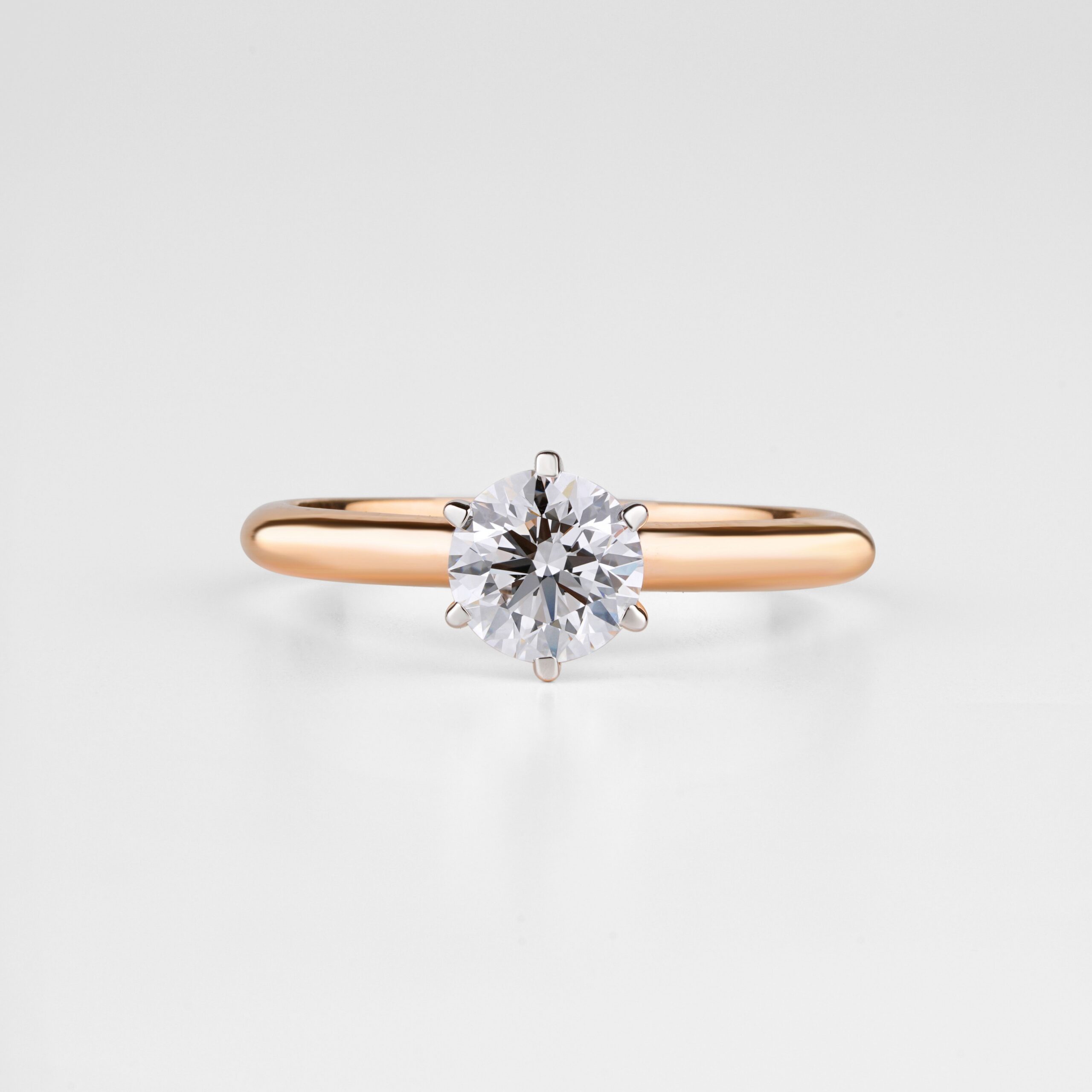
Read a ring from centre stone to palm side
Engagement Ring Anatomy Explained: Head, Gallery, Shoulders and Shank
Learn the structural vocabulary behind an engagement ring, how the main parts connect, and which details to compare for proportion, comfort and everyday wear.
An engagement ring is often introduced by its centre stone, metal or overall style. Its architecture matters just as much. The head, gallery, shoulders and shank determine how the design is built, how it looks from the side and how it feels during normal hand movement.
Terminology is not completely universal. One workshop may use “gallery” for the whole under-structure, while another separates the basket, gallery rail and bridge. Treat the names as a map, then ask the jeweller to point to the exact component on the ring.
Four useful reference points
Engagement ring anatomy at a glance
Viewed from the side, most engagement rings can be understood as connected parts. The boundaries may be obvious in a classic solitaire and more fluid in a sculptural, flush-set or tension-set design.
The top assembly that holds the centre gemstone, including a securing structure such as prongs or a bezel.
The framework seen beneath and around the centre stone, sometimes including a basket, rail or decorative openings.
The upper sections on either side of the head, where the band rises, widens or transitions towards the centre.
The circular portion that wraps around the finger. It is commonly called the band.
These parts work together. A bezel may form much of the visible head and gallery; cathedral shoulders can rise to support the head; and a split shank can create several shoulder lines before becoming one band on the palm side.
Two related ideas
Setting and setting style are not the same thing
The word “setting” can mean the complete metal mounting, including the head and shank. It can also describe the method that secures a gemstone, such as prongs, a bezel, a channel or a flush setting.
A setting style describes the broader arrangement or appearance. Solitaire, halo and three-stone are styles rather than instructions for how every gemstone is held. A solitaire can have a prong-set or bezel-set centre. A halo may combine a prong-set centre with small bead-set accents. A cathedral ring has shoulders that rise in arches, but the centre stone still needs its own securing method.
This distinction prevents vague comparisons. Ask two separate questions: “What is the overall design?” and “How is each stone actually secured?” The answers reveal more than a single style label.
| Term | What it describes | Example question |
|---|---|---|
| Prong or bezel | The metal method that holds the centre stone. | How much of the stone edge is covered or exposed? |
| Basket | A prong structure with horizontal supports beneath the gemstone. | Can I see the rail and how it stabilises the prongs? |
| Solitaire or halo | The arrangement of the centre and accent stones. | Which securing method is used for the centre and each accent? |
| Cathedral | Shoulders that arch upwards towards the centre setting. | How high does the head sit, and what supports it? |
Where the centre stone is held
The head: security, profile and centre-stone presentation
GIA defines the head as the top portion of the setting that holds the gemstone, including structures such as prongs or a bezel. Its dimensions must suit the stone’s outline and depth. A shallow round diamond and a deep pear-shaped stone do not require identical architecture.
Prong heads
Prongs are narrow strips of metal that rise from the base and bend over the gemstone’s edge. Four or six are common around round brilliant diamonds. Fewer prongs reveal more of the stone, while additional prongs can provide more points of support. Pointed shapes such as pear, marquise, heart and princess cuts may use V-shaped prongs to protect vulnerable corners or tips.
Prong condition is a maintenance subject rather than an anatomy label. To understand warning signs, inspection intervals and repairs, use Laxmi Jewellers’ separate guide to diamond-ring prong inspection.
Bezel and flush heads
A full bezel uses a metal rim around the gemstone’s edge, while a partial bezel leaves sections exposed. The smoother perimeter can reduce catching and protect more of the girdle. A flush setting embeds the stone into the band so its top sits close to the metal surface. GIA notes that flush-set rings usually require a wider, thicker shank to accommodate the gemstone safely.
Head height is one part of the profile
A lower head places the centre closer to the finger and usually projects less around clothing or gloves. A higher head creates more elevation and may give a wedding band more room beside the engagement ring, but it can feel more prominent during daily activity. Neither height is automatically better. Stone depth, support, hand habits and the intended proportions all matter.
Look at the head directly above and from both sides. The gemstone should appear centred and level within the intended design. Metal should be smoothly finished, and securing elements should meet the stone without obvious gaps or rough projections.
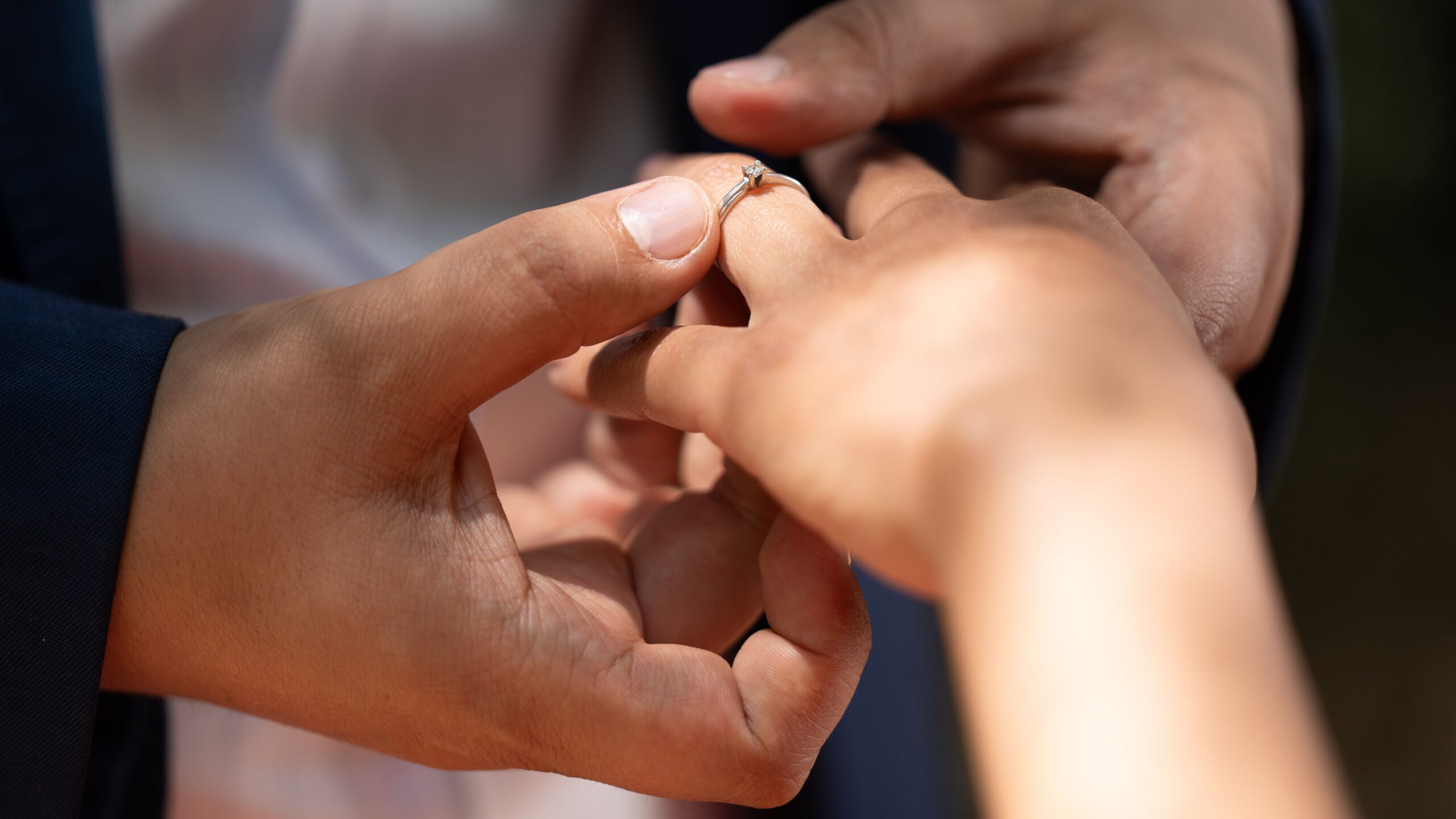
The structure beneath the stone
The gallery: support seen in side profile
“Gallery” commonly describes the under-structure visible beneath and around the centre stone. A jeweller may use the word for the whole area or distinguish a basket, gallery rail and lower bridge. Ask them to point to the exact feature if the name is unclear.
A gallery rail is generally understood as a horizontal element connecting supports around the head. GIA describes a basket setting as a type of prong setting in which horizontal supports connect the prongs beneath the gemstone. This basket-like framework helps stabilise the prongs and adds support, especially around larger or deeper stones.
Decorative galleries may include scrollwork, geometric openings or small accents. A row of stones beneath the centre, visible mainly from the side, is often marketed as a hidden halo.
Open does not automatically mean brighter
An open gallery reveals more of the stone’s side and can give the ring an airy profile. A more enclosed basket or bezel creates a stronger visual boundary. Openness should not be treated as a guarantee of extra sparkle: a diamond’s light performance depends primarily on its cut and proportions. Gallery design does affect visibility, cleaning access and the way the ring looks from the side.
Check clearance and comfort
The gemstone’s pavilion—the lower portion beneath its widest edge—needs suitable space within the structure. At the same time, the lowest metalwork should feel smooth against the finger. Try the ring while closing the hand and making ordinary movements. A beautiful side profile should still be comfortable.
Gallery height can also influence the space beside a second ring. Compare the actual pair rather than assuming every straight band will sit flush. Laxmi Jewellers’ guide to straight versus curved wedding bands covers that choice in detail.
The transition and the circle
Shoulders and shank: proportion, comfort and visual balance
The shoulders are the sections on either side of the head where the band rises, widens or transitions towards the centre. They frame the gemstone and connect its visual scale to the rest of the ring.
Common shoulder shapes
Plain shoulders create a quiet transition. Tapered shoulders narrow as they approach the centre, increasing the contrast between band and gemstone. Reverse-tapered shoulders broaden near the head for a more integrated frame. Split shoulders divide into two or more lines, adding visible width while leaving open space.
In a cathedral style, the shoulders sweep upwards in arches towards the head. This can add structural and visual support while elevating the centre. “Cathedral” describes the shoulder architecture; it does not tell you whether the stone itself is held by prongs, a bezel or another method.
Shoulders can also carry accent stones. Pavé or bead-set shoulders create a fine field of sparkle, while channel setting holds a row between parallel metal walls. If stones extend far down the band, ask how that construction could affect future workshop alterations rather than assuming every stone-set ring can be resized in the same way.
The shank is more than ring size
The shank is the circular part around the finger. Its width, thickness and cross-section are separate features. Width is the side-to-side measurement visible from above; thickness is the depth of metal between the inner and outer surfaces. A ring can look narrow from above yet retain meaningful depth.
The cross-section affects feel. A flat interior sits differently from a softly rounded or “comfort-fit” inside. A rounded outer profile differs from a knife-edge shank, whose exterior rises to a central ridge. Names vary between workshops, so trying physical samples is more useful than relying on a label alone.
Pay attention to the palm side as well as the decorative top. That area meets desks, handles and everyday surfaces most often. Check whether the shank feels smooth between neighbouring fingers, whether the head remains balanced and whether the ring turns excessively during normal movement. These observations concern architecture and wearability, not just nominal size.
Judge the complete build
How the parts work together
No component acts alone. Three rings with the same centre diamond can look and feel very different because of their combined proportions.
- An elevated prong head with cathedral shoulders and a tapered shank creates a taller, architectural profile with strong emphasis on the centre.
- A lower basket with gently rounded shoulders and a broader shank creates a more grounded silhouette and greater finger coverage.
- A fine prong head, pavé shoulders and a narrow shank produces a delicate line of sparkle but introduces more small stone-setting work across the surface.
- A bezel head flowing into substantial shoulders can create a smooth, contemporary outline with more metal around the stone’s edge.
These are descriptions, not rankings. A substantial ring can be comfortable, and a visually delicate ring can be well engineered. A recognised setting name does not guarantee excellent construction. Gemstone shape, metal, workmanship, proportions and the wearer’s routine must be considered together.
Turn vocabulary into useful information
Questions to ask when viewing an engagement ring
A jeweller should be able to explain not only what a feature is called, but why it is used and how it relates to the stone and the wearer.
Identify the structure
Can you point out the head, gallery, shoulders and shank on this exact design, including any rail or bridge?
Confirm how stones are held
How is the centre secured, and which setting method holds any halo, shoulder or hidden-halo accents?
Measure the profile
What is the overall height from the finger to the top of the centre stone, and which edges remain exposed?
Review the gallery
Does it provide a structural rail, decorative detail, a hidden halo or open cleaning access beneath the stone?
Check shank proportions
What are the width, thickness and inside profile at the shoulders and on the palm side?
Try the complete combination
Can the ring be worn for several minutes and viewed beside the intended wedding-band shape?
Discuss future work
How far do accent stones extend, and which parts could affect later resizing, refinishing or other alterations?
Match design to routine
Which profile and protection choices suit the wearer’s work, gloves, exercise and everyday hand movement?
If the proportions you want are not available in a standard design, discuss what can be adapted through Laxmi Jewellers’ bespoke jewellery service. Changes should be assessed as part of the whole build, not made to one component without considering the others.
Common anatomy questions
Engagement ring anatomy FAQs
Is the setting the same as the head?
No. The head is the top assembly holding the centre gemstone. “Setting” may mean the complete metal mounting or the specific method used to secure a stone, depending on context.
Is the gallery a separate official component?
GIA lists the head, shoulders and shank as the three principal components of a typical setting. Gallery is a widely used trade term for the under-structure visible around and beneath the centre stone, but workshops may define its boundaries differently.
Does an open gallery make a diamond sparkle more?
Not by itself. Diamond light performance depends mainly on cut and proportions. An open gallery changes visibility, side profile and cleaning access, but it should not be treated as a guarantee of greater brilliance.
Are cathedral shoulders a type of prong setting?
No. Cathedral describes shoulders that arch upwards towards the centre. The gemstone can still be held by prongs, a bezel or another securing method.
Does a thicker shank always feel wider?
No. Thickness is the depth of metal from the inside to the outside, while width is the side-to-side measurement visible from above. The inside and outside profiles also affect how the ring feels.
Which ring part matters most for comfort?
Comfort comes from the complete design: shank width and profile, shoulder shape, head height, balance and finishing all contribute. Try the ring during normal hand movement rather than judging one measurement alone.
Authoritative references
Compare the complete architecture
See engagement-ring details from every angle
Use the anatomy terms to compare head, gallery, shoulder and shank proportions across Laxmi Jewellers’ lab-grown diamond engagement-ring designs.
