

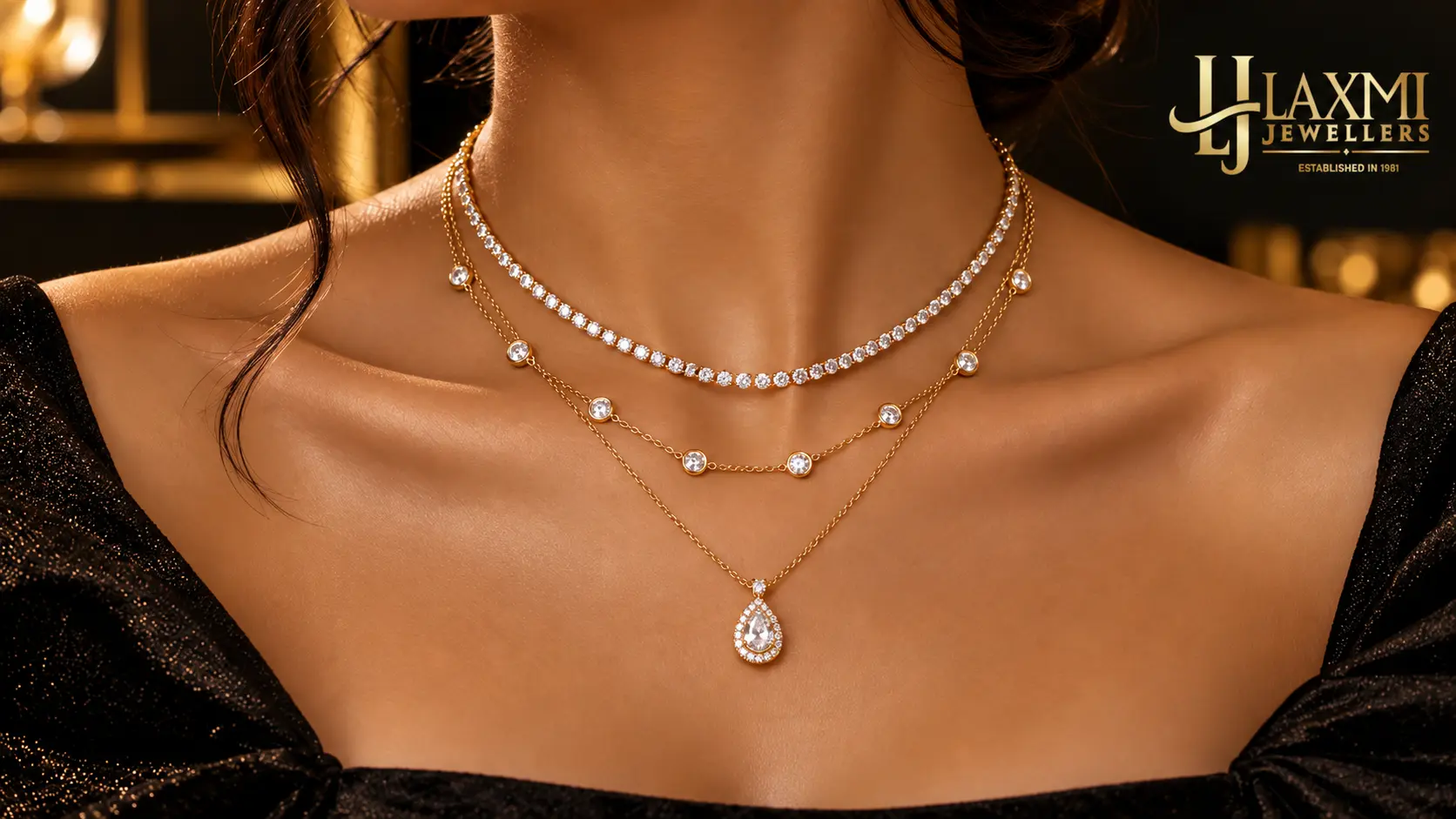
Layering diamond necklaces can transform a simple jewellery look into something much more personal and refined. The challenge is making each necklace visible without allowing delicate chains, pendants and clasps to twist around one another.
Learning how to layer diamond necklaces successfully comes down to choosing different lengths, varying chain weights and creating enough space between each piece. Whether you prefer a subtle everyday combination or a more glamorous layered look, a few simple styling principles can make a noticeable difference.
In This Guide
Start With Different Necklace Lengths
Necklace length is one of the most important factors when creating layers. Two necklaces sitting at almost exactly the same height are far more likely to overlap, twist or hide one another.
Instead, create visible separation between every piece. You might begin with a shorter necklace near the collarbone, place a second piece slightly lower and finish with a longer pendant or diamond necklace.
| Layer | Suggested Length | Good Style Choice |
|---|---|---|
| First layer | 14 to 16 inches | Fine chain or delicate diamond pendant |
| Second layer | 17 to 18 inches | Diamond station necklace |
| Third layer | 20 inches or longer | Longer pendant or statement piece |
These measurements are useful starting points rather than strict rules. Neck size, pendant dimensions and chain construction can all affect where a necklace actually sits.
Build the Layers Around One Main Necklace
A polished layered look usually has one piece that takes visual priority. This may be a solitaire pendant, a diamond tennis necklace, a station necklace or a distinctive diamond shape.
Once you have chosen your focal necklace, keep the other layers slightly simpler. For example, a statement diamond tennis necklace can work beautifully with a fine pendant sitting above it.
If you are starting with a solitaire pendant, a lighter station necklace positioned underneath can add sparkle without competing with the central diamond.
Mix Different Chain Weights
Wearing several necklaces made from almost identical fine chains can increase tangling because the chains move in similar ways.
Mixing different structures can help create more separation. For example, you can combine a delicate pendant chain with a slightly stronger station necklace and then add a more structured tennis necklace.
For a Minimal Look
Pair a fine diamond pendant with a slightly longer station necklace. This is an easy combination for everyday wear.
For More Sparkle
Combine a delicate pendant, a station necklace and a tennis necklace while keeping clear spacing between all three.
Avoid Placing Pendants at the Same Height
Pendants positioned at almost the same level frequently collide, overlap or turn backwards during normal movement.
A better approach is to stagger them. Place the smallest pendant higher on the neckline and allow the larger pendant to sit lower.
This creates a natural visual flow and gives each diamond enough space to be appreciated individually.
Combine Different Necklace Styles
Layering becomes easier when every necklace has a slightly different structure. Rather than wearing three similar pendant chains, combine complementary styles.
Solitaire Pendant With a Station Necklace
A solitaire pendant creates a clear focal point, while the station necklace adds smaller areas of brilliance around the neckline.
A diamond station necklace can be particularly useful for layering because the diamonds are distributed along the chain instead of being concentrated in one central pendant.
You can view an example of a lab grown diamond station necklace from Laxmi Jewellers when considering this type of layered combination.
Station Necklace With a Tennis Necklace
This pairing creates more visual impact. The lighter station necklace can sit above the more defined diamond line created by the tennis necklace.
Simple Gold Chain With Diamond Jewellery
A plain gold chain can introduce texture without adding another strong diamond focal point. This is useful when you want a relaxed layered style rather than a full statement look.
Consider a Necklace Spacer
A necklace spacer or multi clasp can help keep several necklaces organised. These accessories connect multiple chains to one fastening system and help maintain a more consistent distance between individual layers.
A spacer does not guarantee that necklaces will never cross, but it can be useful when wearing several fine chains together.
Put the Necklaces On in the Right Order
Start with the shortest necklace and then work down towards the longest piece. Once every necklace is fastened, centre the pendants and check that the clasps at the back are not already wrapped around one another.
- Fasten the shortest necklace first.
- Add the middle length necklace.
- Finish with the longest layer.
- Centre each pendant.
- Check the clasps behind your neck.
A few seconds of adjustment before leaving home can reduce the amount of untangling needed later.
Pay Attention to the Clasps
Necklace tangling can begin behind the neck rather than at the front. Several clasps sitting directly beside one another may rotate and eventually wrap around neighbouring chains.
If one necklace repeatedly turns around your neck, consider whether the chain is too light for the pendant or whether it sits too close in length to another piece.
Do Not Overcrowd the Neckline
More jewellery does not automatically create a better layered look. Two or three thoughtfully selected necklaces are often enough.
Too many pieces can increase friction, hide individual diamonds and make the whole arrangement feel heavier.
Think About Pendant Size
Larger pendants need more room. A substantial diamond pendant may catch repeatedly on a fine necklace positioned directly underneath it.
Place larger pendants on the lowest layer or leave more distance between them and neighbouring chains. Smaller pendants usually work well closer to the collarbone.
Mixing White Gold, Yellow Gold and Rose Gold
Diamond necklaces do not all need to use the same metal colour. White gold creates a clean contemporary appearance, yellow gold introduces warmth, and rose gold provides a softer look.
Mixed metal layering can look particularly refined when the different colours are repeated elsewhere in your jewellery, such as rings, bracelets or earrings.
How to Layer a Diamond Tennis Necklace
A tennis necklace usually has greater visual weight than a fine pendant chain, so it often works best as the strongest or lowest layer.
One elegant option is to position a small solitaire pendant above the tennis necklace. This gives the pendant its own space while the tennis necklace creates a continuous line of diamonds below.
Another option is to combine a very fine gold chain with a structured tennis necklace for a more modern contrast.
For inspiration, you can explore this lab grown diamond tennis necklace available from Laxmi Jewellers.
How to Layer Diamond Necklaces for Everyday Wear
For everyday jewellery, simplicity is usually easier to manage. A two necklace combination can provide enough detail without creating unnecessary movement.
A practical everyday combination is:
- A fine diamond pendant as the first layer
- A slightly longer diamond station necklace as the second layer
This arrangement can work with workwear, casual clothing and evening outfits while remaining relatively easy to maintain.
How to Layer Diamond Necklaces for Evening Styling
Evening jewellery gives you more room to introduce additional sparkle.
You might combine:
- A short diamond pendant
- A medium length station necklace
- A structured tennis necklace
Keep each necklace clearly separated so the diamonds remain individually visible. A lower neckline can also provide additional space for a three layer arrangement.
Match Your Necklace Layers to Your Neckline
V Neck
Use necklaces that gradually follow the downward shape of the neckline.
Scoop Neck
Rounded layers can sit naturally within the open space of the neckline.
Strapless
A shorter tennis necklace or carefully layered combination can become the main focal point.
Open Shirt
A delicate pendant and station necklace can sit naturally within the opening.
How to Reduce Tangling During the Day
Even a carefully planned arrangement can move during normal wear, but a few habits can help.
- Choose noticeably different necklace lengths.
- Mix different chain weights and structures.
- Avoid several extremely fine chains together.
- Keep large pendants separated from neighbouring necklaces.
- Use a necklace spacer when appropriate.
- Check the position of your necklaces occasionally.
- Remove layered necklaces before sleeping or exercising.
Store Diamond Necklaces Separately
Proper storage is one of the simplest ways to avoid knots and unnecessary contact between jewellery pieces.
Do not remove several layered necklaces and place them together while they are still intertwined. Unfasten each piece and store it separately.
The Gemological Institute of America recommends appropriate jewellery storage, including separate compartments and careful handling, to help protect jewellery from scratching and tangling.
Keep Your Diamond Necklaces Clean
Necklaces worn close to the skin can gradually collect natural oils, moisturiser, cosmetics and other residue. This can reduce the visible brilliance of the diamonds.
Gentle and appropriate cleaning can help maintain their appearance. The GIA diamond jewellery care guide provides further guidance on cleaning diamond jewellery safely.
Always consider the type of metal, setting and construction before cleaning any necklace.
Choosing Diamond Necklaces for Layering
If you are buying a necklace specifically for layering, consider how it will work with jewellery you already own.
Look at:
- Necklace length
- Chain thickness
- Diamond size
- Pendant dimensions
- Metal colour
- Setting style
- Overall visual weight
- How freely the necklace moves
Explore Diamond Necklaces at Laxmi Jewellers Dubai
Discover lab grown diamond necklaces in different styles, including elegant station necklaces and tennis necklace designs suitable for wearing alone or incorporating into a layered jewellery look.
Explore Diamond NecklacesFinal Thoughts
Learning how to layer diamond necklaces without tangling is mainly about giving every piece enough room to move independently.
Start with different necklace lengths, vary chain weights and allow one piece to act as the main focal point. A delicate pendant with a station necklace can create an elegant everyday look, while adding a tennis necklace can introduce more brilliance for evening styling.
Most importantly, avoid overcrowding the neckline. Well spaced necklaces allow each diamond piece to remain visible while creating a complete and carefully considered jewellery look.
With thoughtful styling, suitable lengths and proper storage, layered diamond necklaces can remain comfortable, elegant and much easier to manage.
Frequently Asked Questions
How do you layer necklaces without them tangling?
Choose noticeably different necklace lengths, mix different chain weights, stagger pendants and avoid placing several extremely fine chains at the same level.
How far apart should layered necklaces be?
There is no single required distance, but each necklace should have enough separation to remain clearly visible and avoid repeatedly overlapping the neighbouring piece.
Can you layer a tennis necklace with a pendant?
Yes. A fine pendant can sit above a tennis necklace, allowing the pendant to remain a focal point while the tennis necklace provides a stronger diamond layer below.
Can you mix gold colours when layering diamond necklaces?
Yes. White gold, yellow gold and rose gold can be combined when the overall styling looks intentional. Repeating the metal colours elsewhere in your jewellery can help create a more coordinated appearance.
Jewellery styling and care information is intended as general guidance. Individual necklace construction, clasps and settings can vary, so delicate or damaged jewellery should be inspected by a professional jeweller when necessary.
