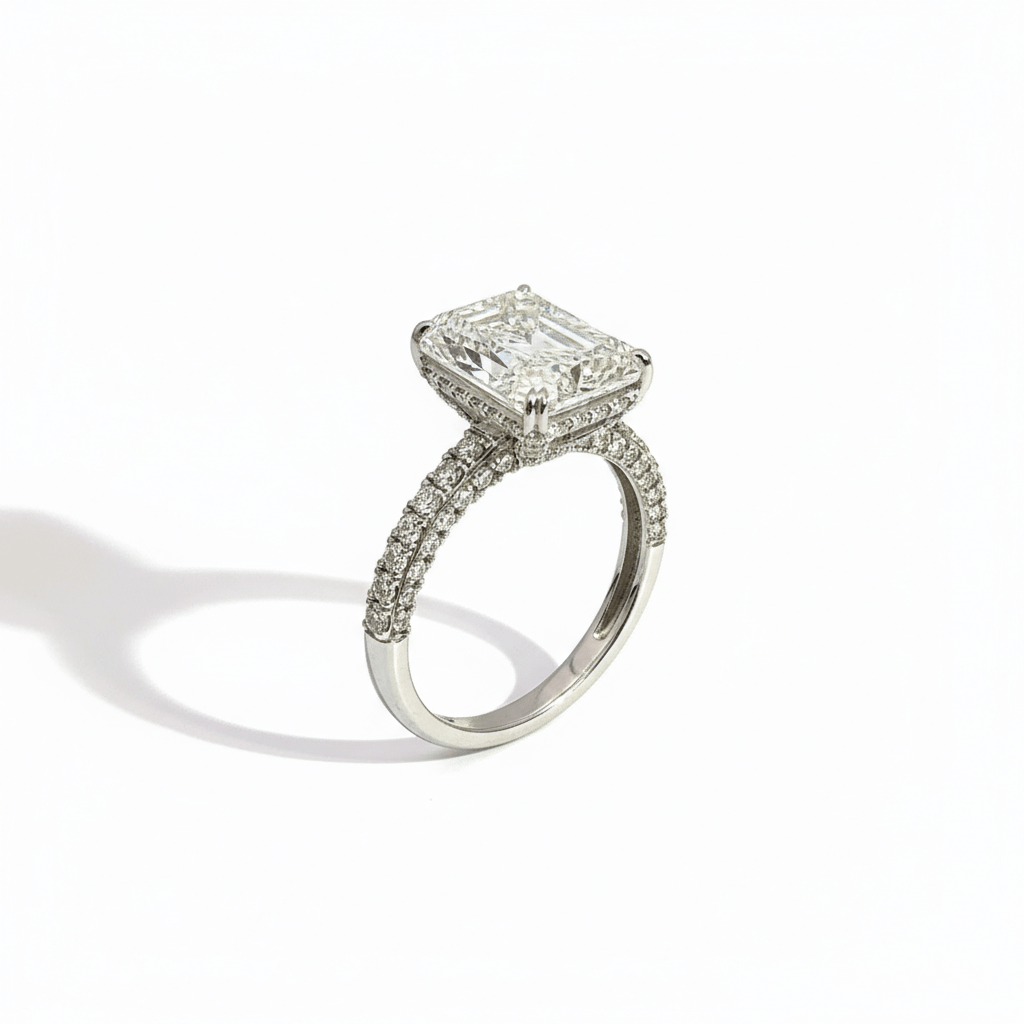
Verify the Diamond Report
Confirm laboratory-grown origin, report details, measurements and recorded grades before purchase.
CERTIFIED LAB-GROWN ENGAGEMENT RING GUIDE
Choosing an engagement ring is a personal decision that involves more than selecting the largest diamond available within a budget. The diamond’s quality, certification, shape, setting, metal and suitability for everyday wear all influence the final result.
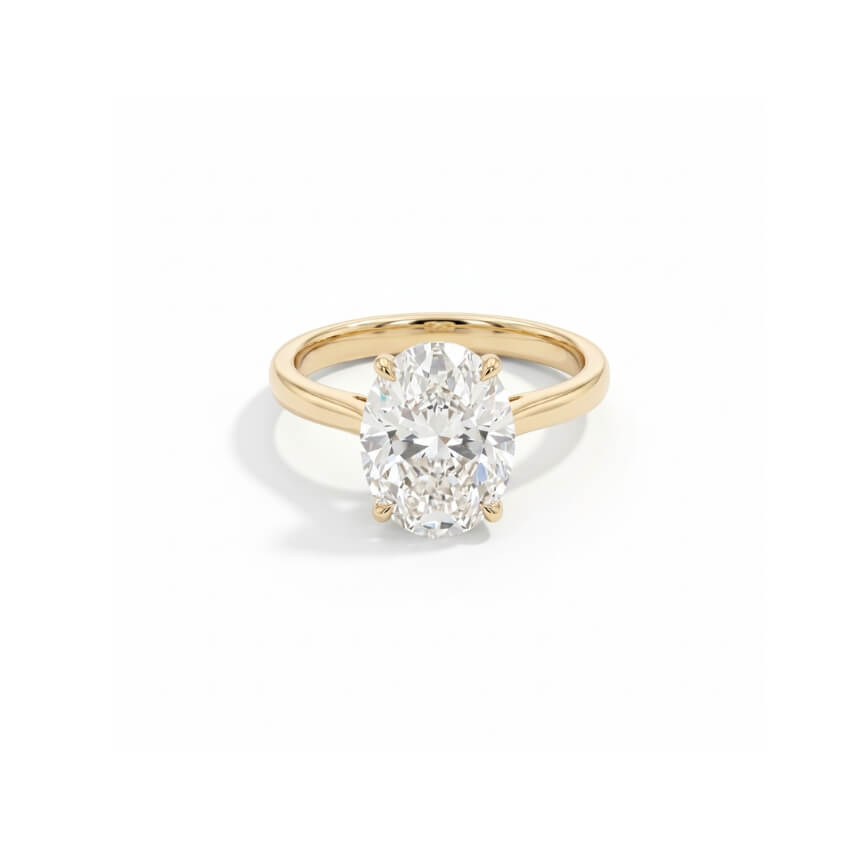
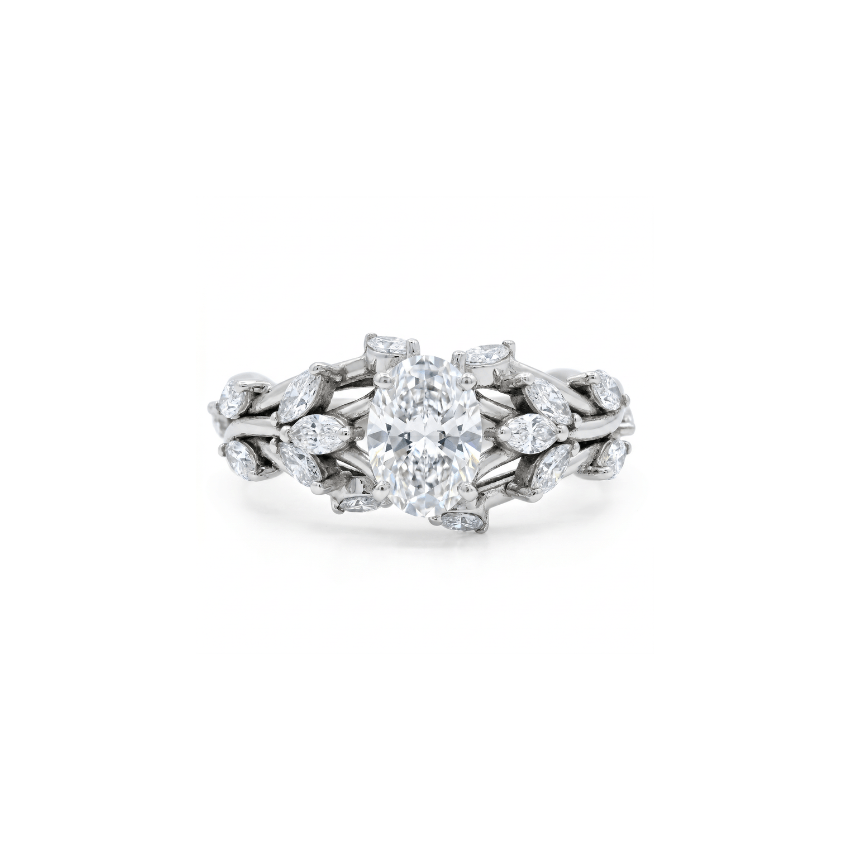
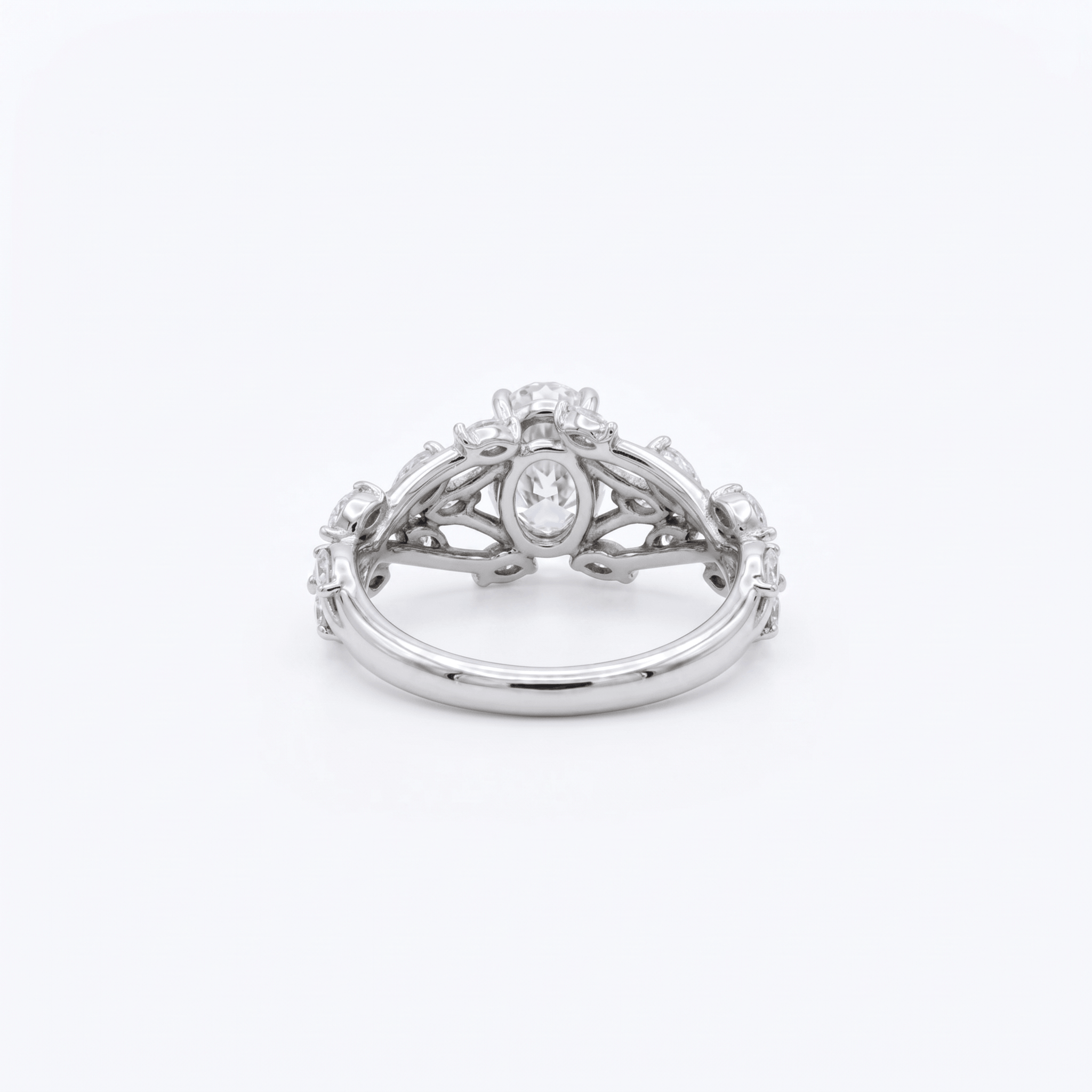
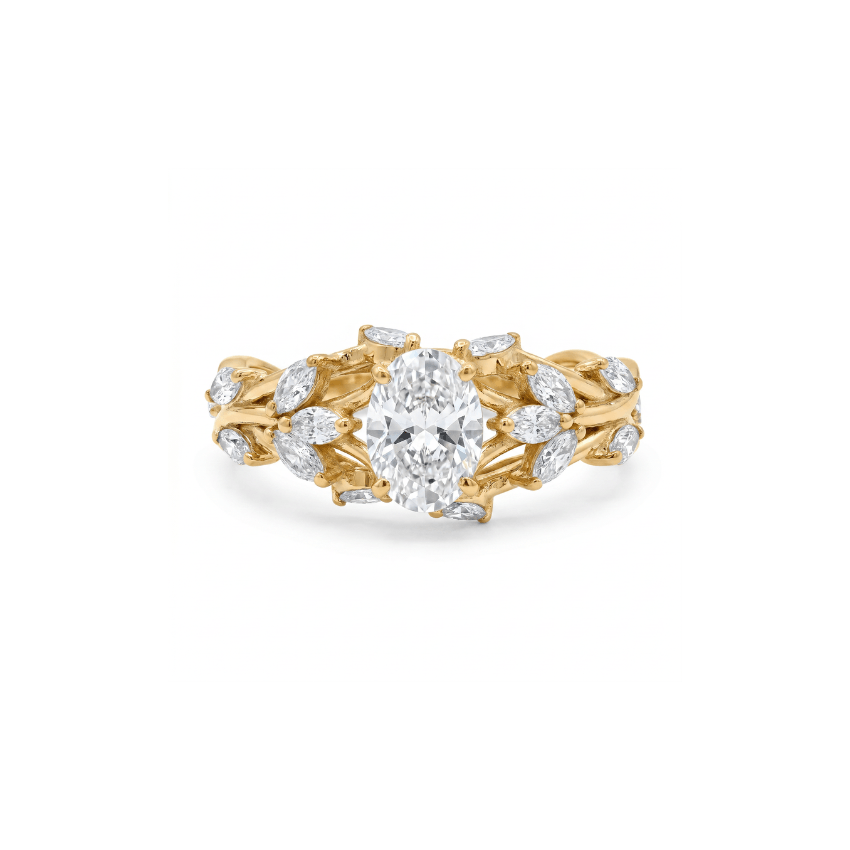
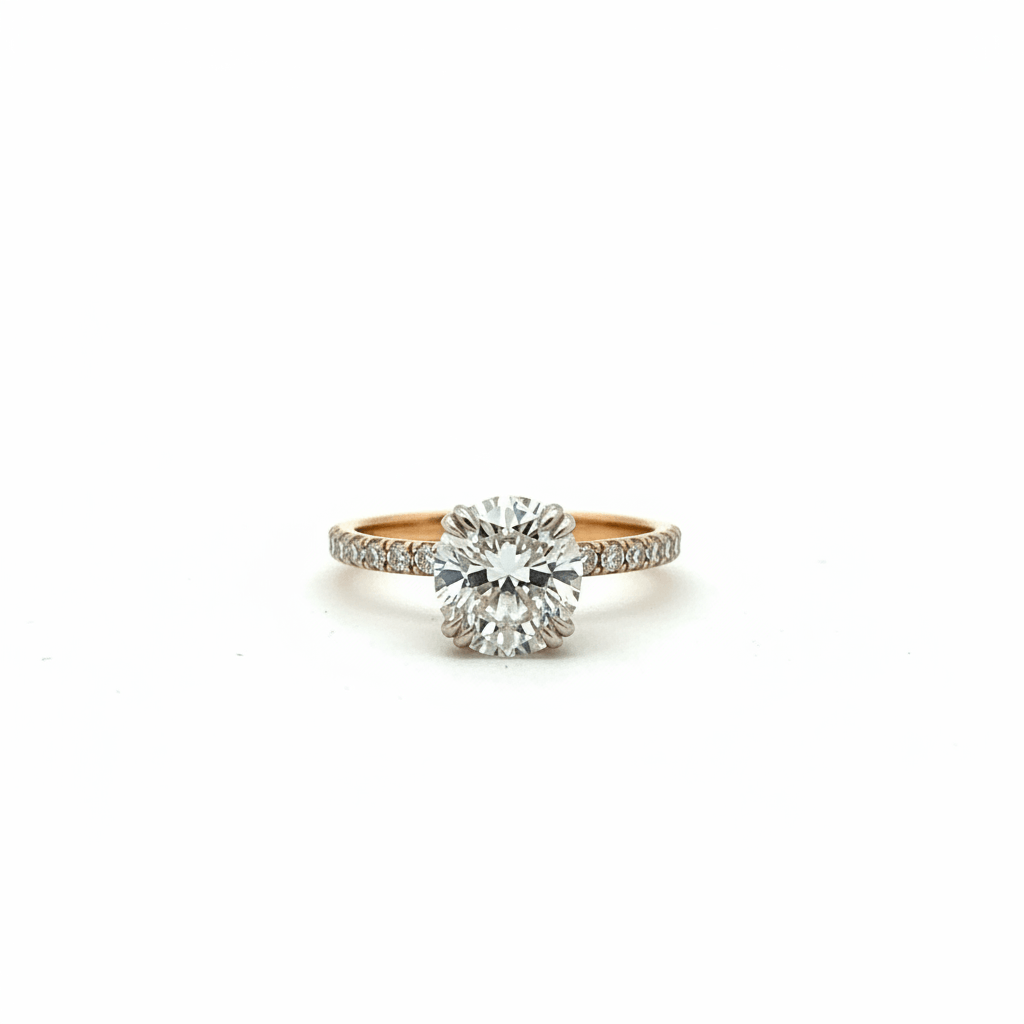
Lab-grown diamond engagement rings in Dubai provide buyers with considerable flexibility. They are available in classic solitaire designs, modern hidden-halo settings, detailed pavé rings, three-stone styles and fully customised designs.
Confirm laboratory-grown origin, report details, measurements and recorded grades before purchase.
Review proportions, brightness, symmetry, face-up size and visible clarity characteristics.
The setting, ring height, metal, size and future wedding band should suit the wearer’s routine.
QUALITY, DESIGN AND DAILY WEAR
However, not every laboratory-grown diamond offers the same quality or visual appearance. Two diamonds with similar grades can still look different because of their proportions, light performance, measurements and clarity characteristics.
This guide explains how to compare certified lab-grown diamonds, understand the 4Cs, select a suitable shape and setting, and plan a ring that suits the wearer’s style and daily routine.
DIAMOND ORIGIN
A lab-grown diamond engagement ring contains a diamond created in a controlled laboratory environment rather than formed naturally beneath the earth.
Laboratory-grown diamonds have the essential physical, chemical and optical characteristics associated with diamonds. They should not be confused with diamond alternatives such as cubic zirconia or moissanite.
The term “lab-grown” explains the diamond’s origin. It does not indicate whether the diamond has high or low quality.
Individual lab-grown diamonds vary according to:
Each diamond should therefore be reviewed individually.
A buyer should not assume that two lab-grown diamonds with the same carat weight will look identical when mounted in an engagement ring.
WHY BUYERS CHOOSE THEM
Lab-grown diamond engagement rings may appeal to buyers who want greater flexibility when balancing diamond size, quality and ring design.
Possible benefits include:
The choice should still reflect the wearer’s personal preferences.
Some people prefer a large solitaire with a simple band. Others may choose a smaller centre diamond surrounded by a halo or accompanied by side stones.
The best ring is not necessarily the design with the highest carat weight. It is the one that balances diamond quality, construction, comfort and personal meaning.
CERTIFICATION FIRST
Certification is one of the most important factors when purchasing a significant lab-grown diamond.
An independent diamond report records the assessed characteristics of the stone and identifies it as laboratory-grown.
Depending on the report and diamond, the information may include:
The certificate or grading report relates primarily to the diamond. It should not be confused with a jewellery valuation, purchase invoice or guarantee of future resale value.
Buyers seeking more information about diamond reports can read our guide to IGI-certified lab-grown diamonds in Dubai.
DOCUMENTED QUALITY
IGI reports are commonly used for laboratory-grown diamonds.
A grading report helps the buyer compare diamonds using documented characteristics rather than relying only on a product name or verbal description.
It can help confirm:
Certification does not mean every diamond with similar grades will look equally attractive.
Two diamonds may have the same colour, clarity and carat weight but display different brightness, proportions or visible shapes.
The report should therefore be used alongside visual inspection, videos and professional guidance.
REPORT VERIFICATION
Before completing a purchase, ask for the full report number and verify the information through the grading laboratory’s official report-checking service.
The verification process should include:
Entering the report number exactly as shown.
Confirming that the report identifies a laboratory-grown diamond.
Matching the shape and cutting style.
Comparing the carat weight.
Checking the measurements.
Reviewing the colour and clarity grades.
Confirming polish, symmetry and fluorescence.
Reviewing any comments or treatment disclosures.
Checking whether a laser inscription is recorded.
The online report details should match the document and diamond being presented.
Where a laser inscription is available, the jeweller may be able to show it under magnification.
CUT · COLOUR · CLARITY · CARAT
The 4Cs—cut, colour, clarity and carat weight—provide a structured way to compare lab-grown diamonds.
The best combination depends on the diamond shape, setting, metal and buyer’s priorities.
It is not always necessary to select the highest possible grade in every category.
A balanced diamond with attractive proportions may provide a better visual result than a diamond selected only because of its high colour or clarity grade.
Cut has a major influence on how a diamond reflects light.
A well-proportioned diamond can appear bright, lively and balanced. A poorly proportioned diamond may appear dark or smaller than expected even when its colour and clarity grades are high.
For round brilliant diamonds, buyers can review the formal cut grade along with:
For fancy-shaped diamonds, such as oval, pear, emerald, radiant and marquise cuts, visual examination becomes especially important.
Review:
Avoid sacrificing cut quality simply to reach a larger carat number.
A slightly smaller diamond with attractive proportions may look brighter and more impressive than a heavier stone with excessive depth.
Diamond colour should be considered together with the chosen metal and setting.
The visibility of colour can be influenced by:
White gold can create a bright, contemporary appearance, while yellow and rose gold produce a warmer contrast.
Some buyers may prefer a high colour grade, while others may be comfortable with a slightly warmer diamond if it allows more budget for cut, size or ring craftsmanship.
The central diamond and side diamonds should also appear visually coordinated.
Clarity refers to internal features called inclusions and external surface features called blemishes.
A higher clarity grade does not always create a noticeable difference during normal wear.
When comparing clarity, consider:
The clarity grade should also be considered according to diamond shape.
Step-cut diamonds, such as emerald cuts, have larger open facets that may make inclusions easier to notice. Brilliant-cut shapes can sometimes conceal small inclusions more effectively because of their light pattern.
The objective should be to select a visually clean diamond rather than paying automatically for the highest available clarity grade.
Carat measures the weight of a diamond, not its exact visible size.
Two diamonds with the same carat weight may have different face-up dimensions.
A diamond that carries too much weight in its depth may appear smaller from above. A well-proportioned diamond may appear broader and more balanced even when the weight is similar.
Compare:
This is especially important for oval, emerald, pear, marquise and radiant-cut diamonds.
DIAMOND SHAPE GUIDE
The diamond shape determines much of the ring’s personality.
The choice should be based on the wearer’s preferences rather than trends alone.
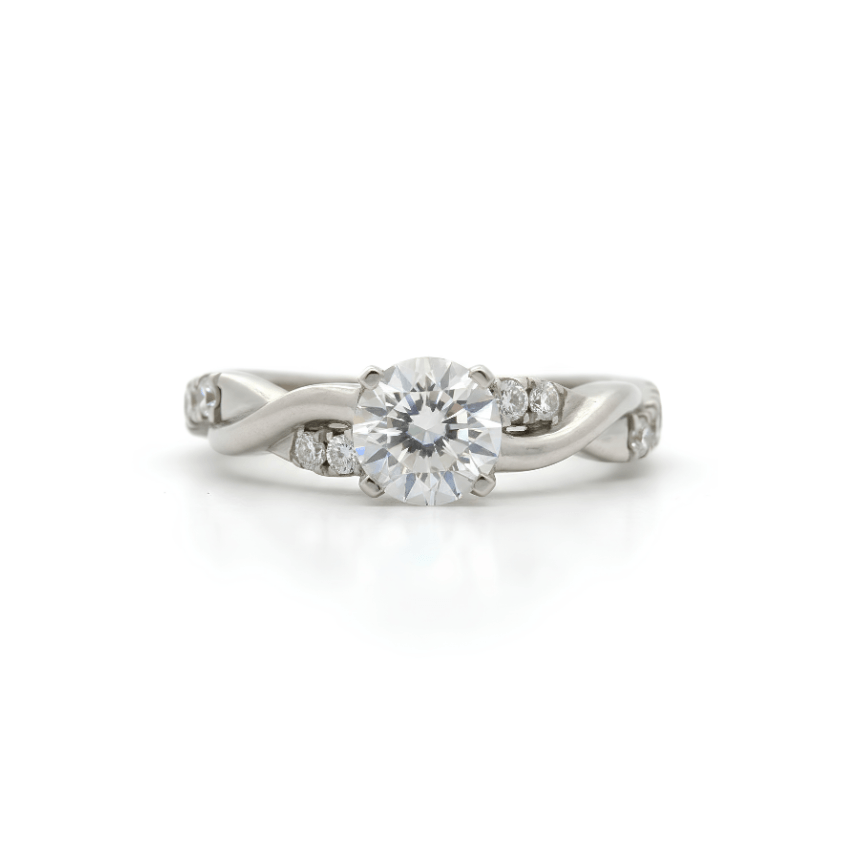
Round brilliant diamonds offer a classic appearance and strong sparkle.
They suit many settings, including:
A round diamond is a versatile choice for someone who prefers a timeless ring.
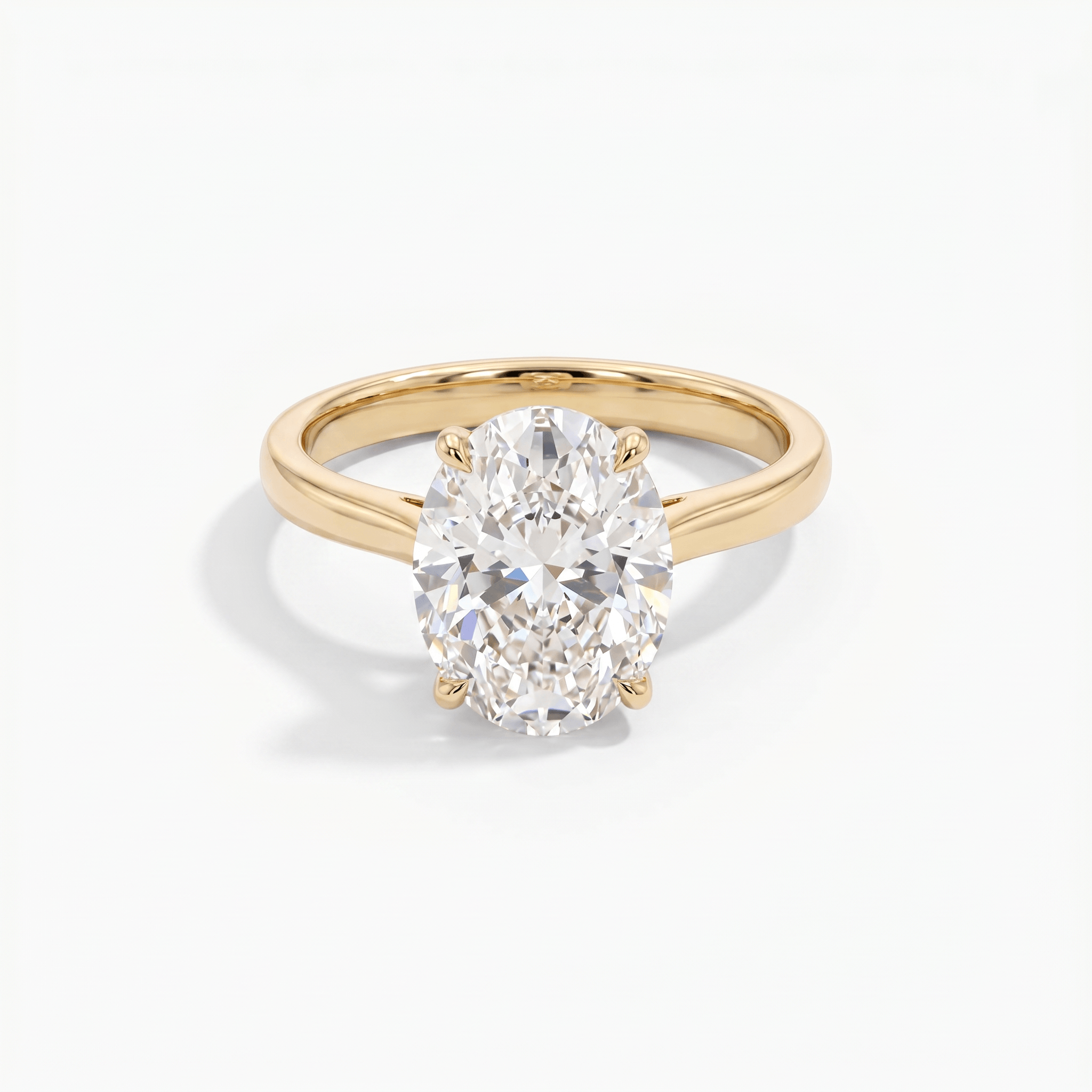
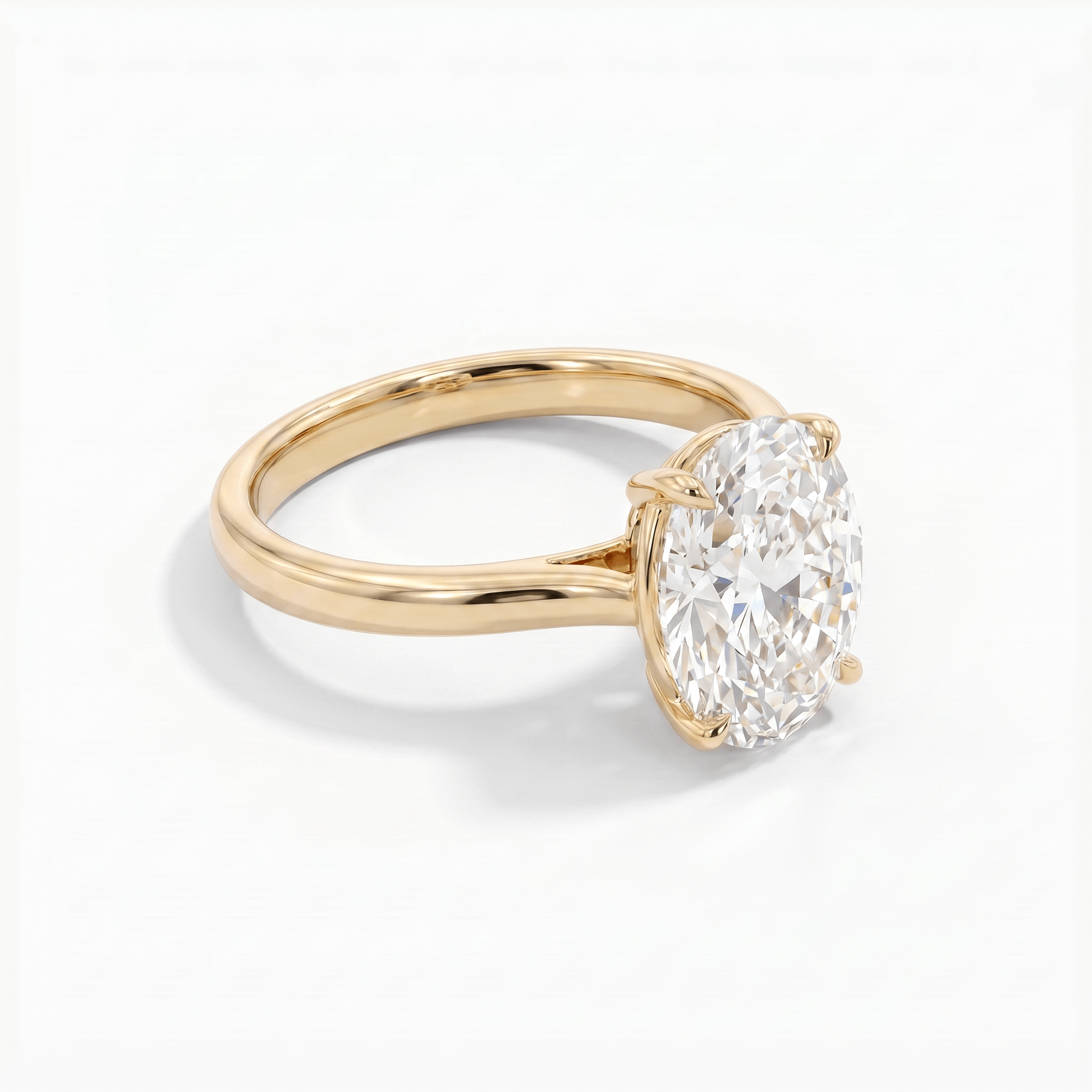
Oval diamonds have an elongated outline that can create greater finger coverage.
They are commonly used in:
When comparing oval diamonds, inspect the bow-tie effect.
A bow tie is a darker area that can appear across the centre of elongated diamond shapes. A mild bow tie may not be distracting, but a strong dark band can reduce the diamond’s visual appeal.
Also compare:
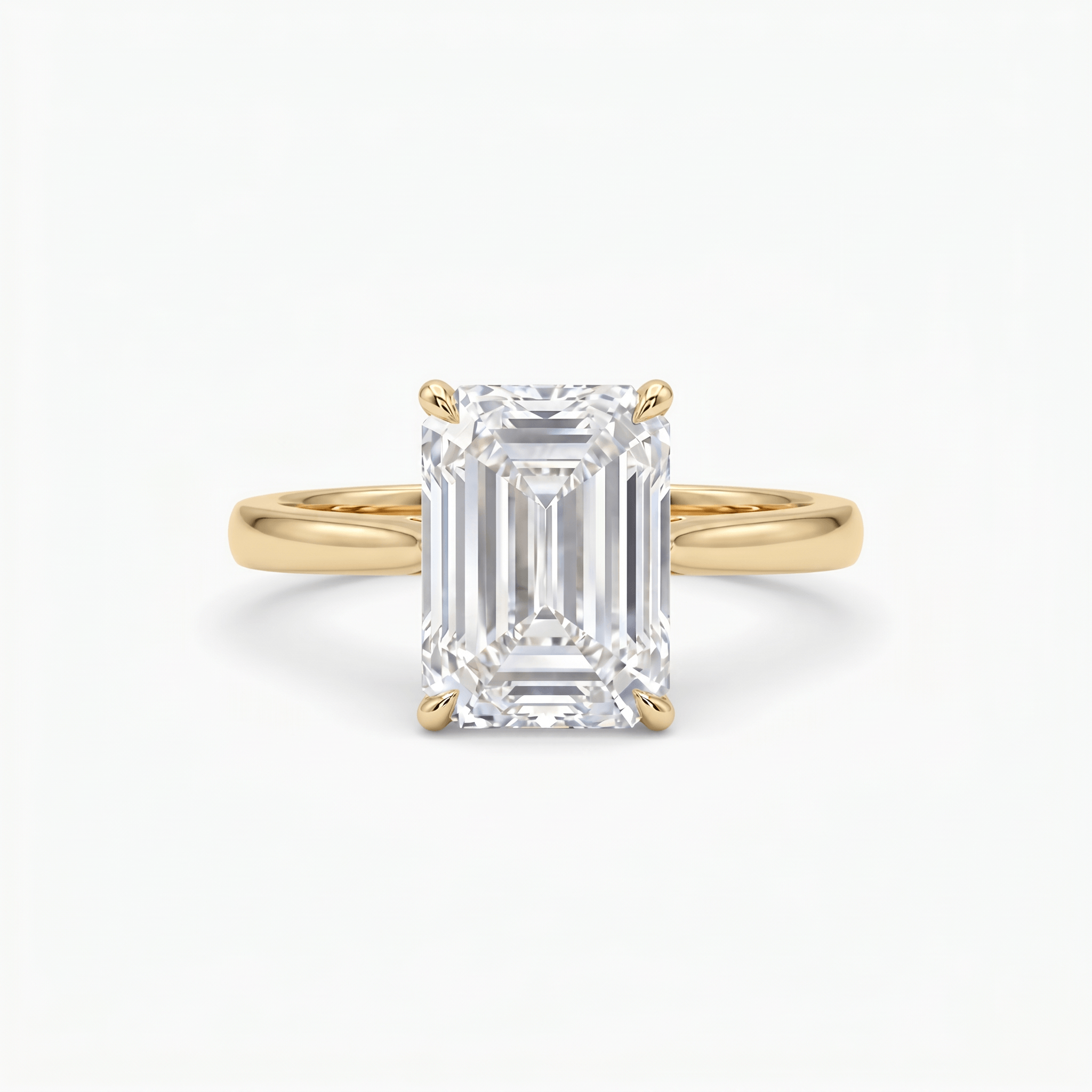
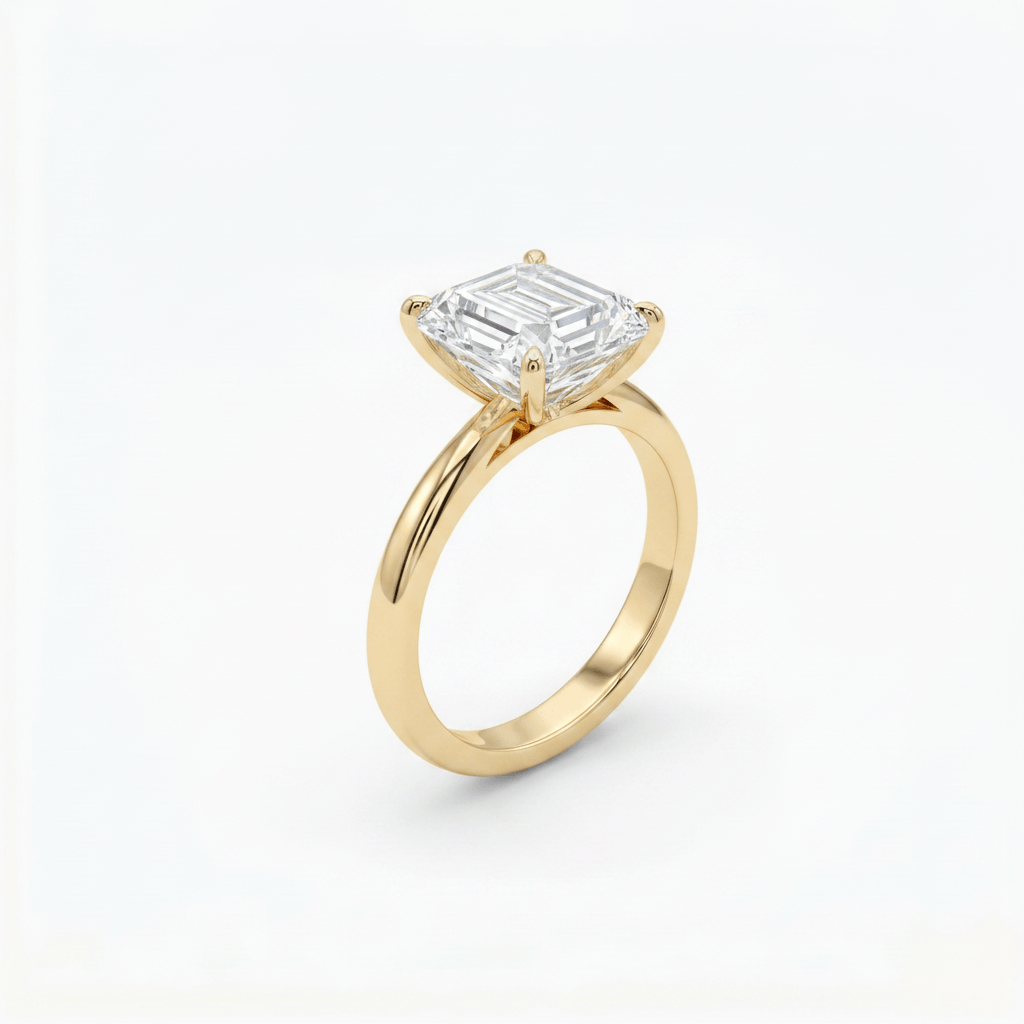
Emerald-cut diamonds feature long step facets and a rectangular outline.
Instead of intense brilliant sparkle, they produce broad flashes of light and a clean, structured appearance.
Because of their open facet pattern, buyers should pay close attention to:
Emerald-cut diamonds work well in solitaire, bezel and three-stone engagement-ring designs.
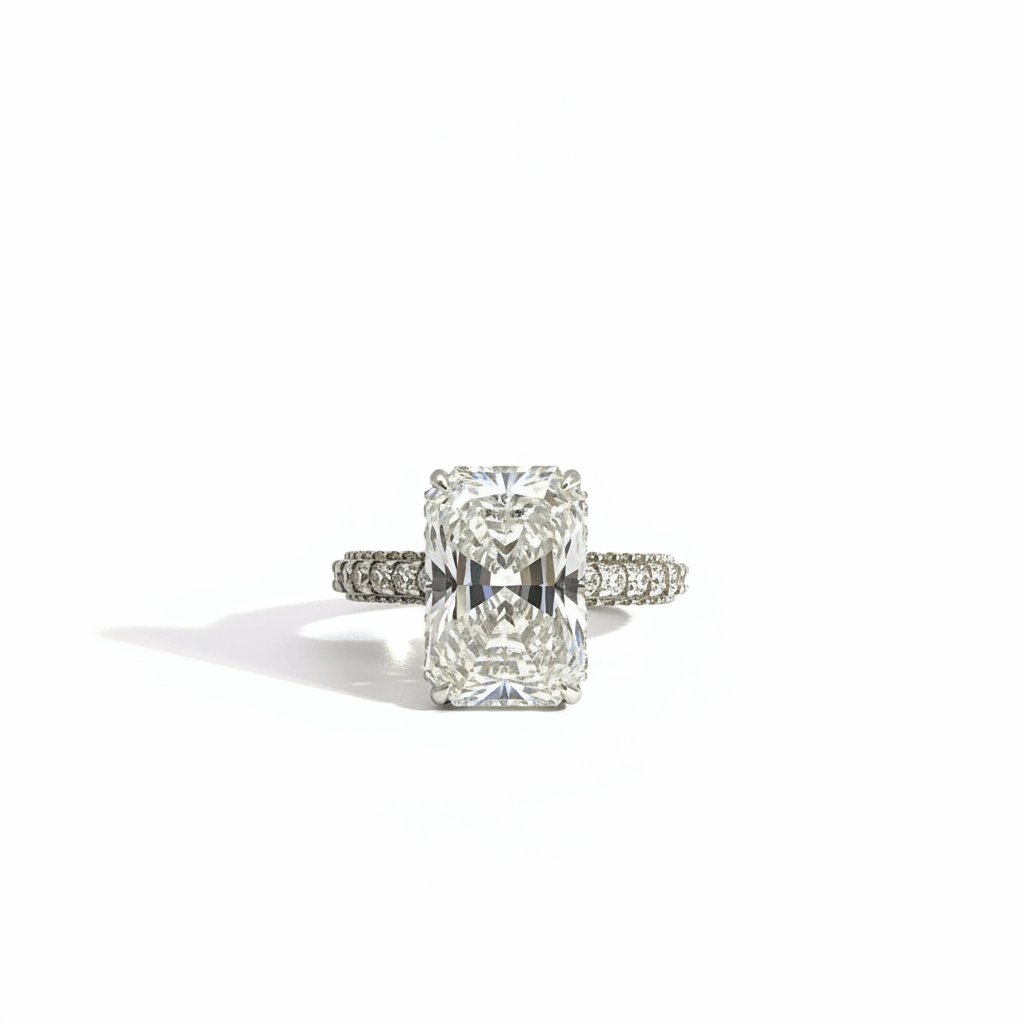
Radiant-cut diamonds combine a rectangular or square outline with a brilliant-style facet pattern.
They may suit buyers who want a structured shape with noticeable sparkle.
Review:
Radiant-cut diamonds pair well with pavé bands, halos and tapered side stones.
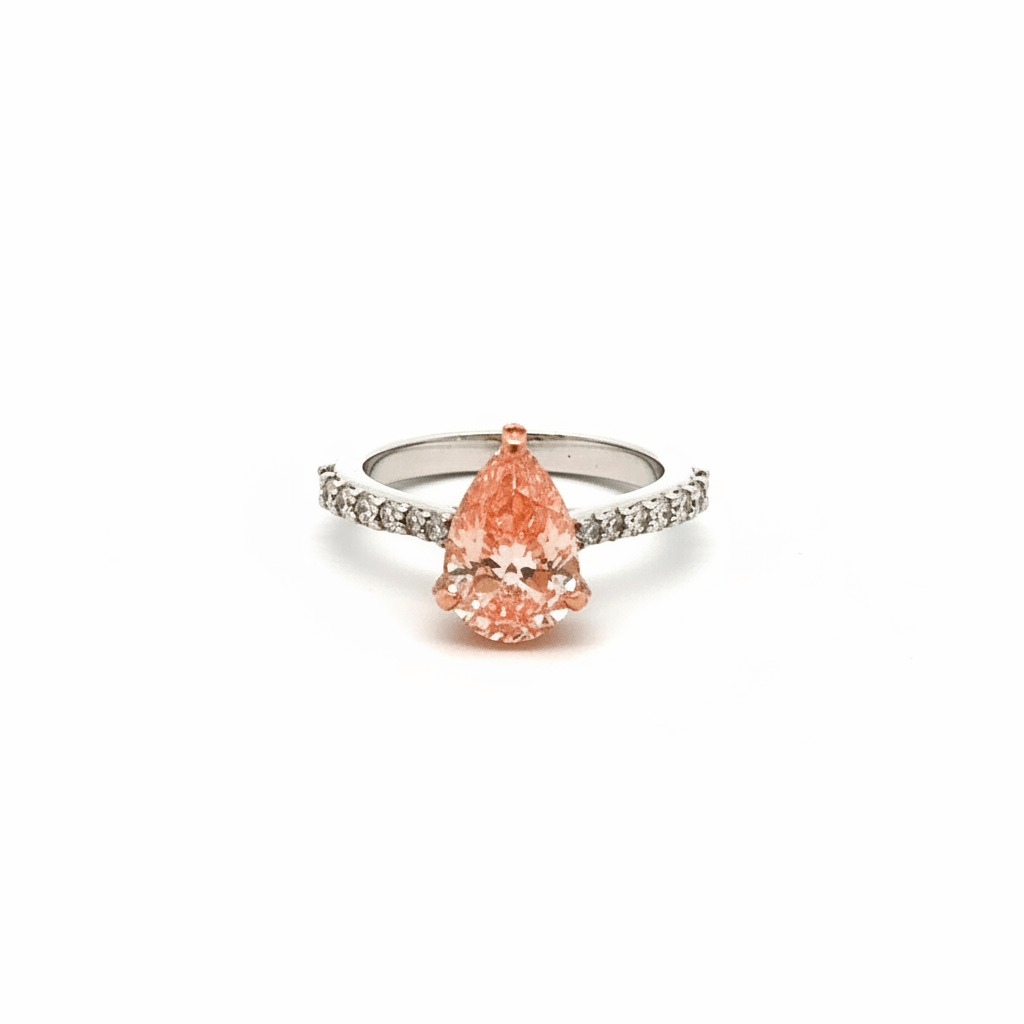
Pear-shaped diamonds combine a curved end with a pointed tip.
Their elongated outline creates an elegant and distinctive appearance.
Check:
The setting should include a suitable prong or protective feature around the tip.
Cushion-cut diamonds usually have a square or rectangular outline with rounded corners.
Their facet patterns can vary considerably.
Some display broad, defined flashes, while others have a more fragmented or crushed-ice appearance.
Because two cushion diamonds can look very different despite similar grades, review actual videos and face-up images before making a decision.
Princess-cut diamonds have a square outline with pointed corners.
They create a modern, geometric appearance.
The setting should protect the corners because these areas can be more vulnerable to impact.
Suitable options include:
Marquise diamonds have an elongated shape with two pointed ends.
They can provide substantial finger coverage and create a lengthening effect.
Compare:
The setting should secure both pointed ends properly.
SETTING AND SECURITY
The setting holds the diamond and determines the ring’s overall style, height and practicality.
It should provide secure construction without hiding too much of the centre stone.
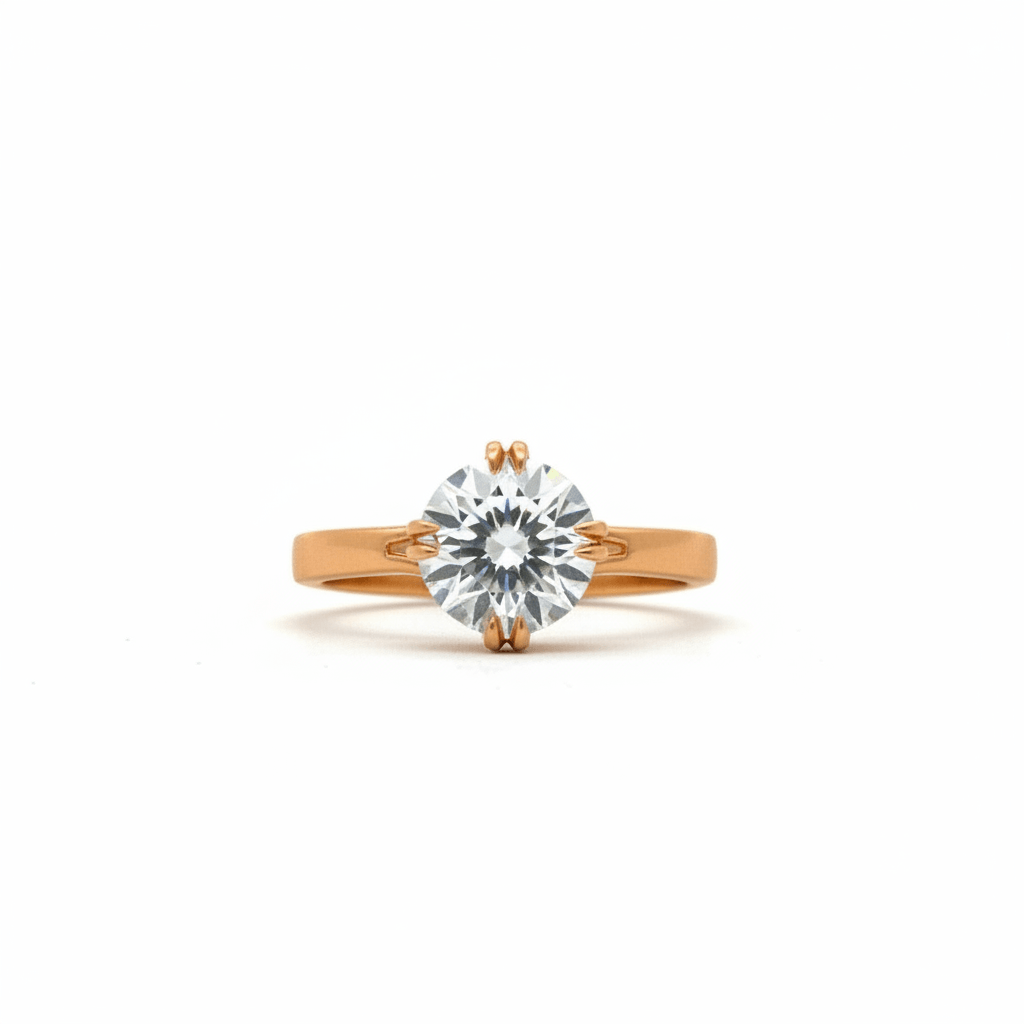
A solitaire places the focus on one centre diamond.
It is suitable for buyers who prefer:
A solitaire may still include a hidden halo, decorative basket or cathedral shoulders.
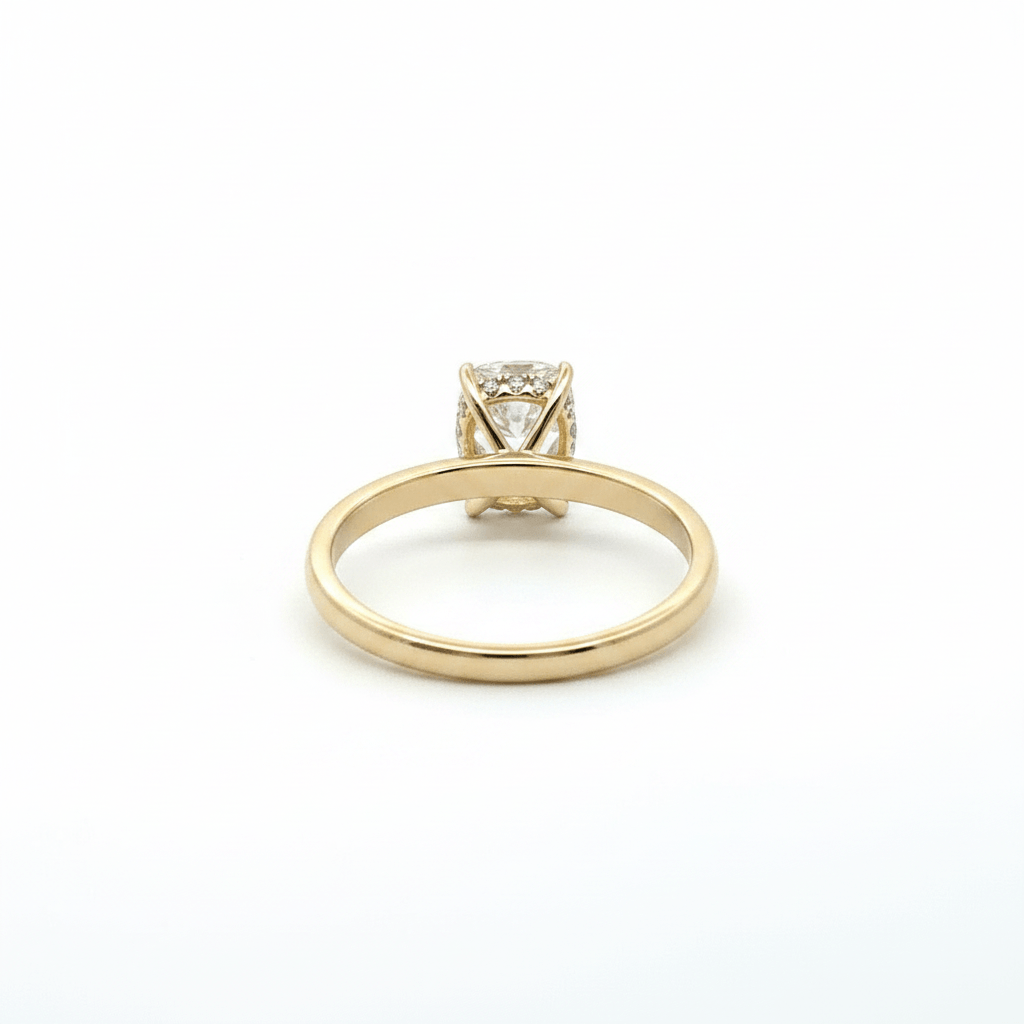
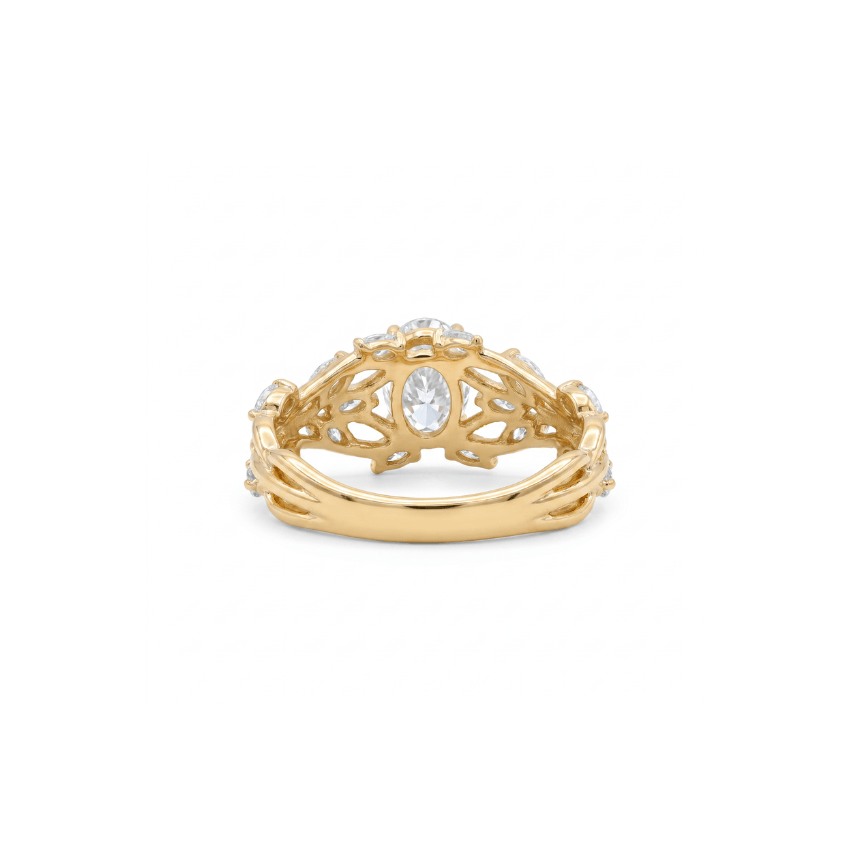
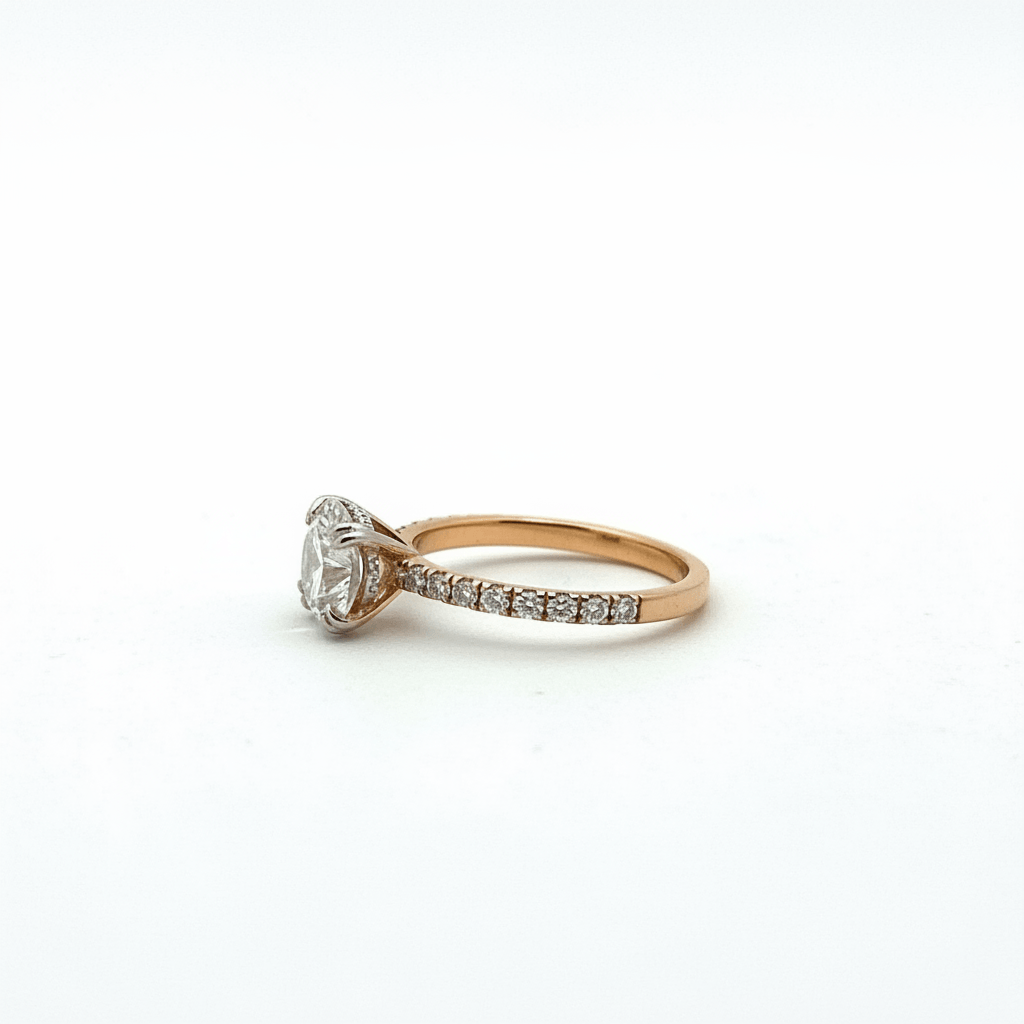
A hidden halo places small diamonds beneath the centre stone.
The additional diamonds are more visible from the side than from directly above.
This style may suit buyers who want a classic face-up appearance with extra detail in the ring’s profile.
Check that the halo is securely constructed and does not make the ring unnecessarily high.
A traditional halo surrounds the centre diamond with smaller stones.
It can create a larger visible outline and additional sparkle.
Review:
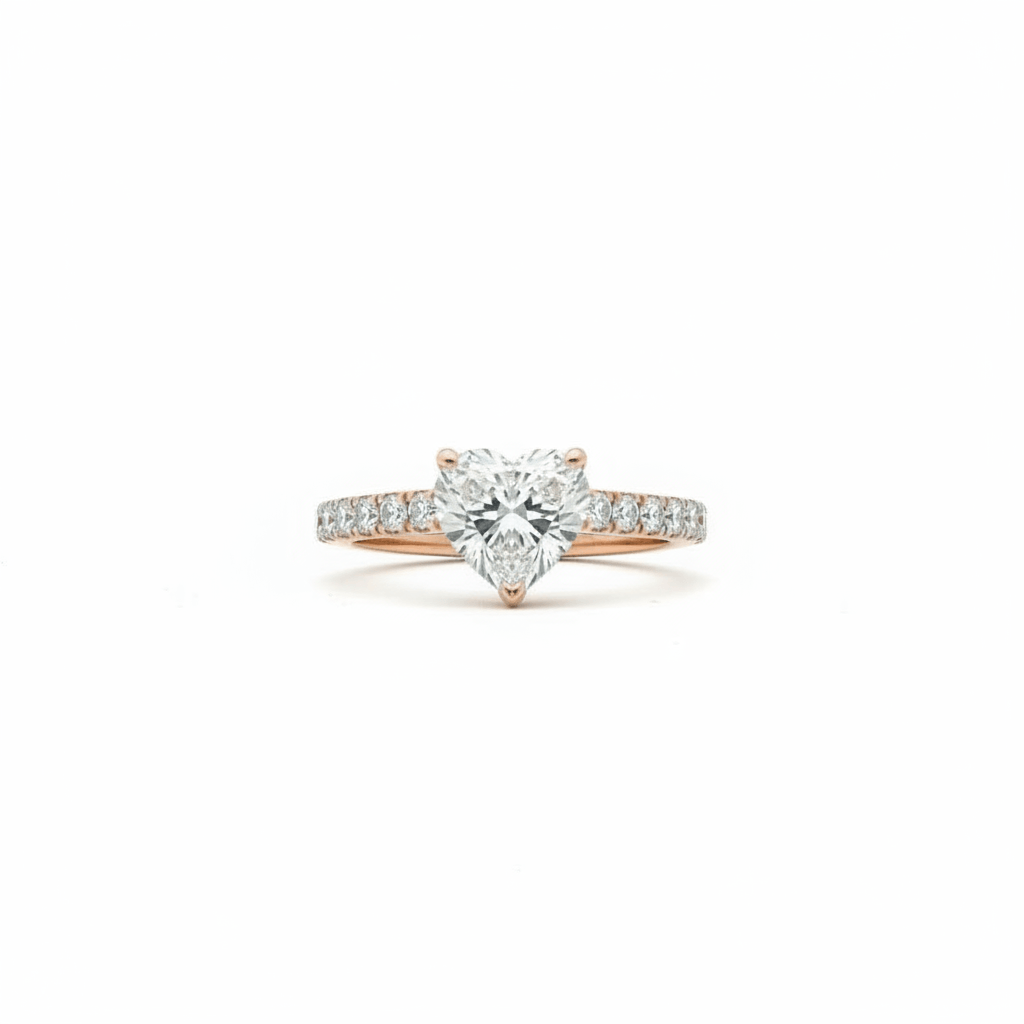
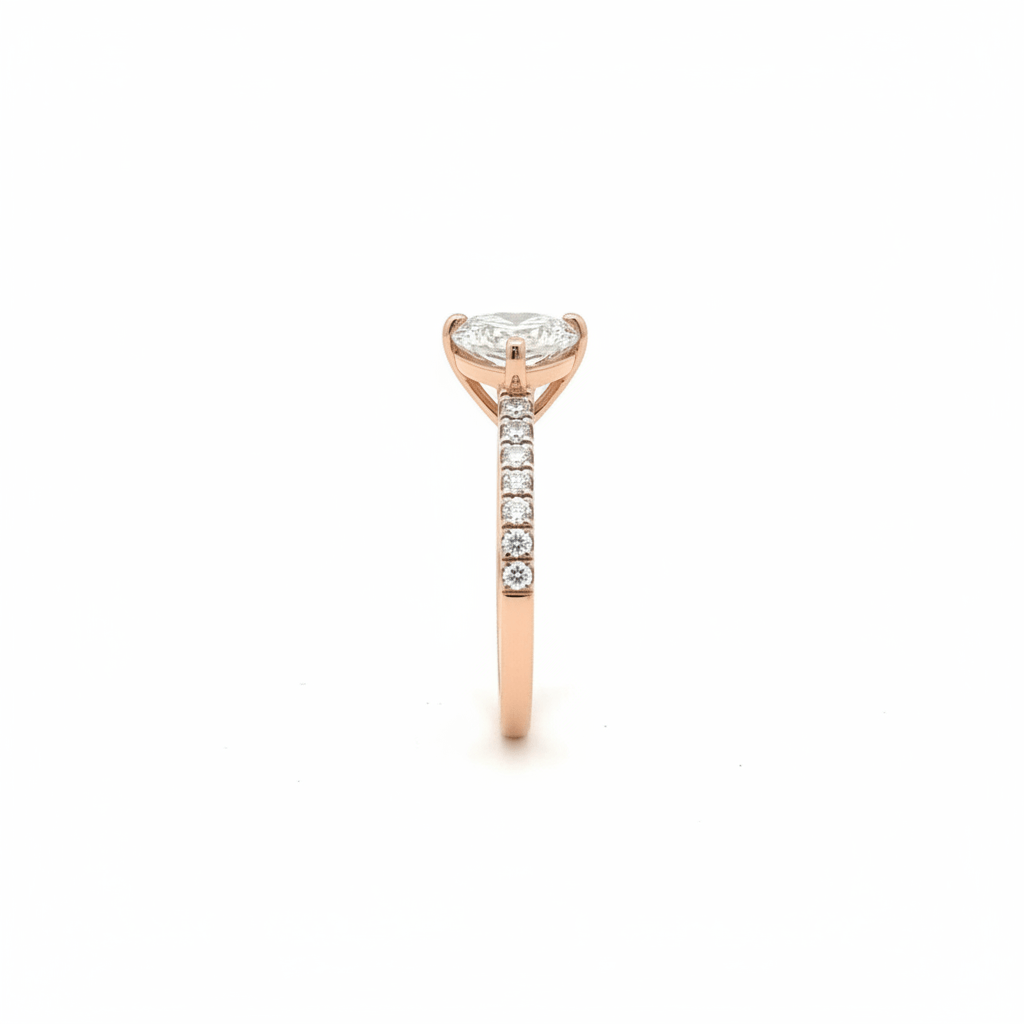
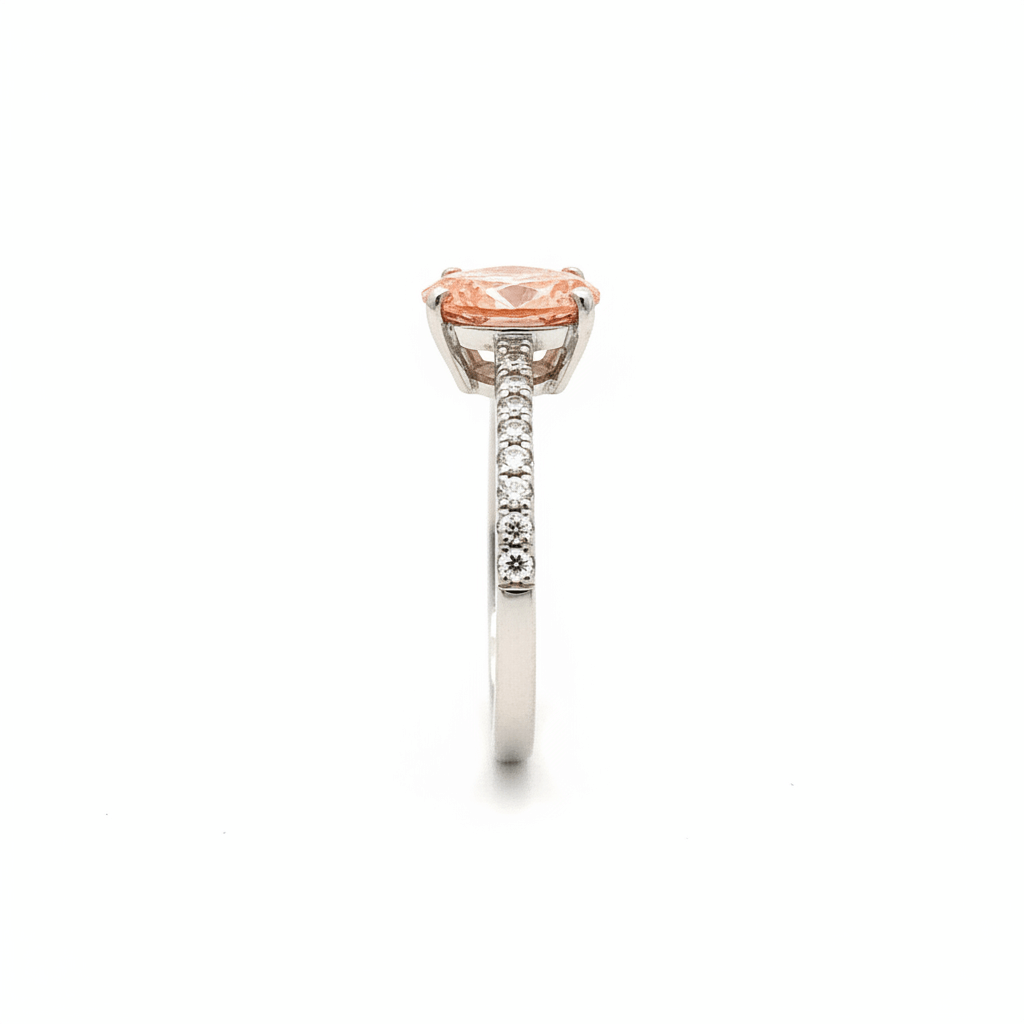
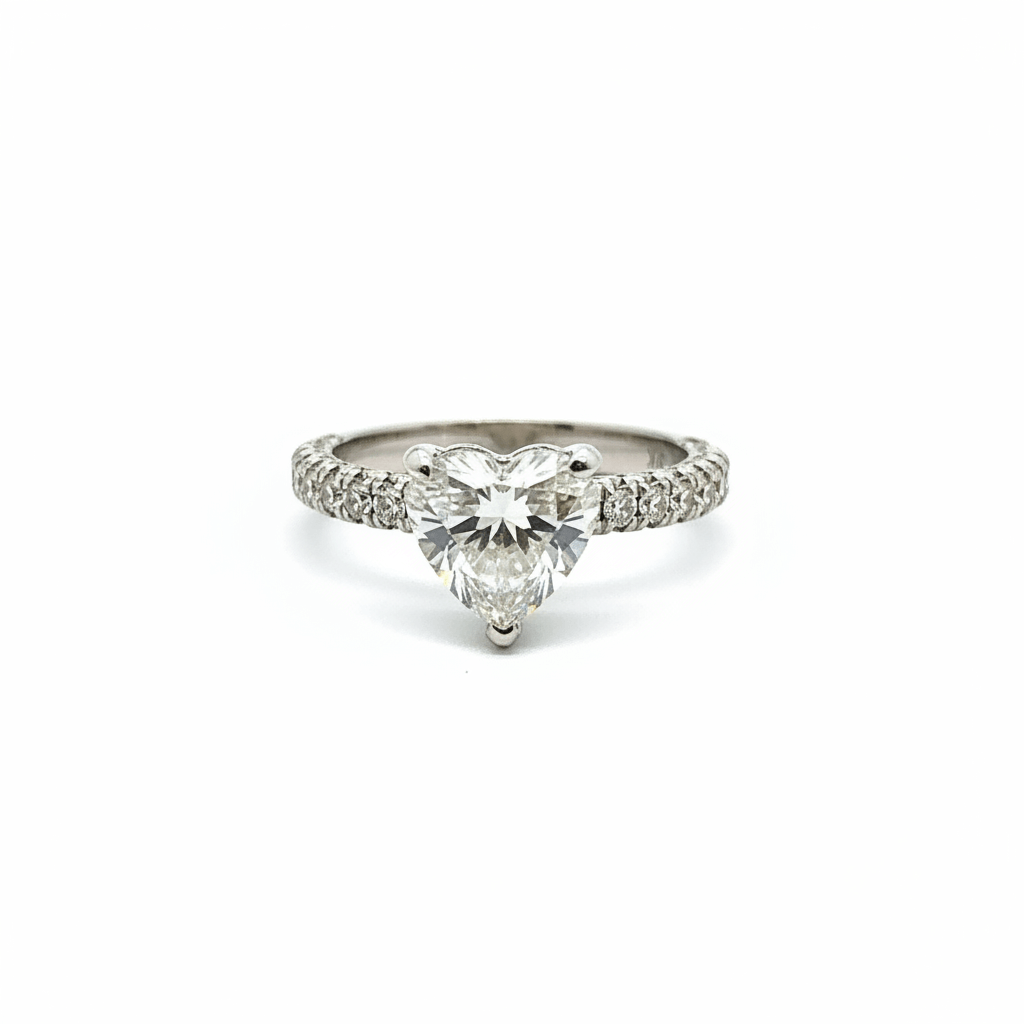
A pavé band includes small diamonds along the ring’s shoulders.
It adds sparkle while maintaining focus on the central diamond.
The band should not be made excessively thin simply to create a delicate appearance. It must remain proportionate to the centre stone and suitable for regular wear.
A three-stone ring contains a centre diamond with one stone on each side.
The side diamonds may match the central shape or use complementary shapes.
Popular combinations include:
The colour, proportions and setting heights of all three stones should appear coordinated.
A bezel setting surrounds all or part of the diamond with metal.
It offers a smooth and contemporary appearance and can provide additional protection around the diamond’s edge.
This style may be suitable for someone with an active lifestyle or a preference for low-profile jewellery.
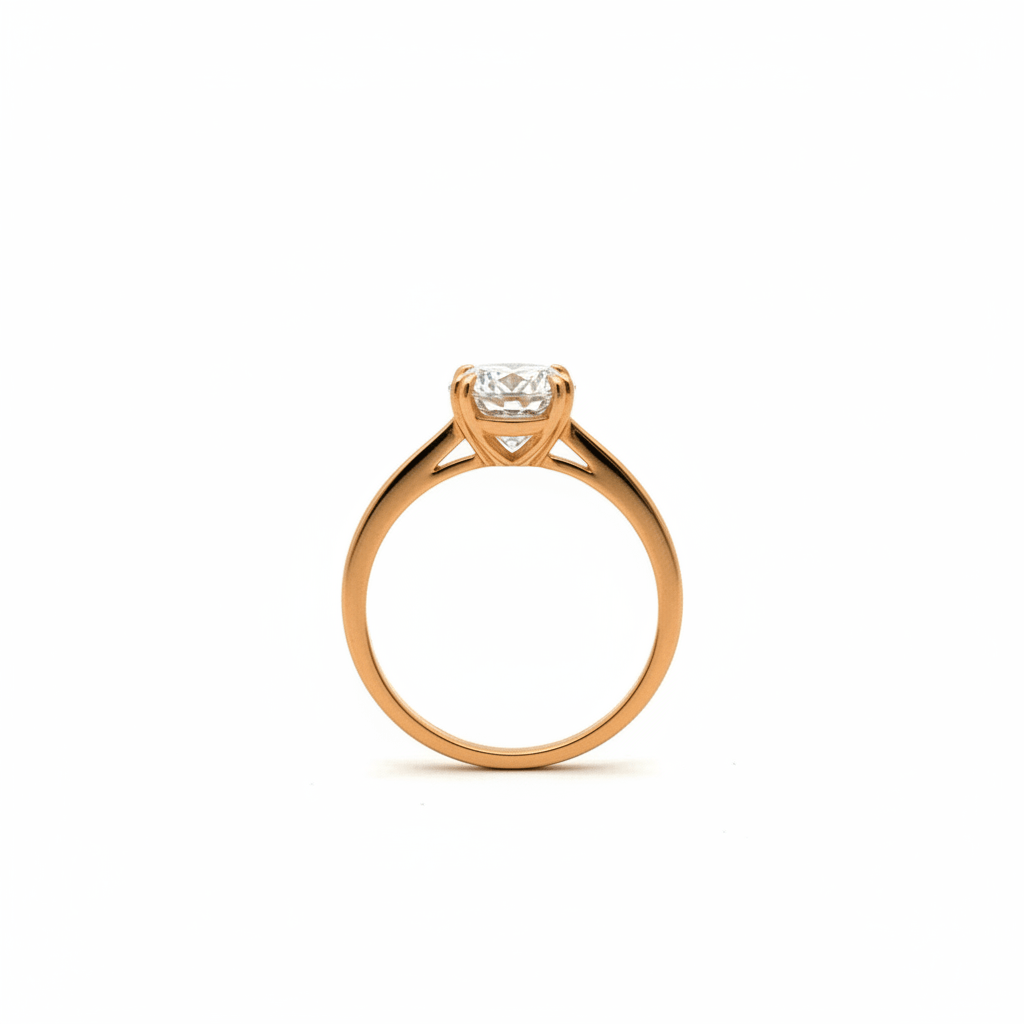
A cathedral setting has raised shoulders that rise toward the centre diamond.
It can create an elegant side profile and make the diamond appear more prominent.
Before choosing this style, confirm whether a straight wedding band can sit comfortably beside it.
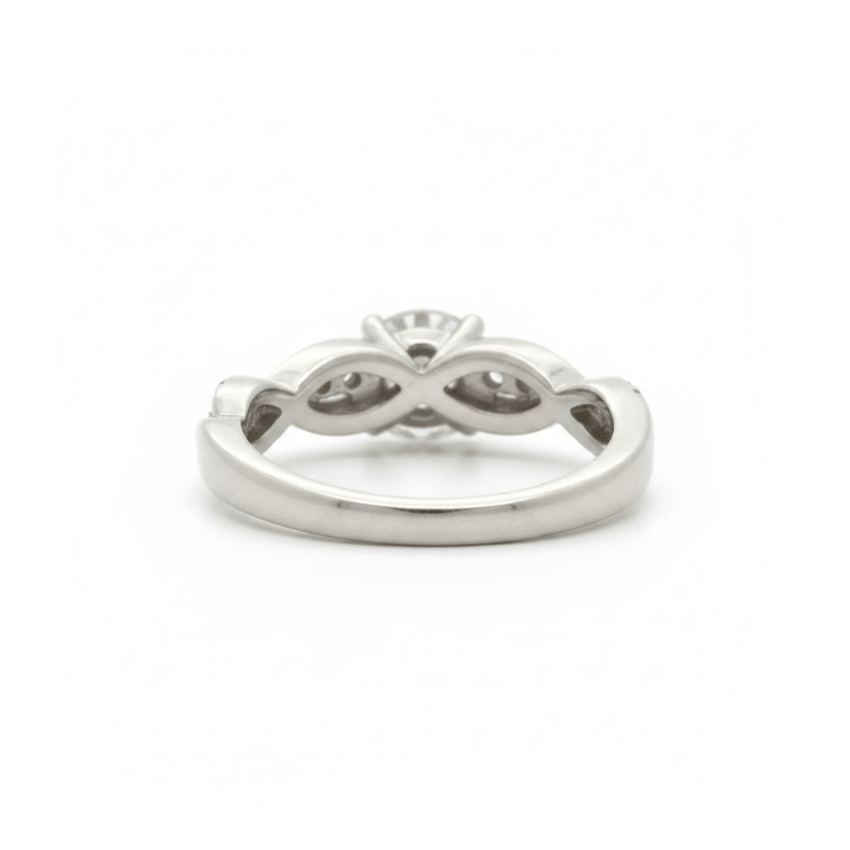
A low-profile ring keeps the centre diamond closer to the finger.
It may be suitable for someone who:
A lower setting may require a shaped or contoured wedding band, so future band compatibility should be considered.
METAL CHOICE
The metal influences the ring’s appearance, maintenance, weight and durability.
White gold creates a bright, contemporary appearance and complements colourless-looking diamonds.
It is widely used for solitaire, halo and pavé engagement-ring designs.
Depending on wear, white gold may require periodic maintenance of its surface finish.
Yellow gold produces a warm and traditional appearance.
It can create an attractive contrast with a lab-grown diamond and may suit classic, vintage or culturally inspired designs.
A two-tone design can combine a yellow gold band with a white metal setting around the centre diamond.
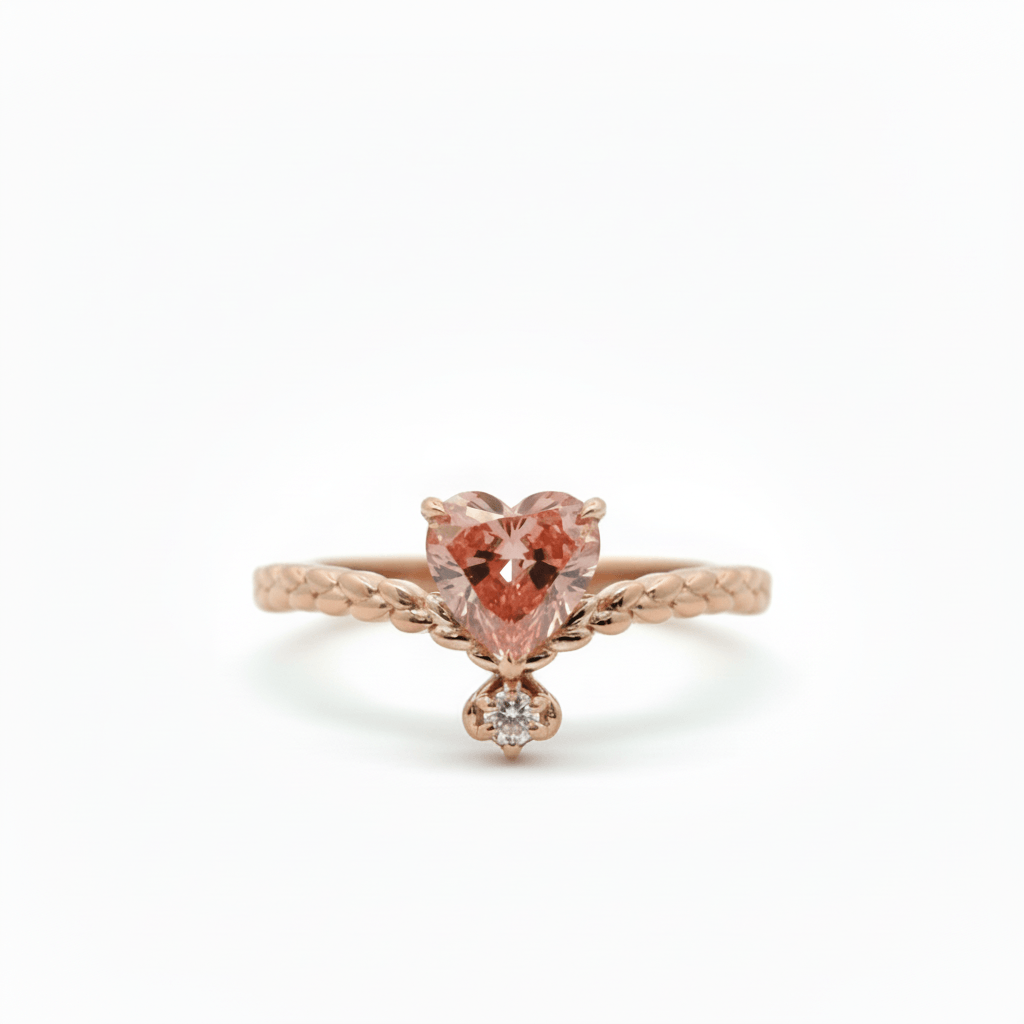
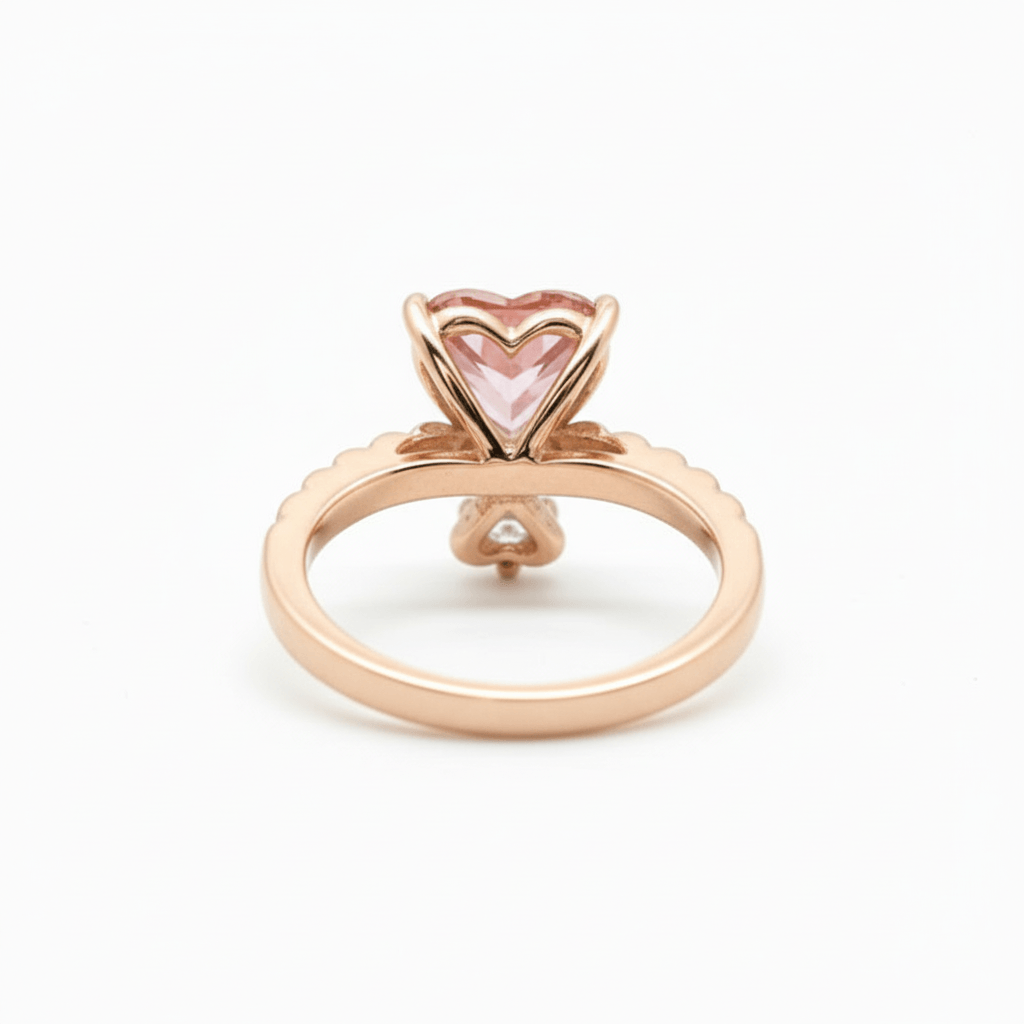
Rose gold has a soft pink tone and can create a romantic or modern appearance.
It may work well with:
Platinum is naturally white and has a dense, substantial feel.
The choice between platinum and gold should consider:
DIAMOND AND SETTING TOGETHER
The budget should cover the complete ring rather than only the centre diamond.
Allow for:
A common mistake is spending nearly the full budget on the centre diamond and selecting an overly light or unsuitable setting.
The setting should be proportionate to the size and shape of the diamond.
For a separate explanation of ring cost factors, read our engagement ring price guide for Dubai.
GROWTH METHODS
Laboratory-grown diamonds are commonly produced using CVD or HPHT methods.
The growth method should not be treated as the only indicator of quality.
Diamonds produced through either process should be compared according to their individual:
A well-cut diamond should not be rejected merely because of its production method, and a poorly proportioned diamond should not be selected only because one growth process is preferred.
Focus on the actual diamond and its grading information.
CHOOSE THE RIGHT PROCESS
Both ready-made and custom rings can be suitable depending on the buyer’s needs.
A ready-made ring may be appropriate when:
Confirm whether the centre diamond and ring setting are documented separately and whether resizing is possible.
A custom ring may be more suitable when:
A typical custom process may include:
Allow sufficient time for design revisions, production and resizing.
Our custom engagement ring process in Dubai explains these stages in more detail.
EVERYDAY PRACTICALITY
An engagement ring is normally worn frequently, so the design should suit the wearer’s routine.
Consider whether the wearer:
A high setting with exposed prongs may not be practical for every lifestyle.
A bezel, low-profile solitaire or protected halo may provide a smoother design.
The ring should still be removed during activities that could expose it to heavy impact, chemicals or unnecessary pressure.
FIT AND COMFORT
Correct sizing affects both comfort and security.
A loose ring may rotate or slip from the finger. A tight ring may become uncomfortable, particularly in warm weather.
Ring fit can be affected by:
Wider bands may feel tighter than slim bands in the same measured size.
A ring with a heavy centre setting may also rotate if the band is too loose or narrow.
FUTURE BAND COMPATIBILITY
The engagement ring and future wedding band should be considered together.
Ask whether a straight wedding band can sit flush beside the setting.
Some designs may require:
Planning both rings together can help create a more comfortable and coordinated set.
VISUAL INSPECTION
Showroom lighting can make diamonds appear especially bright.
Where possible, view the diamond under:
Look for:
For remote selection, request clear videos showing the diamond moving from different angles.
A still image alone may not reveal how the diamond handles light.
FINAL QUALITY CHECK
A grading report describes the centre diamond, but the finished ring also requires careful inspection.
Check:
The diamond should sit straight within the setting.
Prongs should appear secure and balanced without catching easily on clothing.
LONG-TERM CARE
Before purchasing, ask which services are available after the sale.
These may include:
Confirm which services are included and which may involve an additional cost.
BUYING MISTAKES
Carat measures weight rather than visible size or beauty.
Compare proportions, measurements and face-up appearance.
A verbal product description is not a replacement for an independent diamond report.
Verify the report and compare it with the physical diamond.
Very high colour or clarity grades may not always create a noticeable improvement.
Prioritise characteristics that affect the actual appearance of the diamond.
The setting protects the diamond and supports regular wear.
Do not compromise construction merely to increase the centre stone’s size.
A popular diamond shape may not suit the wearer’s style, hand or lifestyle.
Review the jewellery they already enjoy wearing.
Check the ring profile and band fit before finalising the engagement-ring design.
The report provides important grading information, but it cannot fully communicate how attractive the diamond looks to an individual buyer.
Use certification and visual inspection together.
BEFORE YOU BUY
Before buying a lab-grown diamond engagement ring, ask:
Is the centre stone identified as laboratory-grown?
Which independent laboratory issued the report?
Can the report number be verified online?
Is a laser inscription recorded?
What are the diamond’s exact measurements?
What are its colour and clarity grades?
Is a cut grade provided where applicable?
Are treatments disclosed on the report?
Can the diamond be viewed under different lighting?
Can I see a clear magnified video?
Which metal and purity are used?
Is the setting suitable for regular wear?
Can the ring be resized?
Will a straight wedding band fit beside it?
Is customisation available?
What after-sales services are included?
FINAL CHECKLIST
Before finalising the ring, confirm that:
LAB-GROWN RING FAQS
Yes. Lab-grown diamonds can be used in solitaire, halo, three-stone, pavé, bezel and customised ring designs.
The individual diamond’s certification, quality and visual appearance should be reviewed before purchase.
Independent grading is advisable for a significant centre diamond.
The report should identify the diamond as laboratory-grown and document its assessed quality characteristics.
The report number can normally be entered into IGI’s official verification service. The online details should be compared with the supplied document and diamond.
Cut, proportions and overall visual appearance should be strong priorities.
Colour and clarity should then be balanced according to the diamond shape, metal and planned budget.
Elongated shapes such as oval, pear and marquise diamonds may provide greater face-up coverage in some comparisons.
The actual appearance still depends on the individual diamond’s dimensions and proportions.
Yes. Buyers can select the centre diamond, shape, setting, metal, side stones, band style and personal design details.
Many solitaire and partially set rings can be resized.
Full-eternity bands and rings with diamonds around most of the band can be more difficult to adjust.
A BALANCED ENGAGEMENT RING CHOICE
Choosing a lab-grown diamond engagement ring in Dubai requires a careful review of the diamond and the complete ring design.
Begin by confirming the wearer’s preferences and setting a total budget for both the diamond and setting. Choose an independently graded stone and verify its report before completing the purchase.
Review the 4Cs, but do not select a diamond based on grades alone. Compare its measurements, proportions, shape and appearance under different lighting.
Select a setting that secures the diamond, suits the wearer’s lifestyle and works with the future wedding band. The metal, band width and setting height should create a comfortable and structurally balanced ring.
At Laxmi Jewellers, buyers can explore certified lab-grown diamonds and personalised ring designs in Dubai. Comparing certification, diamond quality, setting construction and long-term wear together can help buyers select a meaningful ring suited to the proposal and the person who will wear it.
CHOOSE WITH CONFIDENCE
Compare certification, proportions, visual performance, setting construction, comfort and wedding-band compatibility before finalising the engagement ring.