

Jewellery making guide · Laxmi Jewellers Dubai
Lost-Wax Casting in Jewellery: From Model to Finished Metal
Follow the controlled journey from a wax or castable-resin pattern through investment, burnout and metal casting to bench finishing and stone setting.
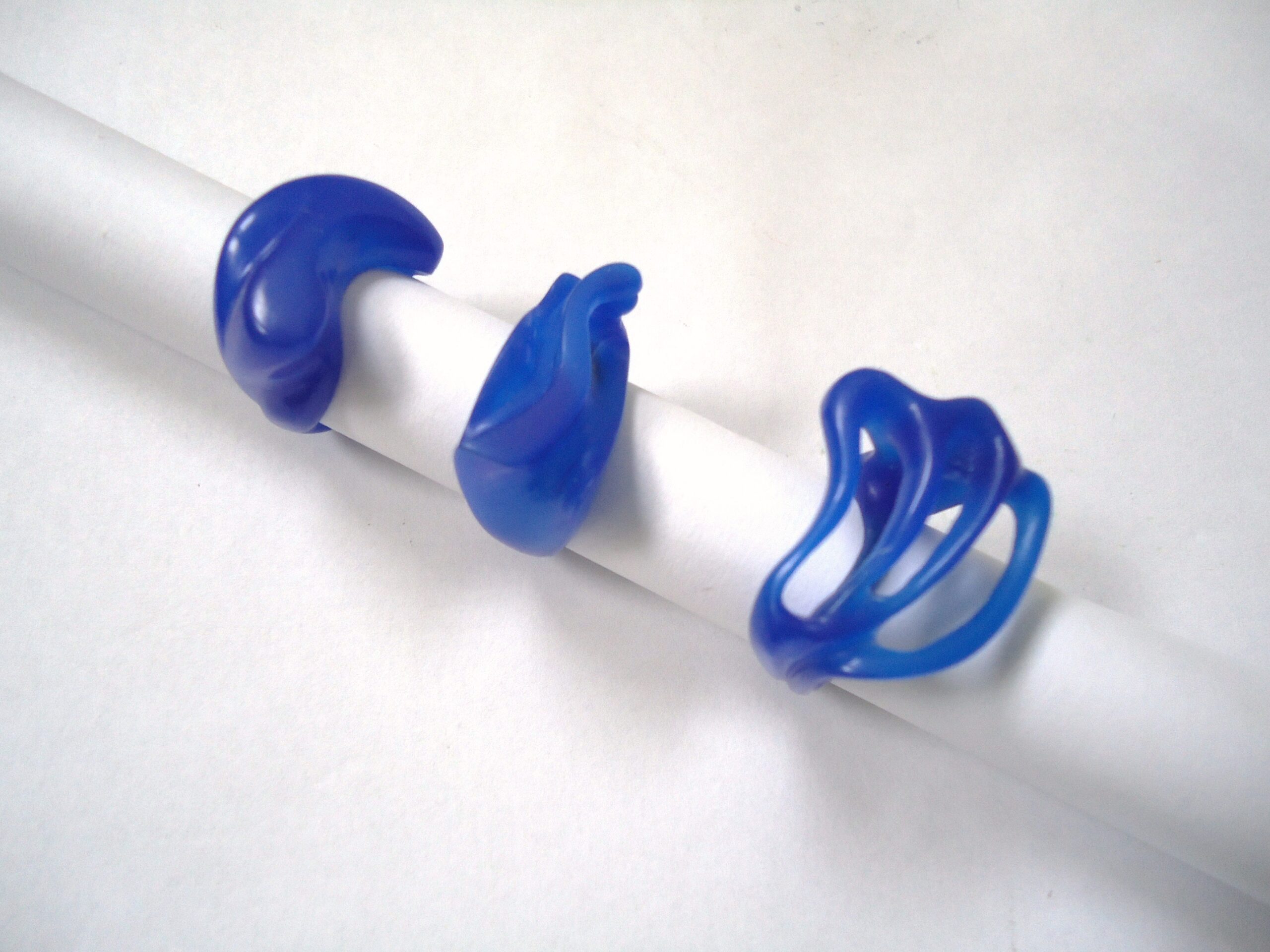
Lost-wax casting is a jewellery manufacturing process in which a detailed wax or castable-resin pattern is surrounded by heat-resistant investment material, removed during a controlled burnout, and replaced by molten metal. The resulting casting is only the beginning of the finished jewel: it still needs cleaning, inspection, bench work, setting and surface finishing.
A model establishes the shape. Sprues create a route for metal, investment forms the temporary mould, and burnout removes the expendable pattern. A workshop then fills the cavity using a casting method suited to its equipment, alloy and design. After the metal cools, the casting is released, separated and refined. Each stage can affect dimensions and surface quality, so a successful result depends on coordinated design, material and production decisions—not on one automatic copy command.
Why the process is called lost-wax casting
The name describes the fate of the pattern. The jewellery form is first represented in wax, or in a compatible printable material designed to burn out. Once that pattern is invested and heated through the specified cycle, it is consumed or evacuated, leaving a negative cavity. Molten alloy occupies that space and becomes the metal version of the model.
The pattern is therefore expendable. If a workshop needs several pieces, it may inject multiple waxes from a mould, print multiple castable patterns, or combine individual patterns on a shared tree. Repetition can improve production efficiency, but it does not make every later stage identical. Investment mixing, burnout, metal behaviour, sprue placement, cooling and finishing all still require control.
Direct wax or hand model
A maker can carve, build or modify wax by hand. This approach is useful for sculptural judgement and tactile changes, although the model must still allow for casting and finishing requirements.
Digital model and castable pattern
A CAD file may be printed in castable resin or wax. Digital precision helps define repeatable geometry, but printing, cleaning and burnout must match the selected pattern material.
The model must work as a future metal object
A convincing shape is not enough. Before the pattern is produced, the design needs suitable wall thicknesses, transitions, openings, stone seats, assembly points and allowances for the work that follows casting. A sharp internal corner, abrupt heavy-to-thin section or inaccessible surface may behave differently from a simple on-screen render.
For a commissioned piece, keep design approval separate from production assumptions. Laxmi’s jewellery CAD approval checklist explains how to confirm the exact revision, dimensions, profiles and stone plan before sign-off. The manufacturer then evaluates how those decisions translate into a pattern, sprue arrangement, alloy and finishing route.
If the design contains a ring setting, it also helps to identify the structural parts correctly. The head, gallery, shoulders and shank each create different engineering and finishing requirements. Those labels make it easier to discuss where metal must remain, where stones will be seated and which surfaces need access for setting and polishing.
Spruing, treeing and investment prepare the pattern for metal
A sprue is attached to the pattern to provide a path between the casting reservoir and the jewellery cavity. Several patterns can be connected to a central trunk to form a tree. The exact number, position and section of these channels are technical decisions: metal must reach the design effectively, while the eventual attachment points must remain practical to remove and finish.
The tree is placed inside a flask. A fluid investment material is mixed and introduced around it, then allowed to set. Investment is not ordinary decorative plaster; it is a specialist refractory mould material selected for the casting system and alloy. Mixing ratio, handling, air management and timing matter because bubbles or weak areas can transfer defects to the metal surface.
| Stage | Purpose | A useful quality question |
|---|---|---|
| Pattern preparation | Creates the exact expendable form and removes avoidable surface flaws. | Does the model reflect the approved dimensions and production material? |
| Spruing and treeing | Connects the model to the metal feed system. | Are attachment positions planned around filling and later clean-up? |
| Investment | Forms a heat-resistant mould around the pattern. | Is the investment and mixing method suitable for the pattern and alloy? |
| Burnout | Removes the pattern and conditions the mould for casting. | Does the cycle follow the pattern and investment suppliers’ requirements? |
| Casting | Moves molten alloy into the prepared cavity. | Which controlled method and metal preparation suit this design? |
| Bench finishing | Turns a rough casting into a refined, wearable component. | Which surfaces, joints, settings and finishes still require hand work? |
Burnout and casting are controlled workshop operations
The invested flask follows a scheduled heating cycle that removes the wax or castable resin and prepares the mould. Different pattern materials do not behave identically. A workshop should follow compatible investment and burnout guidance rather than treating every printed resin like conventional injection wax. Incomplete removal can contaminate the cavity; unsuitable heating can damage the mould.
Once the flask and metal are prepared for the selected process, molten alloy is driven or drawn into the cavity. Jewellery workshops may use vacuum, centrifugal or other purpose-built casting systems. The method is only one variable: alloy preparation, temperature control, flask condition, timing, design geometry and feed arrangement also influence the result.
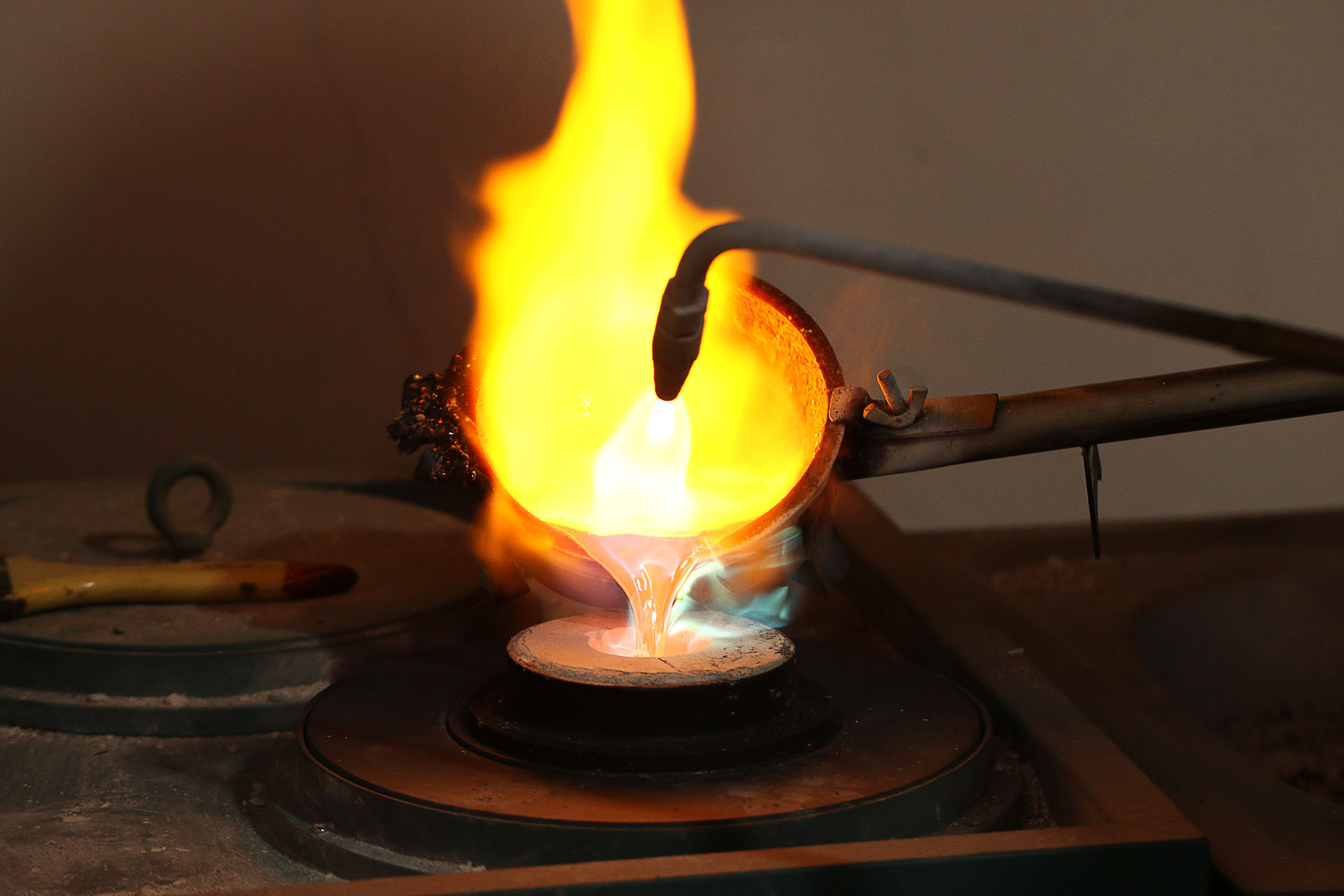
This is professional production work involving molten metal, hot flasks, furnaces and hazardous dust controls. A consumer guide should not be read as a home-casting procedure or a set of operating temperatures. The responsible question is whether the workshop has matched its documented process to the exact design and material.
Divesting, inspection and bench finishing complete the object
After the metal has solidified and reached the correct handling stage, the investment is removed and the cast tree is cleaned. Individual pieces are separated from their sprues. Attachment points must be cut back and blended, and the casting is inspected before time is invested in final finishing.
The next operations depend on the design. A piece may need filing, emery work, pre-polishing, assembly or soldering, stone-seat preparation, setting, engraving, texture, milgrain and final polish. The metal architecture around small stones matters: a row of bright stones is not produced by casting alone. Setting and finishing determine how the designed structure becomes a secure, clean result.
Surface character is also a separate decision. The guide to wedding-ring finishes distinguishes polished, satin, brushed and textured effects; fine edge treatments such as milgrain need their own production plan. These details may be planned in the model, added or refined by hand, or produced through a combination of methods. Confirm the intended appearance and how future maintenance may affect it.
What casting can—and cannot—guarantee
Lost-wax casting can reproduce complex geometry efficiently and can support repeatable production, but it does not promise a mathematically identical result without tolerances. Patterns, investment, burnout, alloy contraction, metal flow and finishing can all affect dimensions or surfaces. A competent workflow anticipates these variables, measures important features and rejects or corrects unacceptable results.
Nor does the casting method by itself determine durability. Strength and wear depend on alloy, section thickness, transitions, setting design, workmanship, finishing and how the jewellery is used. A thin feature does not become robust merely because it was cast accurately. Conversely, a well-engineered cast component can provide the intended service when its material and structure are appropriate.
Visible pits, incomplete areas, severe distortion or cracks require professional assessment. Not every mark has the same cause, and photographs cannot establish whether a local surface irregularity is cosmetic, a finishing issue or evidence that remanufacture is preferable. Ask the workshop how it inspects the casting before setting valuable stones and which tolerances were agreed for critical dimensions.
A practical lost-wax casting project checklist
- Identify the approved design. Keep the exact revision, views and written specification together.
- Confirm physical dimensions. Record overall size, key sections, stone measurements, fit and clearances.
- Name the intended metal. State alloy colour and fineness rather than using a broad colour description alone.
- Clarify the pattern route. Ask whether the master will be hand-modelled, mould-injected or digitally printed in a castable material.
- Separate casting from finishing. Record which assembly, setting, engraving, texture and polish operations follow the cast.
- Agree change control. Decide which production-driven changes require a revised approval before work continues.
- Ask about final inspection. Confirm that dimensions, stone security, joints and surface condition will be checked before handover.
- Keep realistic expectations. Treat renders and waxes as production references, not exact simulations of colour, sparkle or hand finishing.
Laxmi Jewellers’ bespoke design service can help bring the design, material, stone and finishing decisions into one reviewable project brief.
Lost-wax jewellery casting FAQ
Is the wax model the exact size of the finished jewellery?
It is the primary shape reference, but production and finishing allowances may be required. The workshop should engineer important dimensions for its pattern material, alloy, casting system and finishing sequence rather than promise zero dimensional change.
Can CAD resin be used instead of carved wax?
Yes, when the printed pattern, cleaning method, investment and burnout schedule are compatible. Castable resins differ, so the workshop should follow the relevant material guidance instead of assuming every resin behaves like injection wax.
What is investment in jewellery casting?
Investment is the specialist refractory material that surrounds the pattern and forms the temporary mould. It must withstand the burnout and casting conditions required by the selected process.
Why are sprues attached to a wax model?
They connect the model cavity to the casting feed system. Their placement and proportions are technical choices that influence metal delivery and the clean-up required after the piece is separated.
Does lost-wax casting include stone setting?
Not usually as a single operation. Most cast components are cleaned and prefinished before stones are seated and secured. Some specialist cast-in-place processes exist, but they require design, stone and process controls and should not be assumed.
Will a cast piece look exactly like the render?
No. A render is a visual design aid. Actual alloy colour, stone appearance, tolerances, surface finishing and hand work influence the finished object.
Is cast jewellery weaker than handmade jewellery?
That comparison is too broad. Durability depends on alloy, design, section thickness, joins, casting quality, finishing and use. Ask about the exact piece rather than relying on the manufacturing label alone.
Sources used for this guide
- GIA Education: Jewellery Design & Technology and Graduate Jeweler programme descriptions covering CAD/CAM, casting, wax work, setting and finishing.
- Stuller Bench Jeweler resources: lost-wax workflow, common casting questions and production-quality considerations.
- Formlabs Support: current Castable Wax Resin workflow and material-specific burnout guidance.
- The Jeweller’s Toolkit manufacturing fact sheet: lost-wax casting sequence from model and tree to investment, burnout, metal and finishing.
Technical references and both exact image source and licence pages were checked on 3 November 2026. Workshops use different equipment, materials and tolerances; confirm the process for the exact commission.
Connect the approved design to a clear making plan
Confirm the model, metal, stone plan, tolerances and finishing stages together before a bespoke piece moves into production.
