

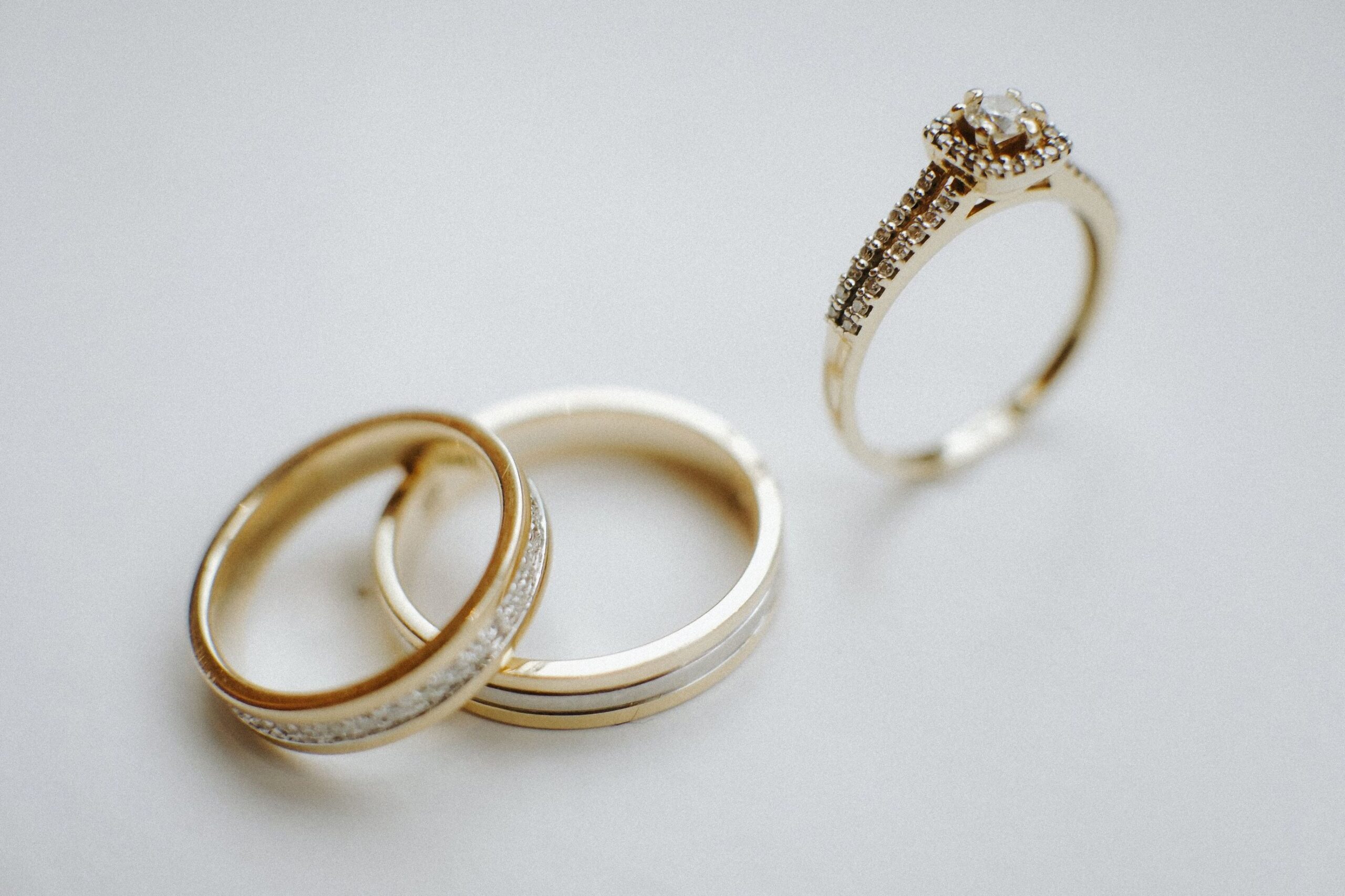
One bridal set or two flexible rings?
Should You Solder an Engagement Ring and Wedding Band Together?
Soldering can keep a bridal set aligned and reduce movement between the rings, but it also changes fit, flexibility and future servicing. Compare the complete decision before joining them.
Soldering an engagement ring and wedding band creates a joined bridal set that moves as one unit. It can be helpful when two compatible rings twist, rub or refuse to stay aligned, but it is not automatically the best answer for every stack.
The decision should follow inspection of the actual rings. A curved band may nest neatly with one engagement ring yet leave a damaging contact point with another. Previous repairs, coatings, delicate stones and mixed constructions can also change what work is suitable. This is a professional bench service, not a home project.
A metal joint, not adhesive
What it means to solder two rings together
Jewellery soldering joins metal components with a compatible filler metal that flows at a lower temperature than the parent metal. GIA describes a properly prepared solder joint as a strong bond created when controlled heat draws solder into close-fitting metal surfaces. Stuller’s 2025 bench guidance likewise emphasises compatible solder, heat control and precision.
For a bridal set, a jeweller typically aligns the rings in their intended position and creates discreet joining points where the shanks meet. The appropriate number and location of joins depend on shape, width and construction. The aim is a stable set with clean alignment, not to fill a poor-fitting gap with excess solder.
The joined rings remain visually recognisable as an engagement ring and band, but they now behave like a wider composite ring. They rotate, come off the finger and are serviced together unless a jeweller later separates them. That behavioural change is central to the decision.
Start with the real problem
What soldering can—and cannot—solve
Joining can stop two rings from rotating independently, so a curved or shaped wedding band stays aligned with the engagement ring. It can also reduce the repetitive rubbing that occurs when compatible shanks slide against one another. Jewelers Mutual lists alignment, reduced friction and greater stability among the common reasons people solder bridal sets.
Soldering may make a top-heavy engagement ring feel steadier because the combined band presents a wider base. It can also simplify keeping track of a set that is always removed and stored together. These are useful outcomes when the owner genuinely wants one permanent arrangement.
It does not correct every cause of spinning. A ring that passes over a prominent knuckle but sits loosely at the base may need a fit solution rather than a permanent join. Seasonal swelling, weight changes and arthritis can alter comfort. Likewise, soldering does not repair a bent shank, worn prong, cracked setting or incompatible contour. Those issues require their own assessment.
Alignment should be designed, not forced
A visible gap is not always a defect. Some engagement-ring baskets intentionally prevent a straight band from sitting flush. A shaped band can follow the outline, while a straight band may create a deliberate negative space. The guide to straight and curved wedding bands explains how centre-setting geometry affects the choice. Joining two rings does not make incompatible profiles fit together safely.
Convenience has a cost
Benefits and trade-offs to compare
Reasons to consider joining
The stack stays in a chosen orientation, matching details can remain aligned, relative movement between shanks is reduced, and the set can feel more stable as one wider unit. It may suit someone who never plans to wear either ring alone.
Reasons to keep them separate
You preserve independent wear, easier style changes and simpler access for some resizing or repair work. Separate rings also let you remove the diamond ring while continuing to wear only the wedding band.
| Decision area | Joined set | Separate rings |
|---|---|---|
| Orientation | Fixed in the approved alignment. | Each ring may rotate or shift independently. |
| Contact between shanks | Less sliding friction at the joined relationship, though ordinary wear continues elsewhere. | Edges and settings may rub if the profiles touch. |
| Fit over the knuckle | The combined width can feel tighter and may be harder to remove. | Each narrower ring can be removed separately. |
| Wearing options | Usually worn as one planned set. | Either ring can be worn alone or in a different stack. |
| Resizing and repair | Separation may be required before some work, followed by refinishing and possibly rejoining. | Each ring can often be assessed and serviced independently. |
| Future design changes | Possible, but undoing the join adds bench work and may leave marks or require restoration. | Changing the band or arrangement is simpler. |
Jewelers Mutual notes that a joined set can be separated by a jeweller, but separation and repeated alteration carry risk. “Reversible” should therefore mean technically possible—not consequence-free. Ask what evidence of the former joint may remain, whether plating or texture must be restored and how the rings’ dimensions affect the work.
Approve the pair on the finger
Fit, width, contour and construction checks
Two individually comfortable rings can feel tighter when permanently joined because the combined band covers more of the finger. Wider coverage reduces the room for skin to move and may require a different final size. The wedding band width guide explains why width changes perceived fit, while the ring size guide covers measurement conditions and why a single quick reading is not enough.
Try the rings together during a normal day and check passage over the knuckle, comfort at the base, finger-to-finger pressure and how the set behaves when the hand is warm. The jeweller should decide final alignment and sizing before joining, not use soldering to hide a size problem.
Metal and finish compatibility
The workshop needs to identify each alloy, colour, plating and previous repair. A colour match between solder and the rings may be very close without being perfectly invisible in every light. White-gold pieces may need surface restoration or rhodium replating after work. If the bands have satin, brushed or hammered areas, the service plan should state how the finish will be protected or recreated. Laxmi Jewellers’ wedding ring finishes guide explains why texture matching must be specified.
Stones and setting details
Heat-sensitive gemstones, enamel, coatings, hollow areas, pavé, shared prongs and stones close to the proposed joint require particular assessment. A diamond’s heat tolerance does not make every surrounding component safe to heat. The jeweller may need to remove stones, use a different joining method or advise against the work.
Contact between rings matters too. A wedding band should not press against exposed diamond girdles or delicate engagement-ring prongs. Before joining, inspect the complete circumference and ensure the pair sits naturally without being clamped into a strained position.
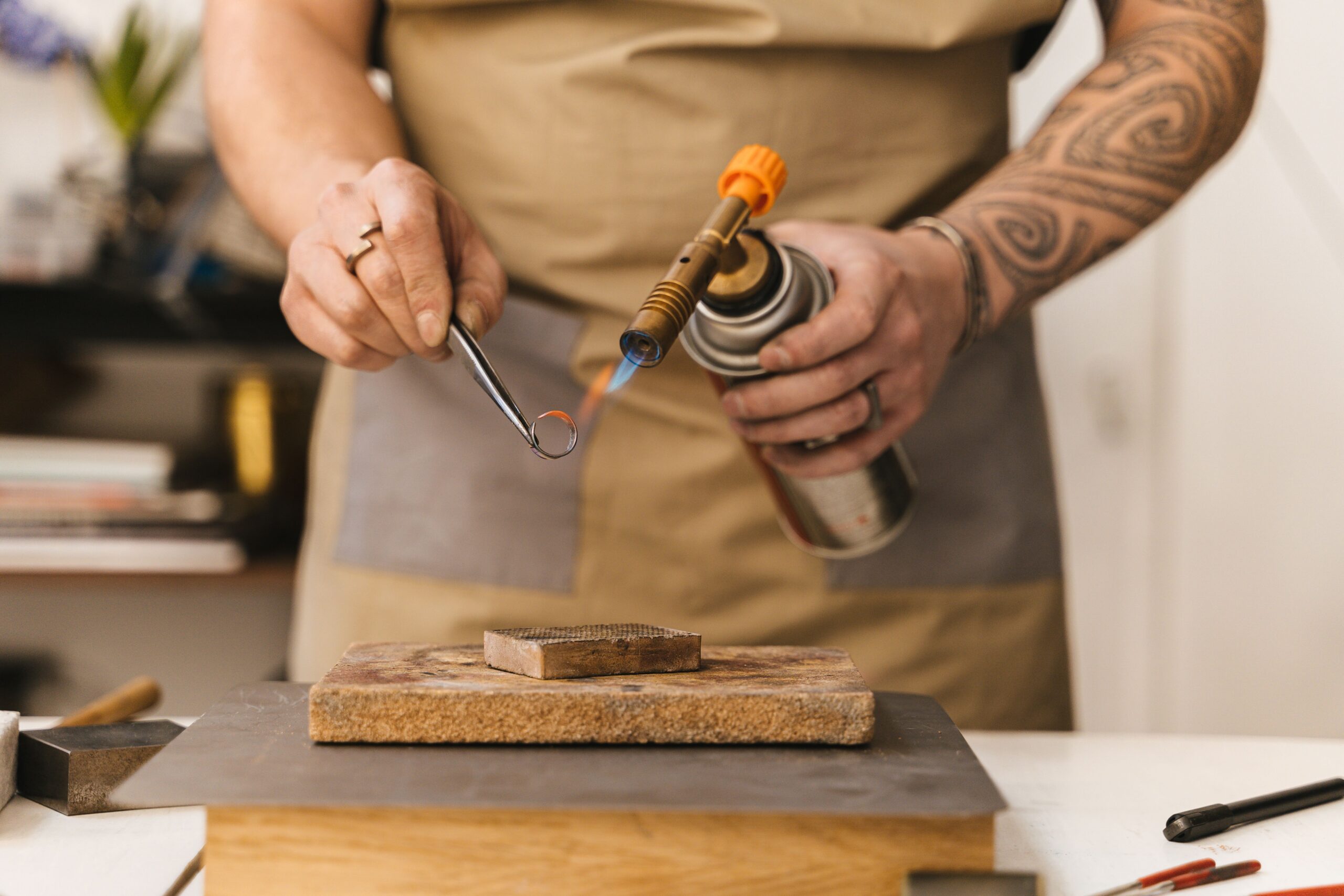
Precision happens at the bench
What to ask before authorising the work
GIA’s conduction-soldering guidance explains that a sound joint needs close contact, controlled heat and correctly flowing solder. For the owner, the important step is not learning the torch technique; it is confirming that the workshop has evaluated the pair and documented the intended outcome.
Ask where the joins will be placed, whether any stones must be removed, how colour and surface finish will be restored, and whether the completed set will be checked for symmetry and stone security. Request a written estimate that separates prerequisite repair from the joining service.
Permanent joining is not the only route
Alternatives when you want alignment without soldering
The right alternative depends on whether the real issue is ring size, contour, top weight or friction. A professional may discuss sizing beads or an internal spring-style aid for a ring that must pass over a larger knuckle. A fitted contour band or custom nesting band may improve alignment without joining. In some designs, a slim spacer creates safer separation between exposed stones and metal edges.
Temporary plastic coils, clips and ring guards are widely sold, but suitability varies. They can trap moisture or debris, alter pressure, scratch finishes or interfere with settings. Do not treat an improvised connector as harmless simply because it is removable. Ask the jeweller whether it is suitable for the particular metal, stones and fit.
If you sometimes need to remove the engagement ring for work, travel or practical tasks, leaving the rings separate may be the most useful solution. The ability to wear only the band is a feature, not a failure of the set.
Plan beyond the joining day
Care, resizing and future separation
A soldered bridal set still needs cleaning and inspection. The joint, shanks, prongs and stones should be checked as one construction. Dirt can collect in the channel between the rings, so use the gentle care method recommended for all metals and stones in the set. Avoid forcing brushes or sharp tools into the gap.
If the finger size changes, the workshop must decide whether the pair can be resized together or should first be separated. Patterned shanks, eternity-set sections, mixed widths and multiple previous size adjustments can limit options. Ask what size range is realistic before the initial join if future change is likely.
Separating the set may require cutting or removing solder, restoring the original shank surfaces, refinishing and checking every nearby stone. Jewelers Mutual cautions that taking rings apart can damage or mark the pieces, even when the work is done carefully. Preserve photographs and service records so a future jeweller can see the original alignment and joint locations.
Warning signs after joining
Seek inspection if the rings begin to separate, the gap changes, a joint line becomes sharp, stones move, prongs snag or the set becomes oval. Remove the rings rather than bending them back by hand. A change may reflect impact, metal wear, fit pressure or a problem unrelated to the solder itself.
- Photograph the rings individually and aligned before service.
- Record alloys, plating, stones, size and previous repairs.
- Approve orientation and fit on the finger.
- Confirm the proposed joints and restoration plan.
- Ask whether future resizing requires separation.
- Keep the invoice and after-service photographs with insurance records.
Bridal-set questions answered
Soldering engagement and wedding rings FAQs
Does soldering rings together stop all spinning?
It stops the two rings rotating independently, and the wider combined base may feel more stable. It does not correct every fit issue, especially when a ring must be large enough to pass over a prominent knuckle. Confirm size before joining.
Can soldered rings be separated later?
A jeweller can often separate them, but the work may leave marks and require reshaping, refinishing, replating or further repair. Treat the decision as a long-term alteration even though reversal may be technically possible.
Will soldering damage the diamonds?
A skilled jeweller assesses diamonds, other gemstones, settings, coatings and previous repairs before selecting a process. Heat and handling risks depend on the complete piece. Do not attempt the work at home.
Should the rings be resized before soldering?
The combined width can fit tighter than either ring alone, so final fit should be assessed with both rings together. The jeweller will decide the correct sequence for sizing, repair, joining and finishing.
Is soldering best for a curved wedding band?
It can keep a shaped band aligned with its matching engagement ring, but curvature alone does not make joining necessary. A well-fitted contour band may stay comfortable while remaining separate. Compare flexibility and service needs.
Technical references
The decision points were checked against Jewelers Mutual’s consumer guide to soldered rings, Stuller’s April 2025 professional overview of jewellery soldering, and GIA’s explanation of a properly prepared conduction-soldered joint.
Compare the pair before joining
Explore wedding bands that work with your engagement ring
Check contour, combined width, stone clearance and future service before choosing one permanent bridal set.
