

Read the report, then view the stone
Diamond Fluorescence Explained: What the Report Grades Mean
Fluorescence is a diamond’s visible response to ultraviolet light. It is neither an automatic benefit nor an automatic defect. This guide explains the laboratory wording, why lighting matters and how to compare an individual diamond without relying on myths.
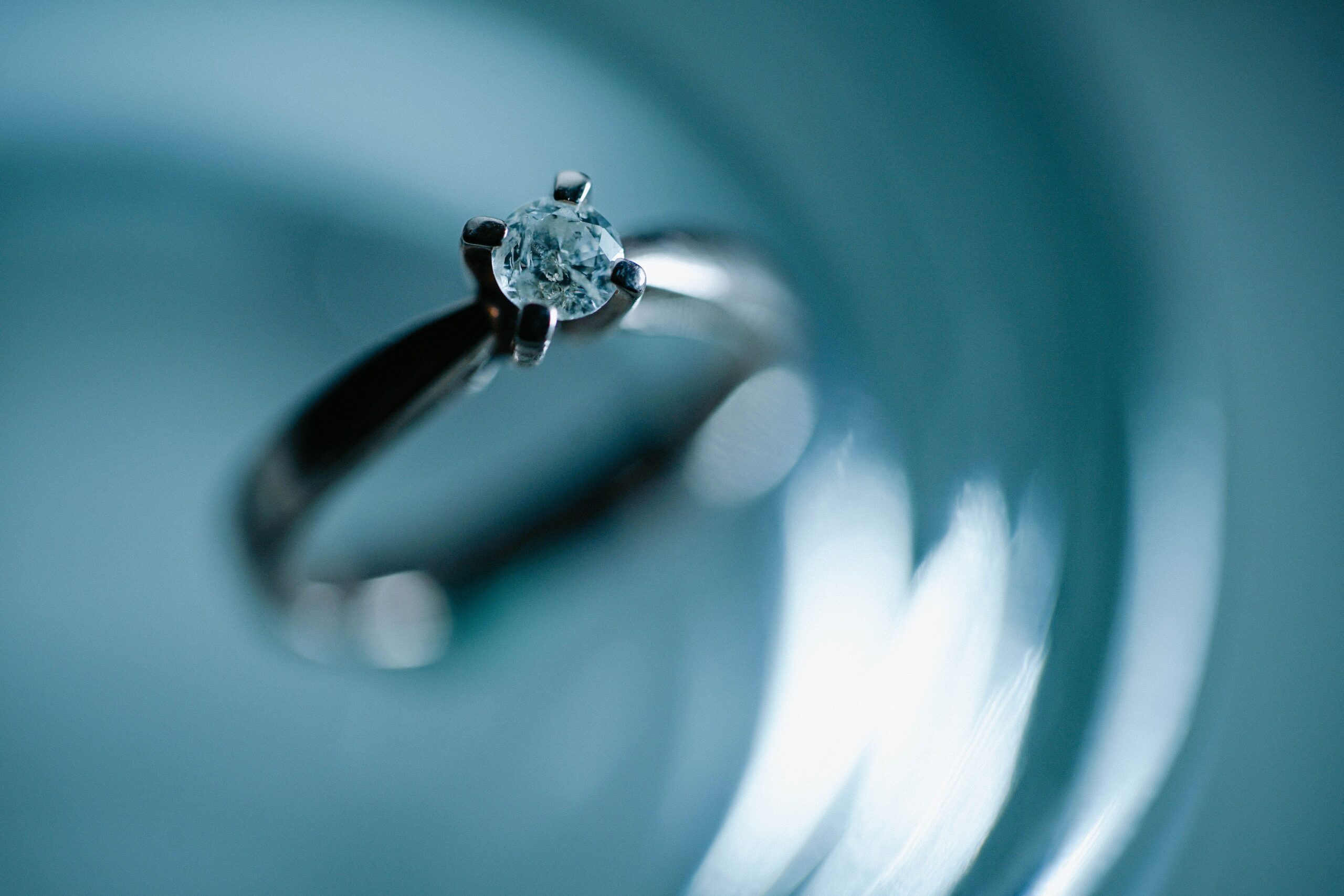
Start with the definition
What Is Diamond Fluorescence?
Fluorescence is visible light emitted while a material is being excited by an energy source. In a diamond report, the relevant source is normally long-wave ultraviolet, or UV, light. Sunlight contains some UV, as do certain specialist lamps. Many common indoor lights contain much less, so the same diamond may not present the same response everywhere.
The emitted colour is most often blue, although other colours can occur. The reaction lasts while the UV source is present. That point separates fluorescence from phosphorescence, which is an afterglow that may continue after the exciting source has been removed. A grading report’s fluorescence field should therefore not be interpreted as a promise that a diamond will glow continuously.
Fluorescence is also different from brilliance, fire and scintillation. Those familiar flashes arise from the way a polished diamond handles visible light through its facets. Fluorescence is a separate response to UV. A stone can have strong light return and no reported fluorescence, or reported fluorescence and weaker light performance for unrelated reasons.
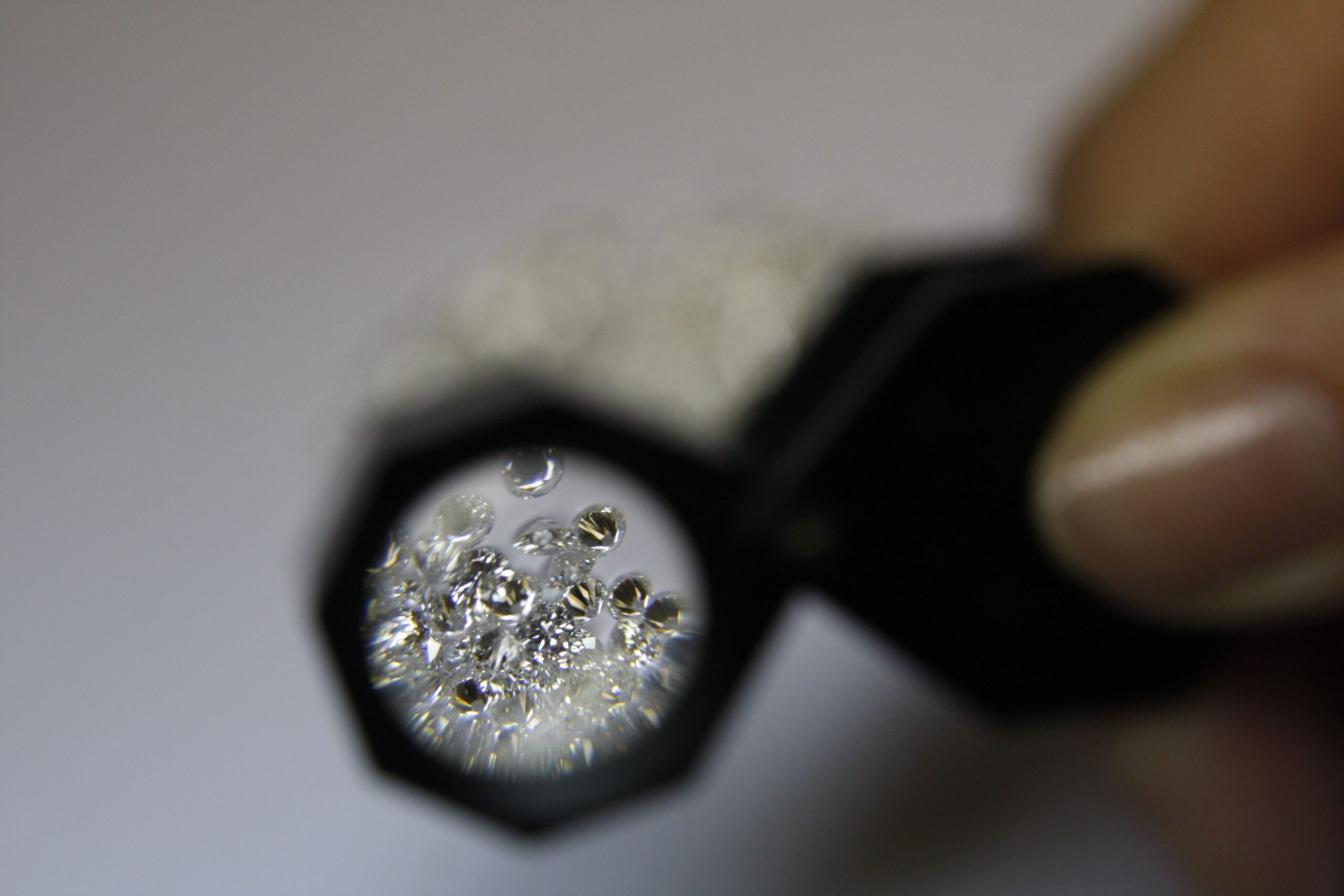
Read the laboratory’s wording
What None, Faint, Medium, Strong and Very Strong Mean
GIA describes fluorescence intensity with five terms: None, Faint, Medium, Strong and Very Strong. These are observations made under standard laboratory conditions. They describe the strength of the UV response; they are not a second colour grade, a clarity grade or a durability grade.
Other laboratories may use different wording or report formats. Do not silently translate one laboratory’s label into another’s. Read the issuing laboratory’s own explanation and verify the report number online. Laxmi Jewellers’ guide to what is included in a diamond grading report explains where fluorescence sits alongside measurements, the 4Cs, finish and comments.
| GIA description | What it records | Practical response |
|---|---|---|
| None | No reportable fluorescence under GIA’s standard observation conditions. | Continue to assess cut, colour, clarity, transparency and overall appearance; “None” is not a complete quality verdict. |
| Faint | A weak reaction under the laboratory’s UV conditions. | It is unlikely to be obvious in many everyday environments, but compare the actual stone rather than assuming. |
| Medium | A more apparent reaction in the controlled UV comparison. | View the diamond in ordinary indoor light and indirect daylight, preferably beside a similar stone. |
| Strong | A pronounced reaction under the specified UV source. | Give the lighting comparison extra attention and judge colour, transparency and facet contrast individually. |
| Very Strong | The highest intensity term in the GIA sequence. | Do not reject or accept it from the label alone; inspect it carefully in realistic lighting and ask for professional guidance. |
The grade is stone-specific. Two diamonds with the same fluorescence word can differ in body colour, clarity characteristics, cut, transparency and face-up pattern. Conversely, two stones that appear similar under one shop light may separate under daylight because the UV content has changed.
The environment is part of the observation
Why a Diamond Can Look Different Under Different Light
Fluorescence needs UV excitation, and light sources do not contain equal amounts of UV. GIA research has found that stronger fluorescence can have a more noticeable effect in lighting with meaningful UV content, such as daylight, than in many office environments. This is why a single jewellery-counter spotlight, phone photograph or dark-room UV demonstration cannot represent every setting in which the diamond will be worn.
A sensible comparison uses normal situations, not theatrical ones. First look in balanced indoor white light. Then move to indirect natural daylight near a window or outdoors in open shade. Examine the diamond face-up at normal viewing distance, tilt it slowly and compare it with a similar stone if possible. A direct UV lamp can demonstrate the reaction, but it is not the same as assessing everyday appearance.
Avoid drawing conclusions from a phone camera alone. Automatic exposure and white balance can exaggerate blue or suppress yellow, while macro focus can make a small feature dominate the frame. Video is more informative than one still image, but an in-person comparison remains preferable for a significant purchase.
Separate evidence from assumptions
Does Fluorescence Affect Colour, Brightness or Haze?
Colour appearance can depend on UV content
Blue is complementary to yellow, so stronger blue fluorescence can influence the perceived colour of some D-to-Z diamonds in UV-containing light. GIA’s controlled research has observed changes in colour and brightness mainly among some Strong to Very Strong examples, with the degree of change depending heavily on the lighting. That is more precise than saying fluorescence always makes a diamond “whiter”. It may have little visible effect in a low-UV room.
Fluorescence is not automatically the cause of haze
A common shortcut says that strong fluorescence makes a diamond milky. GIA’s more recent research distinguishes fluorescence-related contrast changes from haze caused by light-scattering defects or very small inclusions. Strong fluorescence can alter contrast under UV-rich conditions, but fluorescence intensity alone does not establish the cause of a hazy appearance. A diamond may look hazy for another reason, and many strongly fluorescent diamonds do not look hazy.
It does not weaken the diamond
Fluorescence does not inherently reduce a diamond’s structural integrity. Durability questions should instead consider the diamond’s condition, clarity features, shape, vulnerable points and setting. For a finished ring, security also depends on craftsmanship and maintenance rather than the fluorescence line on the report.
It is not a stand-alone value formula
Market preferences can influence pricing, but there is no responsible universal discount or premium that can be calculated from the fluorescence word alone. Compare like with like: laboratory, report type, carat weight, shape, colour, clarity, cut information, transparency and overall beauty. The right conclusion is about the individual diamond, not a blanket rule.
A repeatable viewing routine
How to Compare a Diamond With Fluorescence
The aim is not to “catch” a diamond looking different. It is to understand whether any difference is visible, attractive or distracting in the environments that matter to you. Use this sequence and keep the comparison diamonds as similar as practical.
Verify the report
Use the issuing laboratory’s official report-check service. Confirm that the number and core specifications match the stone being offered.
Locate the exact field
Read the intensity and, where supplied, the fluorescence colour. Do not confuse it with the diamond’s D-to-Z colour grade.
Compare similar diamonds
Choose a comparison with close colour, size, shape and cut quality. Large differences in those factors can hide the effect you are trying to judge.
Use ordinary indoor light
Look face-up at normal distance, then tilt both stones. Check brightness, transparency and the crispness of the facet pattern.
Move to indirect daylight
Repeat the comparison near a window or in open shade. Avoid treating a momentary blue reflection as a full assessment.
Ask what causes any haze
If a stone appears cloudy, request an explanation that considers clarity and transparency instead of blaming the fluorescence grade automatically.
Judge the complete diamond
Balance the observation with cut, colour, clarity, measurements, finish, setting suitability and personal preference.
Keep product intent separate
When ready to compare finished designs, use the dedicated engagement-ring category rather than treating this educational guide as a product listing.
Do not use it as an origin test
Fluorescence in Natural and Laboratory-Grown Diamonds
Both natural and laboratory-grown diamonds can show luminescence reactions, and those reactions can vary in colour, intensity and pattern. Fluorescence is therefore not a reliable do-it-yourself test of origin. A blue glow does not prove that a diamond is natural, while another response does not prove that it is laboratory-grown.
Origin should come from a recognised grading report and, where appropriate, professional identification equipment. The report may also describe inscriptions or growth-related information. If you want to understand the production methods rather than the fluorescence response, read Laxmi Jewellers’ separate comparison of CVD and HPHT laboratory-grown diamonds. That page owns the growth-method intent; this guide stays focused on interpreting fluorescence.
The same buying discipline applies in either case: confirm the issuing laboratory, verify the document, inspect the actual diamond and avoid substituting one report field for a complete quality assessment.
Clear answers
Diamond Fluorescence FAQs
Is diamond fluorescence good or bad?
Neither by definition. It is a reported reaction to UV light. Its visible effect can be minimal, noticeable or personally appealing depending on the individual diamond and lighting, so assess the stone rather than the label alone.
Will a fluorescent diamond glow all the time?
No. Fluorescence is emitted while a suitable UV source is exciting the diamond. In lighting with little UV, the reaction may not be visible. A continuing afterglow is phosphorescence, which is a different phenomenon.
Does Strong fluorescence mean the diamond is cloudy?
No. Strong fluorescence does not prove that a diamond is cloudy. If haze is visible, a professional should consider transparency, inclusions and structural light scattering as well as the lighting environment.
Can fluorescence improve a diamond’s colour?
Stronger blue fluorescence can influence perceived colour in some diamonds when the light contains sufficient UV. The effect is not identical across stones or environments, so compare the actual diamond in indoor light and indirect daylight.
Does fluorescence identify a lab-grown diamond?
No. Natural and laboratory-grown diamonds can both show luminescence. Use a recognised grading report and professional identification rather than a home UV observation to establish origin.
Should I avoid a Very Strong fluorescence grade?
Do not make an automatic decision from that word. Inspect the stone carefully under realistic lighting, compare it with a similar diamond and judge colour, transparency, contrast and overall appearance together.
Compare Complete Ring Designs With Context
Use fluorescence as one report detail, then consider the diamond, setting and overall design together. The product category remains the right destination for current engagement-ring options.
