

CVD vs HPHT Lab-Grown Diamonds: What Dubai Buyers Should Know
Lab-grown diamonds have become an increasingly popular choice among Dubai buyers seeking exceptional brilliance, certified quality and greater value. However, when selecting a laboratory-grown diamond, buyers often encounter two important terms: CVD and HPHT.
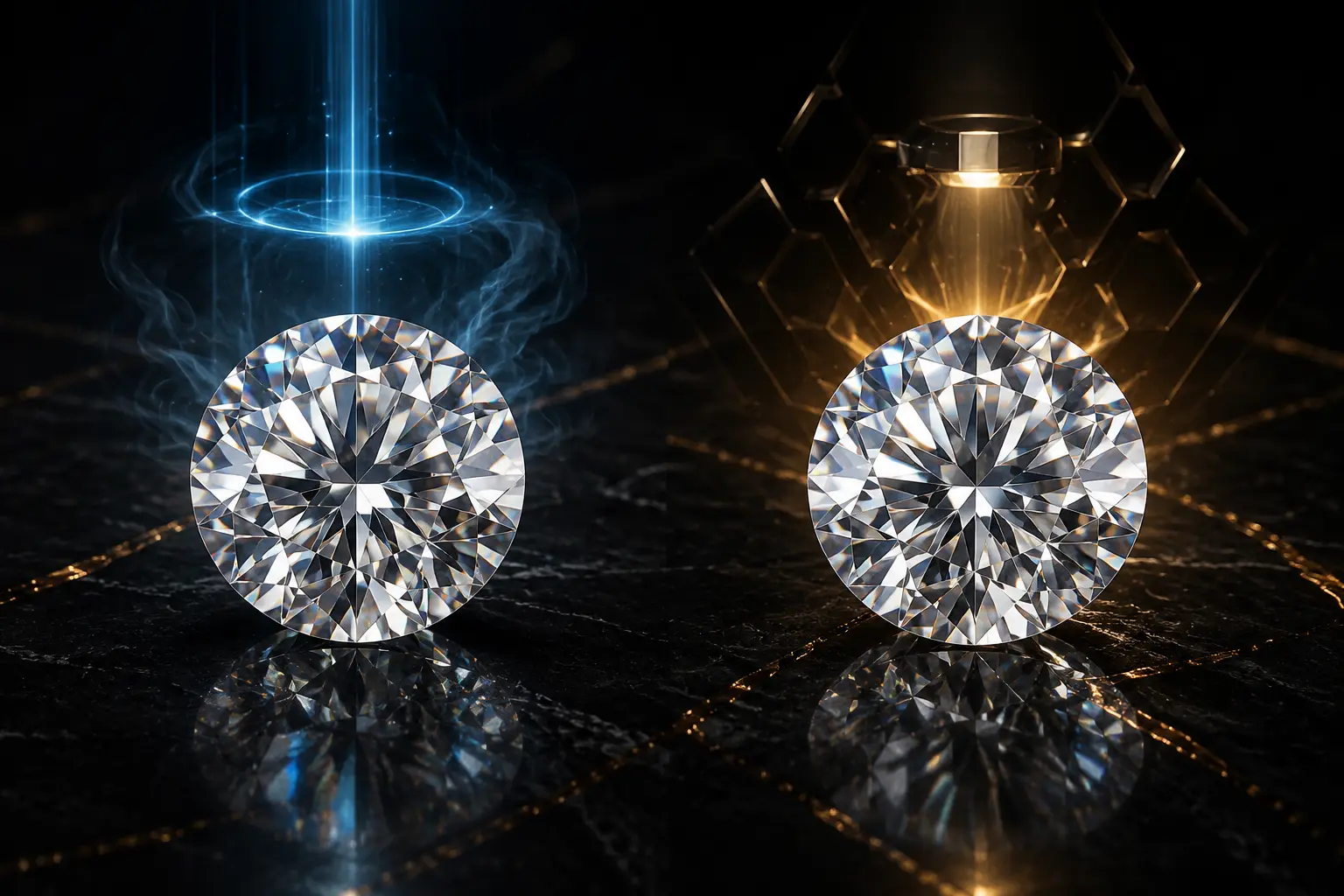
These terms describe the two principal technologies used to grow diamonds in a controlled laboratory environment. CVD stands for Chemical Vapour Deposition, while HPHT means High Pressure High Temperature. Although the production methods differ, both can create genuine diamonds with the same fundamental chemical composition, crystal structure and optical properties associated with natural diamonds.
At Laxmi Jewellers, we believe that buyers should evaluate the finished diamond rather than choosing solely on the basis of its growth method. Cut quality, colour, clarity, proportions, certification and visual appearance usually have a greater influence on a diamond’s beauty and suitability.
What Is a CVD Lab-Grown Diamond?
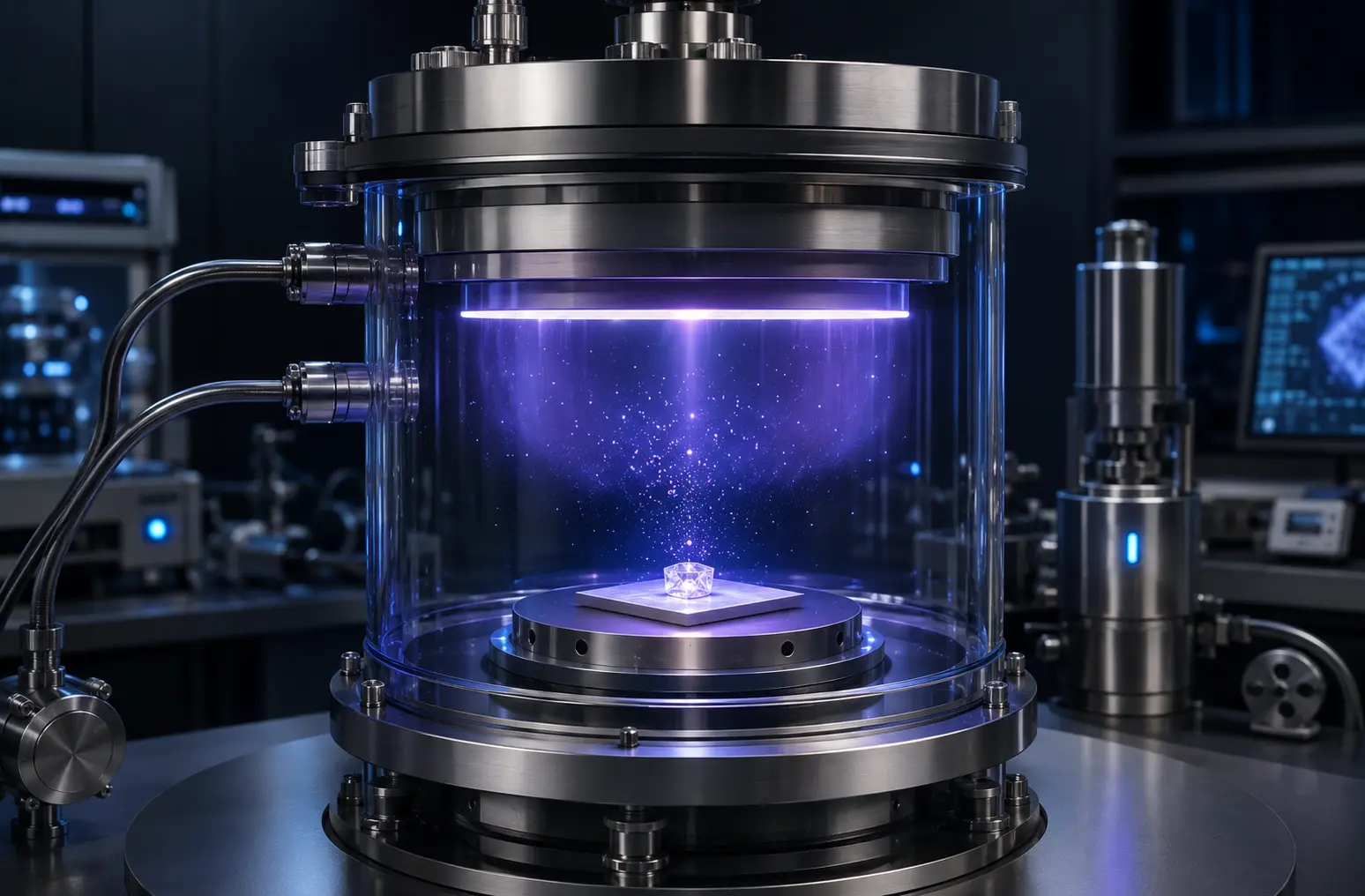
A CVD lab-grown diamond is created inside a specially controlled chamber using carbon-rich gas. The process begins with a thin diamond seed, which acts as the foundation for the new crystal.
The chamber is heated, and gases containing carbon are introduced. Energy breaks down the gas molecules, allowing carbon atoms to settle gradually onto the diamond seed. Over time, these atoms form layers of diamond crystal.
The CVD process takes place under lower pressure than the HPHT method. It allows manufacturers to monitor the growing conditions and produce diamonds with carefully managed characteristics.
CVD technology has developed considerably, making it possible to grow diamonds in a wide selection of carat weights and shapes. These diamonds can be cut into round brilliant, oval, emerald, pear, cushion, radiant and other popular styles.
Some CVD diamonds may receive an additional treatment after growth to improve their colour. When applicable, reputable grading laboratories may disclose post-growth treatments on the diamond report.
Buyers can learn more about how laboratory-grown diamonds are created through the International Gemological Institute’s lab-grown diamond education guide.
What Is an HPHT Lab-Grown Diamond?
The HPHT diamond growth process recreates the intense temperature and pressure conditions under which diamonds form naturally beneath the earth’s surface.
A small diamond seed is placed inside a growth cell with a source of carbon and a metallic catalyst. The cell is exposed to extremely high pressure and temperature. The carbon dissolves and begins to form around the seed, gradually developing into a larger diamond crystal.
The HPHT method was developed before CVD technology and continues to be widely used. It can produce high-quality colourless diamonds as well as coloured lab-grown diamonds, depending on the growth conditions and the trace elements involved.
Certain HPHT diamonds may contain tiny metallic inclusions related to the growth process. These inclusions are normally assessed during professional clarity grading. Their significance depends on their size, quantity and position within the stone.
IGI provides further technical information about inclusions found in lab-grown diamonds, including characteristics associated with HPHT and CVD production.
CVD vs HPHT Diamonds: Key Differences
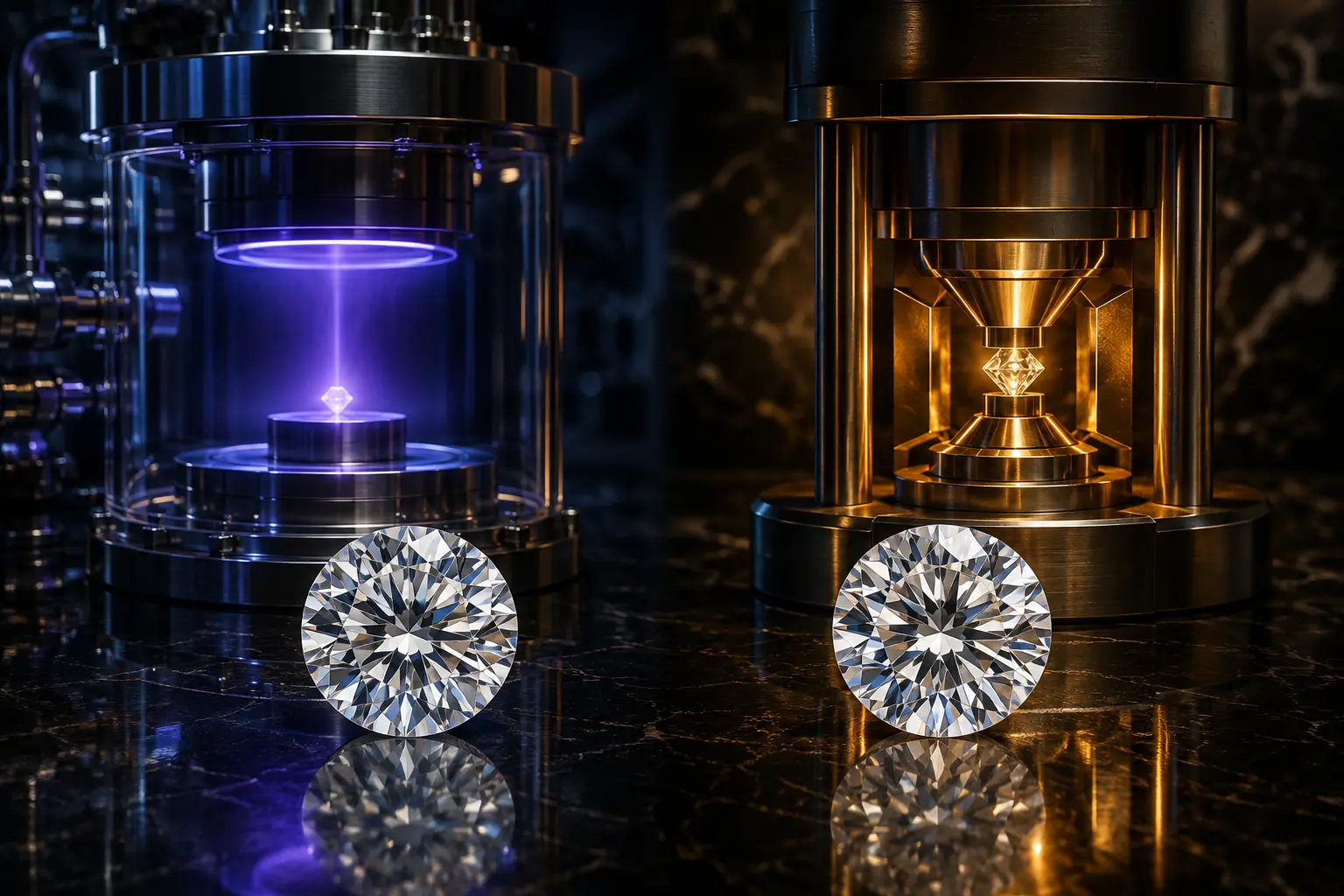
The principal difference between CVD and HPHT lab-grown diamonds is the environment in which the diamond crystal develops.
| Feature | CVD Diamonds | HPHT Diamonds |
|---|---|---|
| Full name | Chemical Vapour Deposition | High Pressure High Temperature |
| Growth environment | Carbon-rich gas in a vacuum chamber | Intense heat and pressure inside a growth cell |
| Crystal development | Carbon forms in gradual layers | Carbon crystallises around a diamond seed |
| Pressure requirements | Relatively lower pressure | Extremely high pressure |
| Possible characteristics | Growth lines, graining or colour zoning | Metallic inclusions or colour zoning |
| Post-growth treatment | May sometimes receive HPHT treatment | May also receive treatment when required |
| Certification | Can be independently graded | Can be independently graded |
| Jewellery suitability | Suitable for all major jewellery styles | Suitable for all major jewellery styles |
Neither method automatically produces a better diamond. The appearance and quality of an individual stone depend on how successfully it was grown, cut, polished and graded.
A well-cut CVD diamond can be more attractive than a poorly cut HPHT diamond. Similarly, a beautifully proportioned HPHT diamond may offer stronger brilliance than a CVD stone with weak proportions. The growth method should therefore be viewed as one part of the diamond’s identity rather than the final measure of its quality.
Are CVD and HPHT Diamonds Real Diamonds?
Yes. CVD and HPHT diamonds are real laboratory-grown diamonds. They are not cubic zirconia, moissanite, glass or imitation stones.
Both types are primarily composed of crystallised carbon. They possess the hardness, brilliance, fire and durability expected from diamonds. Their main difference from natural diamonds is their origin. Natural diamonds develop beneath the earth over an extremely long period, while laboratory-grown diamonds are created in controlled technological environments.
Specialist equipment and gemmological testing are normally required to determine whether a diamond is laboratory-grown and to identify its growth characteristics. Visual inspection alone is not a reliable method for distinguishing a high-quality lab-grown diamond from a natural diamond.
Our detailed guide, Are Lab-Grown Diamonds Real?, explains their composition, durability, certification and suitability for fine jewellery.
Do CVD and HPHT Diamonds Look Different?
To the unaided eye, high-quality CVD and HPHT diamonds can look virtually identical. Both methods can create bright, colourless and beautifully transparent stones.
Minor growth-related features may be visible under magnification or advanced laboratory equipment. CVD diamonds can sometimes display graining or growth patterns, while HPHT diamonds may contain small metallic inclusions. These features are not present in every stone and do not automatically make a diamond unattractive.
What buyers notice in everyday wear is usually determined by the diamond’s:
- Cut and proportions
- Brightness and light return
- Colour grade
- Clarity grade
- Carat weight
- Shape
- Polish and symmetry
- Setting and craftsmanship
A properly cut diamond reflects light efficiently and creates the brightness, fire and scintillation buyers associate with beautiful diamond jewellery. For this reason, we recommend reviewing the complete grading information instead of concentrating only on whether the diamond was grown through CVD or HPHT.
Our lab-grown diamond quality guide for Dubai buyers provides a closer explanation of cut, colour, clarity, carat weight and visual performance.
Which Is Better: CVD or HPHT?
There is no universal answer because CVD is not automatically better than HPHT, and HPHT is not automatically better than CVD.
A buyer should compare individual diamonds based on measurable quality and personal preferences. The best choice is generally the diamond that offers the strongest combination of brilliance, attractive proportions, suitable colour, eye-clean clarity and certified specifications within the available budget.
For example, one CVD diamond may have an excellent cut, minimal visible inclusions and balanced proportions. Another CVD diamond of the same carat weight may show noticeable graining or weaker light performance. The same variation can occur between different HPHT diamonds.
When comparing two stones, we recommend prioritising:
- Independent certification
- Cut quality and proportions
- Face-up appearance
- Colour and clarity
- Visible inclusions
- Polish and symmetry
- Carat weight and dimensions
- Suitability for the selected setting
- Price and overall value
The growth process can then be considered as additional information rather than the deciding factor.
Can CVD Diamonds Receive HPHT Treatment?
Yes. A diamond originally grown through the CVD process may undergo post-growth HPHT treatment. This treatment can be used to improve the diamond’s colour by modifying certain characteristics created during crystal growth.
This does not turn a CVD diamond into an HPHT-grown diamond. Its original growth method remains CVD, while HPHT describes the additional treatment applied after formation.
Reputable grading reports may identify the growth method and disclose detectable post-growth treatment where applicable. This information supports transparency and helps buyers understand the diamond they are purchasing.
A treated CVD diamond can still be a beautiful choice for fine jewellery. The relevant consideration is whether its laboratory-grown origin and applicable treatments have been disclosed accurately.
Why Independent Diamond Certification Matters
Whether a diamond was created using CVD or HPHT technology, an independent grading report is one of the most important documents a buyer can review.
A professional laboratory report can contain details such as:
- Laboratory-grown diamond identification
- Carat weight
- Measurements
- Colour grade
- Clarity grade
- Cut grade, where applicable
- Polish
- Symmetry
- Fluorescence
- Growth method, when stated
- Post-growth treatment disclosure, when detected
- Grading report number
- Laser inscription information
The grading report should correspond to the diamond being offered. Where a laser inscription is present, the number on the diamond’s girdle can be checked under magnification and compared with the report.
IGI explains that its lab-grown diamond reports may include the production method and applicable treatment information. Buyers can also use the laboratory’s official verification service to confirm that the report number matches its records.
At Laxmi Jewellers, we emphasise certification and transparent diamond information so our customers can make informed comparisons.
How Dubai Buyers Should Compare CVD and HPHT Diamonds
Dubai offers access to a broad international jewellery market, but a large selection can make comparison more complicated. Buyers should avoid choosing a diamond based only on a seller’s description or an attractive carat weight.
We recommend examining the following factors carefully.
Check the Diamond’s Cut
Cut has a major influence on brilliance. A diamond with strong colour and clarity can still appear lifeless if its proportions do not return light effectively.
For round diamonds, buyers should review the cut grade, table percentage, depth percentage and symmetry. Fancy shapes require a closer visual assessment because their beauty cannot always be judged from a single cut grade.
Review Colour in the Intended Setting
A colourless or near-colourless lab-grown diamond can complement white gold and platinum beautifully. Slightly warmer diamonds may work especially well in yellow or rose gold settings.
The most expensive colour grade is not always necessary. A well-selected near-colourless diamond may appear bright once mounted and offer better value.
Assess Clarity Practically
Clarity grades describe internal and external characteristics, but their location can be as important as their quantity. A small inclusion near the edge may be less noticeable and could sometimes be covered by a prong. An inclusion directly under the table may be more visible.
We focus on whether the diamond appears clean during normal viewing, rather than pursuing a high clarity grade that may offer no visible advantage.
Compare Measurements, Not Only Carat Weight
Carat is a measure of weight, not visible size. Two diamonds with the same carat weight can face up differently depending on their proportions and shape.
Buyers should compare the diamond’s millimetre measurements, depth and spread to understand how large it will appear once set.
Verify the Grading Report
The certificate number should be checked through the grading laboratory’s official website. Buyers can also inspect the laser inscription where available.
Our guide to how we source certified IGI lab-grown diamonds explains the importance of responsible selection and independent grading.
CVD and HPHT Diamonds for Engagement Rings
Both CVD and HPHT diamonds are suitable for lab-grown diamond engagement rings. Their durability allows them to be used in rings intended for frequent wear, provided the stone is securely set and cared for properly.
Rather than selecting an engagement ring according to the growth method alone, we recommend matching the diamond to the wearer’s style and priorities.
A round brilliant diamond can offer classic sparkle, while oval and pear shapes provide an elongated appearance. Emerald-cut diamonds create a clean, elegant look, while cushion and radiant cuts combine a softer outline with strong brilliance.
The setting is equally important. Solitaire settings place maximum attention on the centre diamond. Halo designs create additional sparkle, while three-stone rings offer a balanced and symbolic arrangement.
Buyers can explore our collection of lab-grown diamond engagement rings in Dubai or discuss a personalised design through our bespoke jewellery service.
Common Myths About CVD vs HPHT Diamonds
Myth 1: CVD Diamonds Are Always Better
CVD describes a production method, not a guaranteed quality level. CVD diamonds can vary in cut, colour, clarity and transparency.
Myth 2: HPHT Diamonds Are Artificial Stones
HPHT diamonds are genuine laboratory-grown diamonds. They should not be confused with diamond simulants such as cubic zirconia or moissanite.
Myth 3: Every CVD Diamond Is Untreated
Some CVD diamonds receive post-growth treatment to improve their colour. A reliable grading report should be reviewed for relevant disclosures.
Myth 4: HPHT Diamonds Always Contain Visible Metal
Metallic inclusions can occur in HPHT diamonds, but they are not necessarily present or visible in every stone. Professional clarity grading evaluates their significance.
Myth 5: The Growth Method Determines Brilliance
Brilliance is primarily influenced by cut quality, proportions and light performance. Both growth methods can produce exceptionally bright diamonds.
Choosing a Certified Lab-Grown Diamond at Laxmi Jewellers
At Laxmi Jewellers Dubai, we help customers look beyond technical labels and concentrate on the qualities that determine a diamond’s genuine beauty.
We compare the diamond’s certification, dimensions, proportions, colour, clarity and visual performance before recommending it for a jewellery design. Whether the selected stone is CVD or HPHT, our objective is to find a diamond that offers an attractive appearance and appropriate value.
Our customers can choose from lab-grown diamond rings, necklaces, bangles and bespoke jewellery created according to individual preferences. We also provide guidance on diamond shape, metal colour, setting style and certification.
Laxmi Jewellers is a trade name owned and operated by Amit Verma Jewellery LLC, a company registered in the UAE. Our approach combines modern laboratory-grown diamond technology with more than four decades of jewellery knowledge and craftsmanship.
Frequently Asked Questions About CVD and HPHT Diamonds
Are HPHT diamonds more expensive than CVD diamonds?
Not necessarily. Price depends on carat weight, cut, colour, clarity, shape, certification, supply and overall visual quality. The growth method alone does not determine the final price.
Can a jeweller identify CVD and HPHT diamonds by sight?
A definitive identification generally requires specialised gemmological equipment. Growth features may provide clues under magnification, but professional laboratory testing offers greater reliability.
Do CVD diamonds become cloudy over time?
A properly grown diamond does not normally lose its fundamental optical properties through ordinary wear. Surface oil, dust and cosmetics can reduce visible sparkle, but professional cleaning can restore its appearance.
Are CVD and HPHT diamonds suitable for daily wear?
Yes. Both are diamonds and offer the hardness required for engagement rings and other frequently worn jewellery. The setting should still be inspected periodically to ensure the stone remains secure.
Does an IGI report show whether a diamond is CVD or HPHT?
In some cases, an IGI report may state the diamond’s growth method and identify applicable post-growth treatment. Buyers should review the specific report rather than assume every certificate contains identical information.
Should Dubai buyers choose CVD or HPHT?
Buyers should choose the best individual diamond based on certification, cut, proportions, colour, clarity and appearance. Either growth method can provide an excellent diamond when the stone has been carefully selected.
Final Verdict: CVD or HPHT Lab-Grown Diamonds?
The CVD vs HPHT diamonds comparison is useful for understanding how laboratory-grown diamonds are created, but the growth method should not overshadow the finished stone’s quality.
CVD diamonds develop through carbon deposition inside a controlled chamber, while HPHT diamonds grow under intense heat and pressure. Both methods can produce genuine, durable and brilliant laboratory-grown diamonds suitable for fine jewellery.
For Dubai buyers, the strongest choice is a diamond supported by independent certification, accurate disclosure and expert evaluation. A beautifully cut and properly graded diamond can deliver exceptional brilliance whether it was grown using CVD or HPHT technology.
At Laxmi Jewellers Dubai, we help customers compare certified lab-grown diamonds with clarity and confidence. By considering the complete diamond rather than relying on one technical label, we can select a stone that complements the design, budget and significance of each jewellery purchase.
Business information: Laxmi Jewellers is a trade name owned and operated by Amit Verma Jewellery LLC, a company registered in the UAE.
