

Current laboratory guide · Laxmi Jewellers Dubai
GIA Premium vs Standard Lab-Grown Diamond Assessment: How to Read the New Format
Understand which diamonds the current GIA assessment covers, how all-or-nothing Premium criteria differ from Standard, and why the result should never be translated into an exact IGI grade.
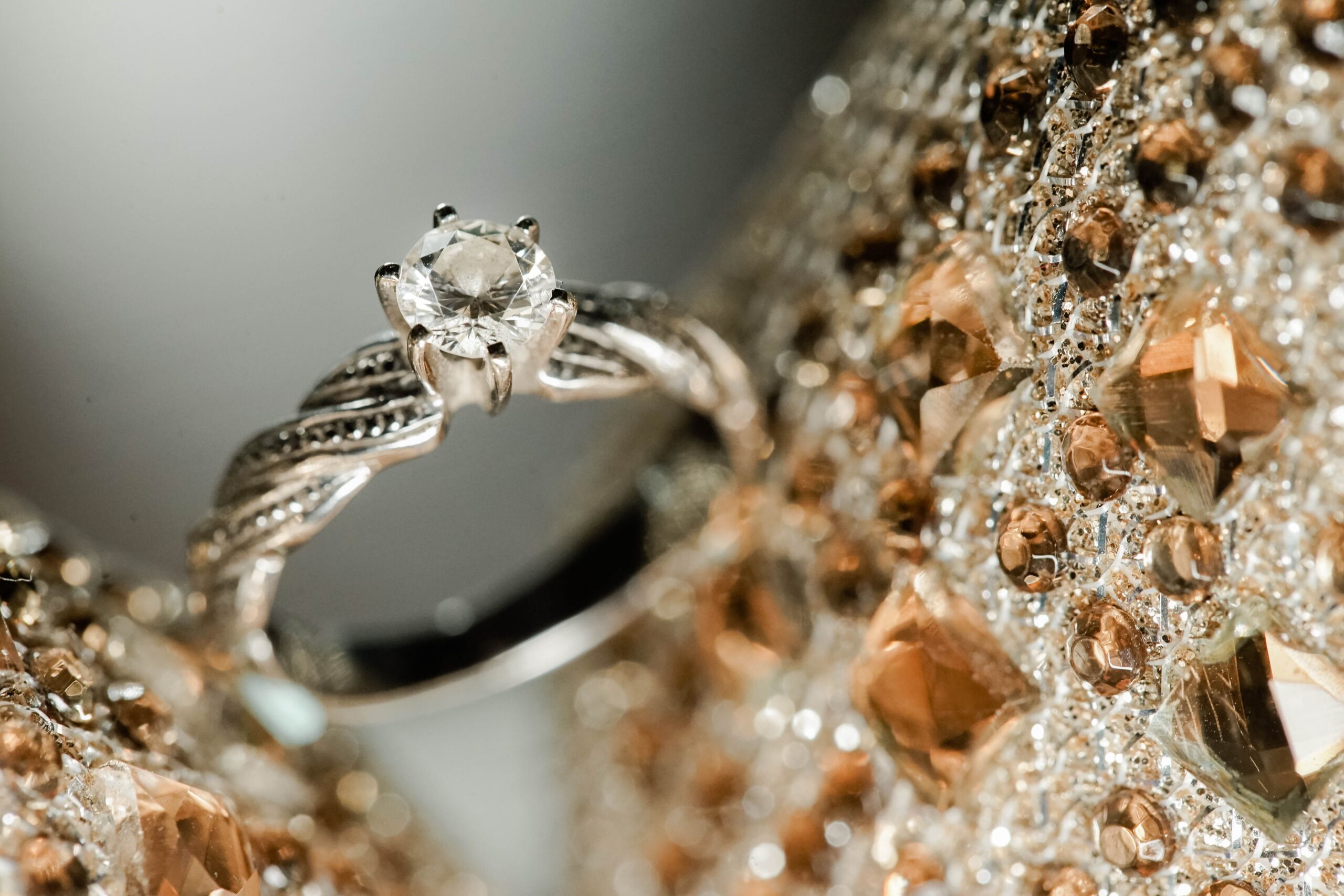
GIA Premium and Standard are two overall assessment categories introduced for eligible loose, colourless to near-colourless laboratory-grown diamonds. Since 1 October 2025, GIA has used this distinct format instead of placing the familiar natural-diamond colour and clarity nomenclature at the front of its D-to-Z laboratory-grown service. Premium requires every applicable criterion to meet the Premium threshold. Standard covers qualifying stones with a mixture of Premium and Standard-level results, or all Standard-level results.
Premium is not simply “one grade above” Standard, and Standard is not a synonym for one colour, clarity or cut grade. First confirm that the document is the current GIA Laboratory-Grown Diamond Quality Assessment, then read the assessment word together with the stone’s identity, measurements, carat weight, shape, inscription and the criteria published by GIA.
Which diamonds receive the Premium-or-Standard assessment?
GIA describes its current quality assessment as a service for loose, laboratory-grown diamonds in the colourless to near-colourless range, weighing at least 0.15 carat. It is therefore not a label that can be copied across every laboratory-grown diamond or every type of jewellery report. Mounted jewellery may require a different report product, and coloured laboratory-grown diamonds have separate GIA coloured-diamond services.
The date and document title matter. GIA announced the revised service in August 2025 and launched it on 1 October 2025. Documents issued under an earlier service can use an earlier layout and terminology. That difference in format does not, by itself, show that the diamond or its document is false. Verify the exact report or assessment through the issuing laboratory and interpret it according to the service in force when it was issued.
Loose, colourless to near-colourless lab-grown diamonds
The current GIA page specifies a minimum weight of 0.15 carat and an overall Premium or Standard result.
Coloured laboratory-grown diamonds
GIA lists separate coloured-diamond report options. For colour terminology, use the dedicated fancy-colour lab-grown diamond guide.
This narrow scope keeps the article distinct from Laxmi Jewellers’ general explanation of what is included in a diamond grading report. That broader guide explains the normal parts of a document; this page explains one current GIA assessment system and its decision rules.
How GIA defines Premium and Standard
GIA’s published criteria combine clarity, colour, polish, symmetry and, for round brilliant diamonds, cut grade. The wording is important: Premium requires the diamond to satisfy every Premium criterion. A stone that mixes Premium-level results with results that remain within the Standard minimums is classified Standard.
| Criterion | Premium threshold | Standard threshold | How to read it |
|---|---|---|---|
| Clarity | Very Very Slightly Included and higher | Very Slightly Included | Premium requires the higher threshold; a qualifying VS result places the overall assessment in Standard. |
| Colour | D | E to J | A qualifying E–J result can contribute to Standard. The assessment word does not print an exact colour grade as its headline result. |
| Polish | Excellent | Very Good | Polish concerns surface finish after cutting; it should not be treated as a complete beauty score. |
| Symmetry | Excellent | Very Good, or Good for fancy shapes | GIA publishes a different Standard minimum for fancy-shape symmetry than for round brilliants. |
| Cut grade | Excellent for round brilliant | Very Good for round brilliant | The listed overall cut-grade criterion applies to round brilliant diamonds, not as a universal grade for every fancy shape. |
A diamond must meet all Premium thresholds to receive Premium. Consider a round brilliant that reaches Premium thresholds for clarity, polish, symmetry and cut, but whose colour falls within the E-to-J Standard range. The overall result is Standard because one component is within the Standard band. The word Standard does not reveal which component determined the outcome.
Conversely, do not assume that two Standard assessments describe identical diamonds. One may meet several Premium thresholds and one Standard threshold; another may sit at the Standard threshold across several criteria. The overall word is useful, but it compresses multiple observations. Measurements, carat weight, shape and face-up appearance still help distinguish individual stones.
GIA states that a laboratory-grown diamond with any criterion outside the Premium or Standard ranges will not receive this quality assessment. That is not a third published quality category. It means the submitted stone does not qualify for a Premium-or-Standard assessment under the stated service rules.
What the assessment word tells you—and what it does not
The overall category tells you that the diamond met GIA’s published set of thresholds for that assessment. It also confirms that the item was submitted as a loose, laboratory-grown diamond within the service’s stated colour and size scope. GIA says the girdle is laser inscribed with “Laboratory-Grown” and the assessment number, creating an identification link between the stone and document.
Premium does not mean “perfect”, “flawless”, “best value” or “most beautiful”. Standard does not mean “poor”, “uncertified” or “second-hand”. Neither word states a retail price, an appraisal, an ethical conclusion, a warranty, a setting quality or a personal preference. They are GIA’s defined assessment outcomes for this particular service.
The categories also should not be converted into a retailer-created score. Saying that Premium equals a fixed number out of ten, or that Standard always corresponds to one exact 4Cs combination, adds information that GIA does not put into the category. Use the laboratory’s own criteria and the actual document rather than an invented translation.
- Use the exact assessment title and issue date.
- Match the number to the girdle inscription.
- Keep Premium and Standard capitalised as defined GIA terms.
- Do not infer an exact hidden colour or clarity grade.
- Review measurements and carat weight separately.
- Judge setting, workmanship and comfort on the finished jewel.
A practical way to read the new GIA format
- Identify the document type. Look for “Laboratory-Grown Diamond Quality Assessment”. A natural-diamond grading report, a coloured-diamond report and an assessment from another laboratory follow different formats.
- Check the assessment number. Enter it in GIA Report Check and compare the returned details with the document. A screenshot or seller-written summary is not a substitute for the issuing laboratory’s record.
- Match the diamond. GIA states that the girdle is inscribed with “Laboratory-Grown” and the assessment number. Where practical, a jeweller can inspect the inscription under magnification and compare it with the document.
- Read the scope fields. Confirm laboratory-grown identity, shape or cutting style, measurements, carat weight and the overall Premium or Standard result. Do not let the headline word make the other fields disappear.
- Apply the published decision rule. Premium means every applicable criterion reached Premium; Standard can contain any qualifying mixture of Premium and Standard criteria. Do not guess which one from appearance alone.
- Compare the actual diamond. Examine outline, light return, transparency and visual balance under consistent conditions. The assessment informs the comparison but does not choose a design for you.
If an older GIA laboratory-grown document uses colour and clarity grade terms rather than Premium or Standard, do not rewrite it in the new vocabulary. Verify its number, read the original fields and retain its issue context. The launch of a later service format does not authorise a seller or buyer to substitute an unofficial category for the document that was actually issued.
Why Premium or Standard is not an IGI grade
IGI’s current laboratory-grown diamond report page describes a report that records the diamond’s laboratory-grown identity and detailed characteristics. Its guide shows shape, cutting style, measurements and 4Cs assessments, with report-dependent information such as proportions and clarity characteristics. That is a different report design from GIA’s two-category overall assessment.
The underlying subjects overlap—both laboratories may examine colour, clarity, cut-related characteristics and origin—but the way results are organised and displayed differs. It is unsafe to claim that GIA Premium always equals a particular IGI colour-and-clarity pairing, or that GIA Standard maps to one exact IGI grade. A Standard result can arise from several qualifying combinations, while an IGI report presents individual fields within IGI’s own system.
| Question | Current GIA quality assessment | IGI laboratory-grown diamond report |
|---|---|---|
| Headline quality result | Overall Premium or Standard category for eligible stones. | Individual 4Cs assessments and related report fields. |
| Eligible item in the cited service | Loose, colourless to near-colourless laboratory-grown diamond of 0.15 ct or more. | IGI describes services for loose stones and finished jewellery; the exact report type controls the fields available. |
| Colour and clarity | Used within GIA’s eligibility criteria; the headline result is the combined category. | Shown as separate graded characteristics on the applicable report. |
| How to compare | Verify through GIA and apply GIA’s assessment criteria. | Verify through IGI and read IGI’s individual fields and comments. |
| Safe conversion | There is no responsible one-word crosswalk. Compare documented fields, scope and the actual diamonds rather than forcing one format into the other. | |
This is not a ranking of laboratories. It is a document-reading rule. Always name the issuing laboratory, use its verification service and preserve its terminology. If two diamonds have documents from different laboratories, compare what each document actually reports and note any fields that cannot be matched directly.
How the assessment can support a jewellery decision
Begin with identity and eligibility, then use the assessment to understand where the diamond sits within GIA’s defined bands. After that, compare dimensions, shape, carat weight and actual face-up appearance. A Premium result can narrow the documented criteria, but it cannot tell you whether you prefer one oval outline, one round brilliant pattern or one setting style over another.
For a finished ring, earrings, pendant or necklace, the jewellery adds decisions that sit outside the loose-diamond assessment: metal purity, setting security, stone matching, proportions within the design, comfort, workmanship and aftercare. A well-documented centre stone does not grade the entire piece. Equally, the finished design should not obscure which diamond document belongs to which stone.
When exploring Laxmi Jewellers’ lab diamond jewellery collection, ask for the item-specific document and confirm its issuing laboratory before comparing terminology. This keeps the commercial collection as the place to view designs, while this guide answers the narrower informational question about the new GIA format.
Instead of asking only “Is it Premium?”, ask: “Which document applies to this diamond, can I verify the number, what does the issuing laboratory report, and how does the actual stone look in this setting?” That sequence protects both documentation and personal judgement.
GIA Premium and Standard FAQs
When did GIA start using Premium and Standard for laboratory-grown diamonds?
GIA launched the revised assessment service on 1 October 2025 after announcing it in August 2025. The current service applies to eligible loose, colourless to near-colourless laboratory-grown diamonds weighing at least 0.15 carat.
Is Premium always better-looking than Standard?
Premium confirms that every applicable criterion met GIA’s Premium threshold. It does not guarantee that one person will prefer that diamond’s outline, facet pattern or appearance in a finished setting. Compare the document and the actual stones under consistent viewing conditions.
Can a diamond with an E colour criterion receive Premium?
No under GIA’s published criteria for this assessment. Premium requires D colour as well as the other Premium thresholds. E to J falls within the Standard colour band, so an otherwise qualifying diamond with an E result would receive Standard overall.
Does Standard mean every criterion is at the Standard minimum?
No. GIA states that Standard can contain any combination of Premium and Standard criteria, or all Standard criteria. The overall word alone does not reveal the mix, so do not invent exact hidden grades.
Do Premium and Standard apply to fancy-colour lab-grown diamonds?
Not through the quality assessment described here. GIA lists separate services for laboratory-grown coloured diamonds. Read the exact coloured-diamond report and its colour terminology rather than transferring Premium or Standard to it.
Is a GIA Standard assessment equivalent to an IGI VS or E-to-J grade?
No exact equivalence should be claimed. GIA Standard is an overall category that can arise from multiple qualifying combinations. An IGI report presents individual characteristics using IGI’s own format. Verify and read each document independently.
Does the new format make an older GIA lab-grown report invalid?
A different format or issue date is not, by itself, proof of invalidity. Verify the report number through GIA, match it to the diamond and interpret the original document according to the service under which it was issued. Do not relabel it unofficially as Premium or Standard.
Sources and further reading
Laboratory services can change. These primary sources were checked for the present guide; for an individual diamond, use the current record supplied by its issuing laboratory.
- GIA: current laboratory-grown diamond services
- GIA: updated services launched 1 October 2025
- GIA: Laboratory-Grown Diamond Assessment criteria chart
- IGI: how to read an IGI laboratory-grown diamond report
This article explains published report terminology. It is not a grading opinion, appraisal or statement that either laboratory has assessed every diamond offered by Laxmi Jewellers.
Explore lab diamond jewellery with the report in context
View Laxmi Jewellers’ current lab diamond designs, then ask our team to identify the document supplied with the specific diamond and explain how its fields relate to the finished piece.
