

Diamond colour guide · Laxmi Jewellers Dubai
Fancy-Colour Lab-Grown Diamonds Explained: Hue, Tone, Saturation and Report Terms
Learn how laboratory reports describe a coloured lab-grown diamond, why colour strength is more than a single word, and which identity and treatment fields to verify before comparing stones.
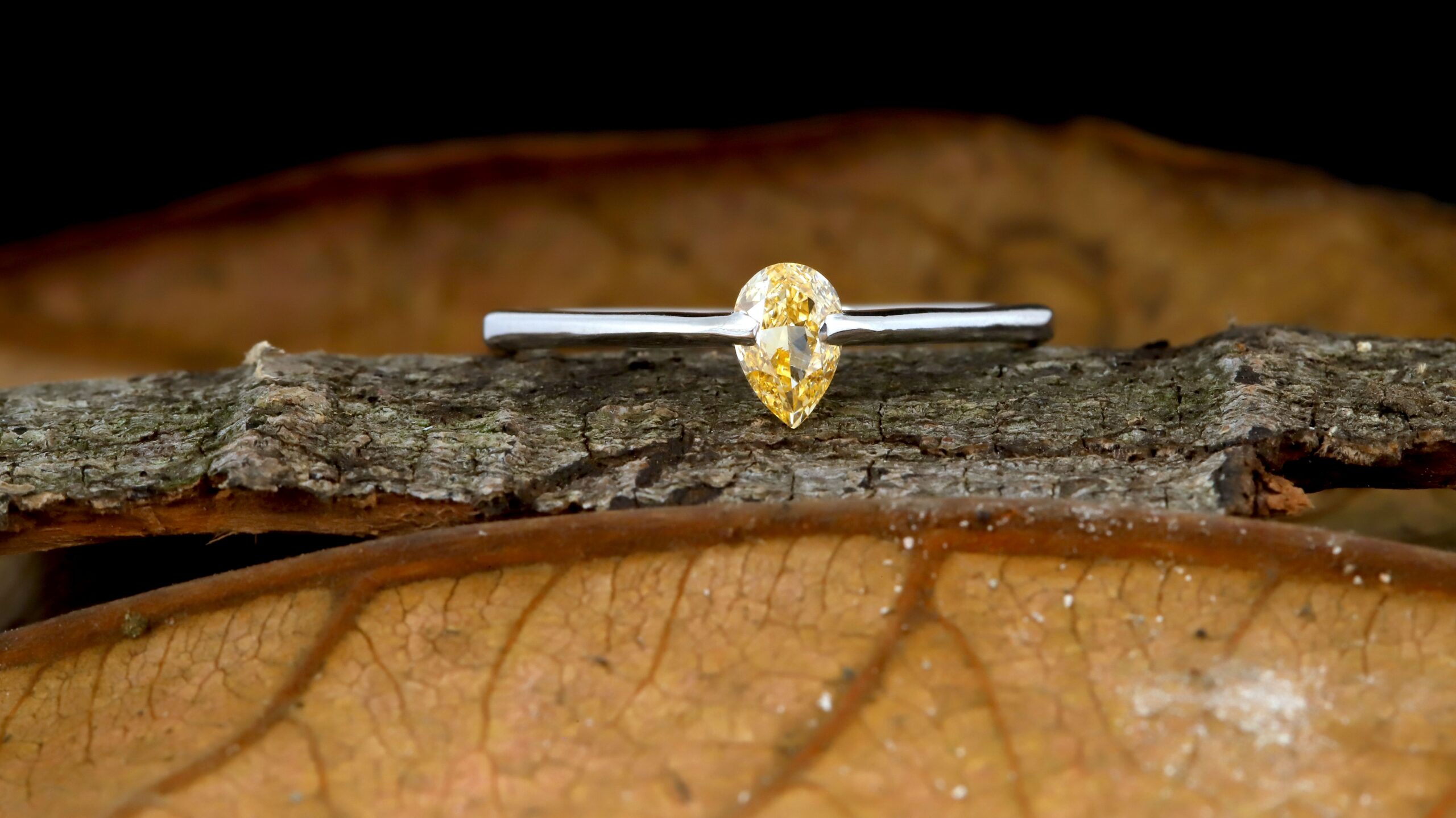
A fancy-colour lab-grown diamond is described by the colour that is present, not by how little colour it shows. Its report may combine a hue name with a term such as Fancy Light, Fancy, Fancy Intense, Fancy Vivid, Fancy Deep or Fancy Dark. That final description reflects the relationship between hue, tone and saturation; it is not a simple ladder that can be read without the rest of the report.
Origin, colour and treatment are separate questions. “Laboratory-grown” identifies how the diamond originated. The colour description records its observed colour within the issuing laboratory’s framework. A growth-method or post-growth-treatment comment provides further information when that service includes it. None of those fields should be guessed from a product photograph.
This guide stays with coloured laboratory-grown diamonds. It does not repeat the ordinary D-to-Z diamond colour scale, and it does not transfer claims about the scarcity or value of natural fancy-colour diamonds to lab-grown stones. Use it to understand report language before viewing complete designs in Laxmi Jewellers’ engagement-ring collection.
Fancy colour is not the next step after Z
The familiar D-to-Z system evaluates relative colourlessness in diamonds that fall within its normal range. A fancy-colour system instead evaluates the presence and appearance of colour. GIA’s current explanation distinguishes the two directly: fancy-colour grading considers hue, tone and saturation, and uses a “Fancy-grade” term to express the combined effect of tone and saturation.
That distinction matters when comparing listings. A letter grade from the normal range and a fancy-colour description answer different questions. Do not convert “Fancy Intense”, for example, into an imagined D-to-Z equivalent. Also avoid treating every colour name used in advertising as a laboratory term. Trade names, campaign names and screen colours may not reproduce the wording on the actual report.
Read the complete colour line exactly as the issuing laboratory records it, then confirm the diamond’s origin, report number, colour distribution and treatment comments. The photograph and product name do not replace those fields.
Hue, tone and saturation describe different things
Colour is three-dimensional. IGI describes its approach in terms of hue, tone and saturation, while GIA’s coloured-diamond references also use these attributes. Keeping them separate prevents a common reading error: assuming that two stones described with the same broad colour word must look alike.
Hue
The colour family the eye recognises, such as yellow, pink, blue, green or a combination that includes a modifying hue.
Tone
The relative lightness or darkness of the colour. Too little or too much darkness can change how strongly the hue reads face-up.
Saturation
The strength or intensity of the colour. It concerns how concentrated the colour appears, not the diamond’s brightness or sparkle.
A colour description can include a modifier as well as a dominant hue. The precise order and wording follow the issuing laboratory’s conventions, so preserve the report language rather than shortening it casually. “Pink”, “purplish pink” and “pinkish purple” are not interchangeable labels. When comparing two reports, compare the full description, not only the last colour word or a retailer’s shortened heading.
Hue, tone and saturation also interact. A stronger saturation does not necessarily mean a darker stone, and a dark tone is not automatically a stronger colour. This is why laboratories use reference systems and controlled conditions rather than asking a grader to select a colour from memory.
What Fancy Light, Intense, Vivid, Deep and Dark mean
The modifier before the hue locates the observed colour within regions of tone and saturation. GIA’s current reference chart shows that these regions are hue-dependent: different hues reach their strongest saturation at different tones. The terms are therefore more nuanced than a universal one-to-six intensity scale.
| Report wording | What it conveys | What it does not prove alone |
|---|---|---|
| Fancy Light | A relatively light region of fancy colour, described through the laboratory’s tone-and-saturation framework. | That every stone with the term will look identical in every shape, setting or light. |
| Fancy | A fancy-colour grade without an additional Light, Intense, Vivid, Deep or Dark modifier. | A position on a simple price or rarity ladder. |
| Fancy Intense | A region in which colour strength is more pronounced for that hue and grading framework. | That the stone must appear brighter than a Fancy Vivid or lighter than every Fancy Deep stone. |
| Fancy Vivid | A strong, comparatively vivid colour region determined by the interaction of tone and saturation. | Natural origin, untreated colour, superior cut or higher monetary value. |
| Fancy Deep | A combination of stronger colour and deeper tone within the applicable hue region. | That “deep” means only saturation, or that the face-up pattern will be even. |
| Fancy Dark | A dark-toned fancy-colour region for the stated hue. | That darkness, brilliance and saturation are the same characteristic. |
Some laboratory charts also show Faint, Very Light or Light regions before the “Fancy” grades for relevant hues. Always interpret the exact document and date rather than filling in a missing term from memory. Report products and terminology can be updated.
How to read IGI and GIA coloured lab-grown reports
IGI and GIA both provide services for laboratory-grown coloured diamonds, but their report products, layouts and exact terms are not interchangeable. Check the logo, report type, issue date and official verification result before interpreting any field.
| Item | IGI | GIA |
|---|---|---|
| Identity | IGI states that its Fancy Colored Diamond Report identifies the gemstone as natural or laboratory grown. | GIA offers separate laboratory-grown coloured-diamond services and identifies the stone as laboratory-grown. |
| Colour description | IGI describes hue, tone and saturation and includes the fancy colour among the report details. | GIA’s coloured-diamond framework uses hue plus a fancy-grade term reflecting tone and saturation. |
| Growth and treatment | IGI says permanent treatments are noted in comments and explains its laboratory-grown inscription convention. | GIA’s current coloured lab-grown services include assessment of growth type and post-growth treatment. |
| Verification | Use IGI’s own report-verification service and match the returned details to the stone and document. | Use GIA Report Check and match the report number, inscription and specifications. |
There is one timely GIA distinction worth noting. Its current service page describes a Premium-or-Standard quality assessment for loose colourless to near-colourless laboratory-grown diamonds, while laboratory-grown coloured diamonds have separate coloured-diamond report services. Do not assume that wording from one service automatically belongs on the other.
Citing GIA or IGI methodology here does not state that either laboratory has graded every Laxmi Jewellers diamond. For any specific product, rely only on the report actually supplied for that stone and verify it with the named issuing laboratory.
Growth method does not replace the colour description
Laboratory-grown diamonds are produced by high-pressure, high-temperature (HPHT) or chemical vapour deposition (CVD) methods. Those terms identify growth processes; they are not colour grades. A diamond may also receive a post-growth process intended to alter colour. GIA’s current laboratory-grown services state that its coloured reports assess growth type and post-growth treatment, while IGI says that permanent treatments are noted in the comments of its fancy-colour reports.
HPHT can refer to a growth method or to a later treatment, depending on context. Treating those uses as the same is a frequent source of confusion. Read the complete report line and comments: “HPHT-grown” describes formation, while a separate post-growth-treatment statement addresses what happened after growth.
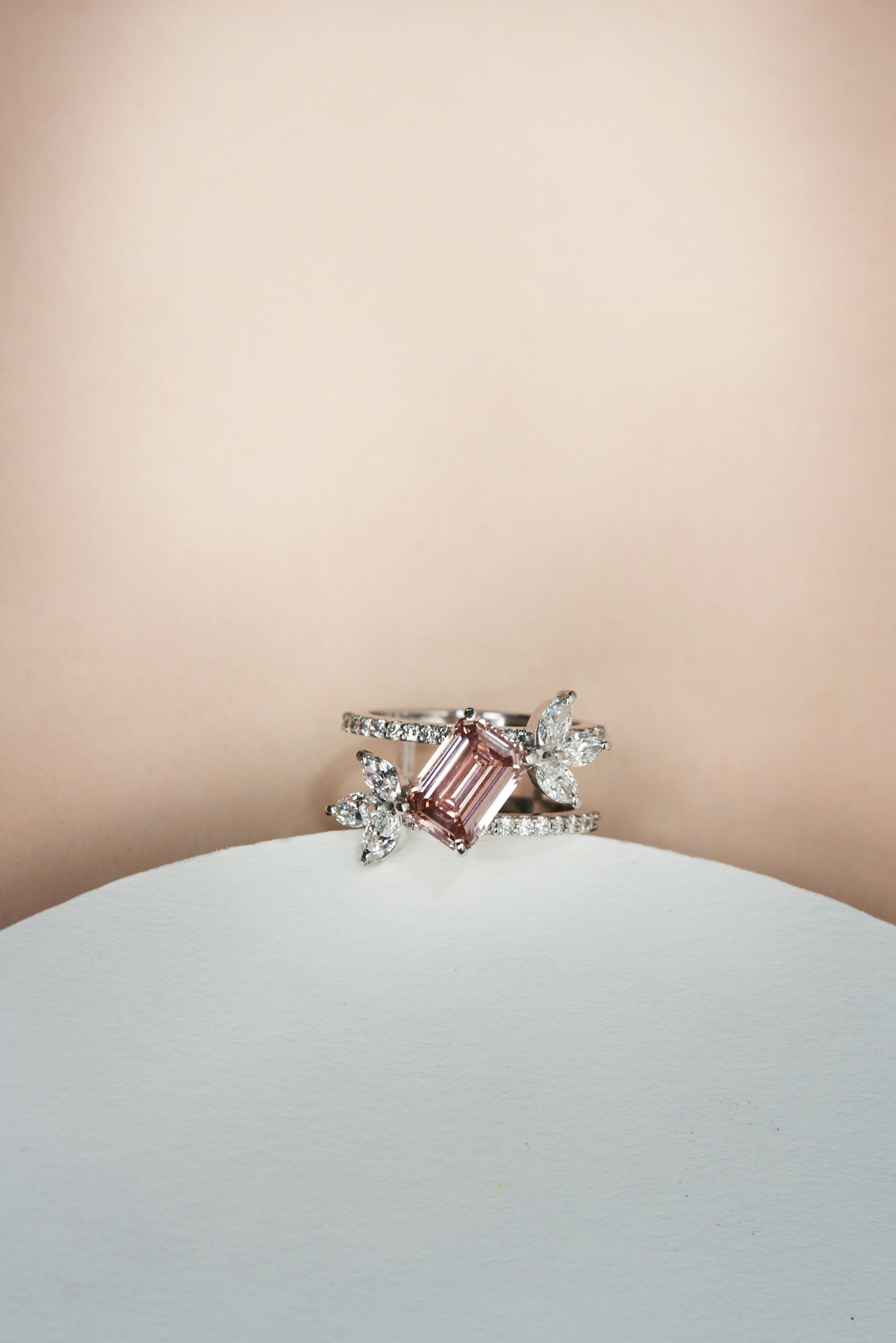
Colour should not be reverse-engineered from growth method. Nor should a viewer infer “untreated” because a hue looks subtle or natural. Laboratories use advanced analytical methods beyond unaided-eye inspection. Laxmi Jewellers’ separate guide to CVD and HPHT lab-grown diamonds explains the two growth routes; the present guide is limited to colour and report terminology.
Colour distribution, cut and lighting still matter
Colour distribution describes whether the characteristic colour appears evenly or unevenly across the diamond under the laboratory’s assessment. It is a different field from the hue and fancy-grade wording. An “even” entry does not mean that every facet returns the same colour at every angle; contrast, extinction, reflections and dispersion still move as the diamond and light move.
Shape and faceting influence where colour appears to collect face-up. Cutters may make different proportion choices for coloured diamonds because retaining and displaying colour can be an important objective. That does not make a fancy-colour grade a cut grade. Read polish, symmetry, proportions and any cut-related comments in their own places.
Setting metal, surrounding stones and ambient light create further context. White metal may form a high-contrast border around some hues, while yellow or rose metal may visually blend with or modify the surrounding impression. A phone camera can alter white balance, exposure and saturation. For a fair comparison, view candidate stones under the same neutral lighting, against the same background and at the same scale.
Fluorescence is also separate. It describes a response to ultraviolet radiation, not the fancy-colour grade itself. If the report records fluorescence, interpret it alongside the stone rather than adding it to the colour name. See the dedicated diamond fluorescence guide for that field.
A practical checklist for comparing coloured lab-grown diamonds
Start with identity and documentation, then move to appearance. This order reduces the risk of allowing a dramatic photograph or shortened product name to override what the report actually says.
- Confirm the issuing laboratory and open its official report-verification result.
- Match the report number to the document and, where present, the girdle inscription.
- Read the full hue wording, including every modifying colour term.
- Keep the fancy-grade term intact rather than translating it into a private intensity score.
- Check colour distribution and inspect how the colour appears across the face-up pattern.
- Read origin, growth and treatment fields separately; none is a substitute for another.
- Compare similar shapes and sizes under the same neutral lighting and camera conditions.
- Review the full specification, including measurements, carat, clarity, finish and setting design.
A grading report is a structured description, not a valuation and not a beauty score. Two diamonds can share a colour description yet differ in proportions, facet pattern, clarity, size or the way their settings frame the colour. The final decision should combine verified documentation with a consistent view of the complete jewellery design.
GIA’s laboratory-grown coloured-diamond sample explicitly notes that its specifications use the same descriptive colour scale as natural coloured-diamond reporting but do not correlate with nature’s continuum of rarity. Therefore, a natural fancy-colour diamond’s rarity narrative, auction history or value relationship must not be applied to a lab-grown stone merely because the colour words look similar.
Fancy-colour lab-grown diamond FAQs
Is a fancy-colour lab-grown diamond graded on the D-to-Z scale?
No. The D-to-Z framework describes relative colourlessness in its normal range, while fancy-colour grading describes the presence of colour through hue, tone and saturation. Read the report type and exact colour line rather than treating Fancy as the next letter after Z.
What is the difference between hue, tone and saturation?
Hue is the recognised colour family, tone is its relative lightness or darkness, and saturation is its strength or intensity. A fancy-grade term reflects the interaction of tone and saturation, while the hue wording identifies the colour itself.
Is Fancy Vivid always better than Fancy Intense?
No laboratory term is a universal beauty ranking. Fancy Vivid and Fancy Intense occupy different colour regions, but appearance also depends on hue, tone, shape, faceting, size, distribution and personal preference. The terms alone do not establish value.
Does “HPHT” mean the diamond was colour treated?
Not necessarily. HPHT can name the method used to grow a diamond, and it can also describe a later post-growth process. The report’s growth-method and treatment statements provide the needed context; do not infer treatment from the acronym alone.
Do IGI and GIA use identical lab-grown diamond reports?
No. Both organisations describe coloured diamonds and identify laboratory-grown origin, but their products, layouts, inscriptions and current service wording differ. Verify the report with the issuing laboratory and use that laboratory’s explanations for its fields.
Can a product photograph confirm the fancy-colour grade?
No. Lighting, background, reflections, camera white balance, editing and screen calibration can change apparent colour. Use the verified report for the grade, then compare the actual stone or consistent neutral imagery for face-up appearance.
Sources and further reading
Report services and terminology can change. The following primary laboratory sources were checked for this guide; always consult the current issuing-laboratory record for an individual stone.
See fancy-colour diamonds in engagement-ring settings
Use the verified report to understand the diamond, then consider how its hue, shape, setting metal and surrounding stones work together face-up.
Diamond education · Laxmi Jewellers, Dubai · A trade name of Amit Verma Jewellery LLC.
