

Diamond verification guide · Laxmi Jewellers Dubai
Can a Diamond Tester Detect Lab-Grown Diamonds? Simulants, Screening and “Pass/Refer”
Understand what a basic thermal or electrical tester can establish, why laboratory-grown diamonds need different screening, and what “refer” actually means.
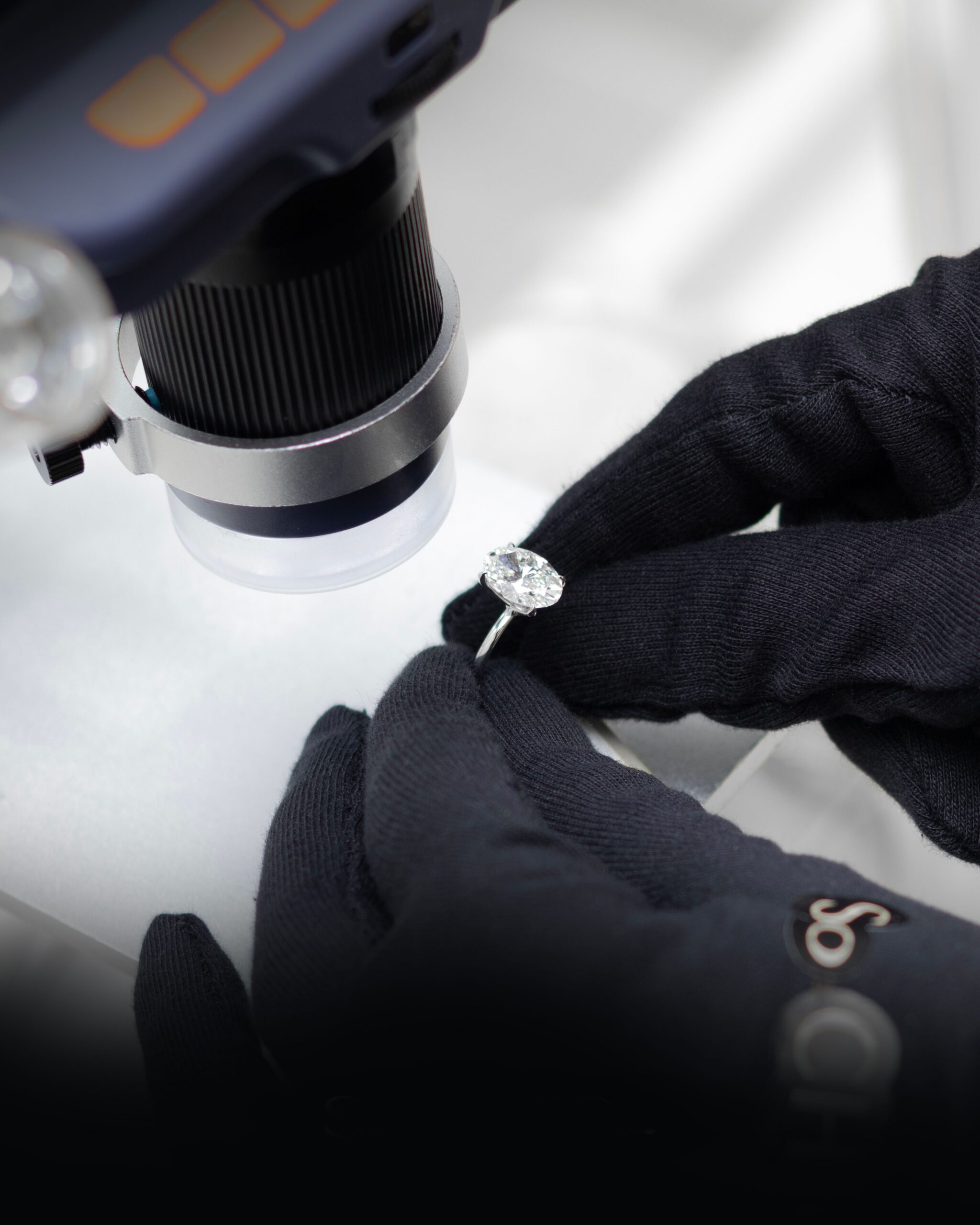
A conventional diamond tester can often help separate diamond from some look-alike materials, but it generally cannot prove that a diamond is natural rather than laboratory-grown. Natural and laboratory-grown diamonds share essentially the same chemical and optical identity, so the familiar probe that measures heat or electrical behaviour is answering a different question from origin screening. A professional screening instrument may return “pass” or “refer”; a refer result is a request for more testing, not a diagnosis of “lab-grown”.
If a stone triggers a basic diamond tester, the result may support “diamond rather than certain simulants” within that tester’s stated scope. It does not automatically establish natural origin. For that, use documentation, inscription checks and an appropriate screening pathway. GIA explains that no rapid, low-cost screening tool conclusively identifies every laboratory-grown diamond; referred stones need further examination using suitable gemological and laboratory techniques.
“Is it diamond?” is not the same as “where did it grow?”
Testing becomes confusing when several different questions are compressed into one beep. A buyer may want to know whether a clear stone is diamond, whether it is a simulant such as moissanite or cubic zirconia, whether a diamond is natural or laboratory-grown, or whether it has been treated. Those are related questions, but they are not interchangeable.
| Question | What a result may indicate | What it does not prove |
|---|---|---|
| Diamond or some simulants? | A thermal or combination probe may help within its specified material range. | Natural versus laboratory-grown origin. |
| Natural-diamond screening? | A purpose-built instrument may pass a sample with the expected natural signature or refer it. | That every referred stone is laboratory-grown. |
| Definitive origin? | A qualified laboratory can combine spectroscopy, imaging and gemological observations. | That one consumer tool can replace the complete analysis. |
| Match to a report? | Report number, measurements and any inscription can be compared. | Identity from a number alone if the physical stone has not been matched. |
Keep the exact question attached to the result. A device can be functioning correctly while still being the wrong device for the conclusion someone wants to draw.
What thermal and electrical diamond testers do
Many handheld testers place a probe tip on a facet and measure a physical response such as thermal conductivity. Diamond moves heat in a distinctive way, so this can be useful in separating it from materials with very different behaviour. Some combination testers add electrical response to improve separation from moissanite. Exact capabilities, eligible colours and sizes, calibration steps and error messages vary by instrument.
A basic tester’s positive indication should therefore be read as a result within the manufacturer’s claimed scope. Probe angle, contact, stone temperature, cleanliness, nearby metal and a very small testing surface can influence operation. Mounted jewellery adds access challenges: touching metal instead of the stone or testing a narrow facet can produce an invalid or misleading reading.
For the underlying distinction, see Laxmi Jewellers’ separate guide to laboratory-grown versus natural diamonds. The present guide owns the testing pathway, not the broader buying comparison.
Diamond simulants, moissanite and cubic zirconia
A diamond simulant resembles diamond visually but has a different composition and properties. Moissanite and cubic zirconia are common examples. They are not laboratory-grown diamonds: the word “laboratory-grown” describes diamond produced by a manufacturing process, while a simulant is a different material used for a diamond-like appearance.
Moissanite
Moissanite can challenge older thermal-only testers because its heat behaviour may overlap the tester’s diamond threshold. Instruments designed to add another measurement may separate it more effectively, but users must follow that model’s instructions.
Cubic zirconia and other look-alikes
Materials with substantially different thermal behaviour may be rejected by a basic probe. That still does not turn the same result into proof of natural diamond origin or disclose every possible treatment.
GIA also cautions that screening-device scope matters: depending on the method, some instruments may not refer every simulant correctly. Treat the operating manual’s colour, size, mounting and material limits as part of the test—not as optional fine print.
What “pass” and “refer” mean
Purpose-built natural-diamond screeners commonly use an intentionally cautious decision model. In GIA’s description of the iD100, “pass” indicates that the tested item shows the characteristic luminescence pattern of a natural diamond. “Refer” means that pattern was not established and the item could be a laboratory-grown diamond or a simulant; it should be retested as directed and, when the refer result remains, examined further.
A refer result is not a failed quality grade, and it does not mean a laboratory-grown diamond has been conclusively identified. A small percentage of natural diamonds can also be referred. The correct next action is controlled follow-up, not relabelling the stone based on one screen.
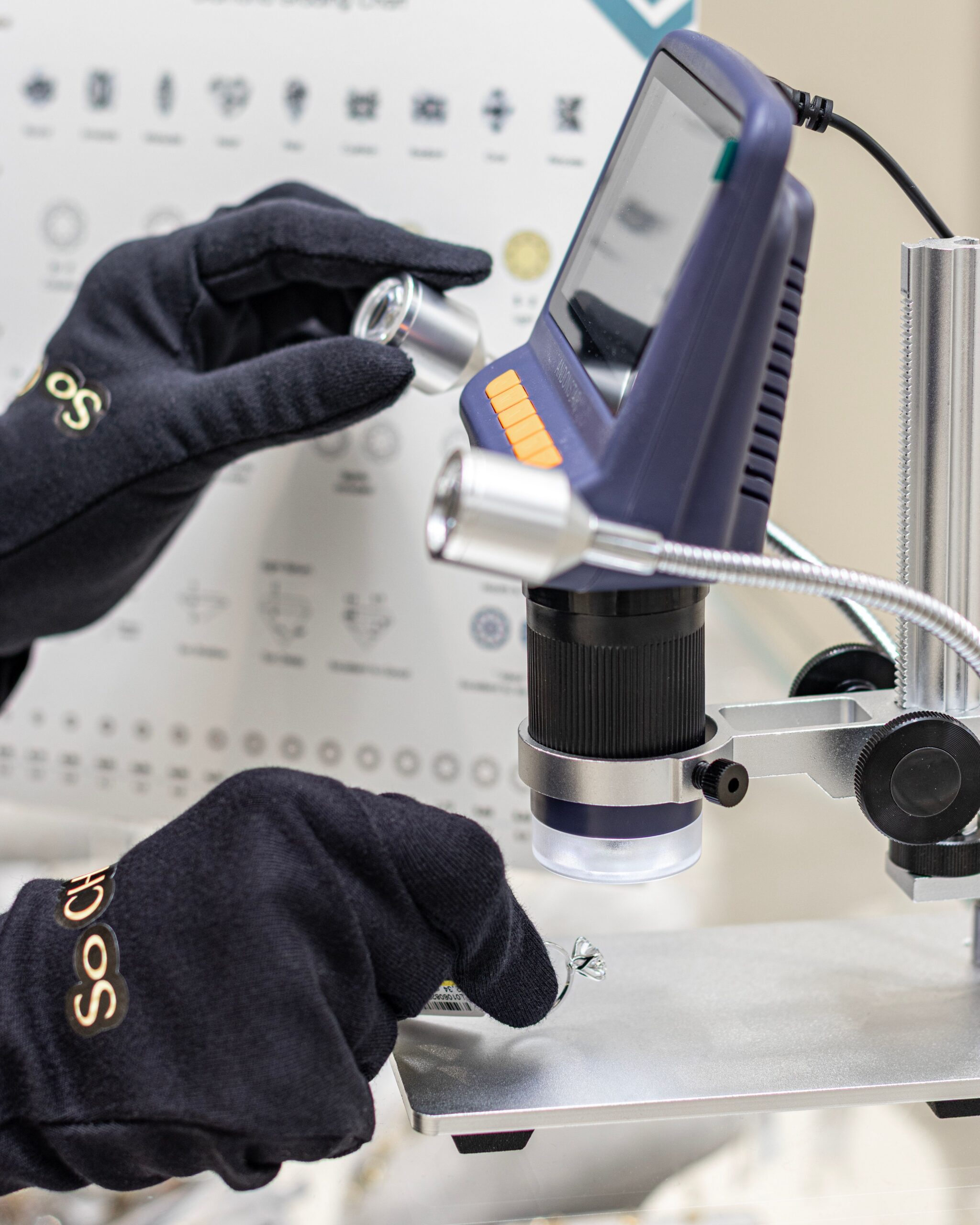
GIA’s 2024 review states that no cost-effective, rapid screening tool definitively identifies all laboratory-grown diamonds. Most consumer-market screeners for colourless to near-colourless stones use pass/refer logic, and referred samples require additional gemological techniques or laboratory examination.
Mounted stones and melee need extra care
A loose diamond offers accessible facets and can be positioned for the instrument. A mounted stone may expose only a small table or crown area, sit close to conductive metal, or be partly blocked by prongs. A ring can also contain several types or sizes of stone. One reading on the centre stone says nothing about untested accents.
Melee creates a different scale problem. Tiny stones can be numerous, and testing each with a probe is slower and more sensitive to positioning. GIA’s research highlights the importance of screening instruments for melee, while also stressing the differences among HPHT growth, CVD growth and post-growth treatment. For terminology and size context, read the dedicated guide to melee diamonds.
Do not press a probe aggressively into a setting, scrape a facet or dismantle fine jewellery at home. If the mounted design falls outside the tester’s stated scope, stop and use an appropriate professional route.
How to check a diamond claim without over-reading one tool
- Define the claim. Decide whether you need material identification, natural-versus-laboratory-grown origin, treatment information, or a match to a grading document.
- Read the device scope. Confirm eligible stone colour, size, shape, mounting and simulant coverage before interpreting a result.
- Inspect and clean safely. Surface residue and poor probe contact can interfere. Follow the instrument and jewellery-care instructions rather than improvising.
- Record the exact output. “Diamond”, “moissanite”, “pass”, “refer”, “no test” and an error code are different outcomes. Do not translate them into a stronger conclusion.
- Check documents and identity. Compare report number, measurements and inscriptions where applicable. Laxmi’s diamond grading report guide explains what the document covers.
- Escalate a persistent refer or mismatch. Use a qualified gemological laboratory or professional with the correct advanced instrumentation and ask for the scope of the conclusion in writing.
For a new purchase, disclosure should be clear before payment. Explore Laxmi Jewellers’ laboratory-grown diamond jewellery and ask the team to connect the stone, its description and any supplied report. If growth method is relevant to your comparison, keep that separate too: the CVD versus HPHT guide explains production routes rather than tester operation.
Diamond tester FAQ
Will a lab-grown diamond pass a normal diamond tester?
It can indicate as diamond because laboratory-grown diamond is diamond material. A conventional diamond-versus-simulant probe is not designed to establish natural origin unless its manufacturer explicitly states a separate, validated screening capability.
Does a “refer” result mean the stone is lab-grown?
No. Refer means the instrument did not establish its pass condition and the stone needs further testing. Depending on the device and sample, the item could be laboratory-grown, a simulant, treated or a natural diamond that the screener refers.
Can a tester confuse moissanite with diamond?
Some thermal-only instruments can be challenged by moissanite. Combination testers may add another measurement, but performance and limits depend on the exact model, sample and operating procedure.
Can I test a diamond while it is in a ring?
Some instruments are designed for mounted jewellery, but access, nearby metal, stone size and probe angle still matter. Use only a device and procedure that cover the mounting and do not risk damaging the piece.
Can a phone app identify a lab-grown diamond?
A photograph or consumer phone app cannot replace appropriate origin screening and laboratory analysis. Natural and laboratory-grown diamonds can appear alike without specialised measurements.
What is the most reliable proof of diamond origin?
Use a report from a recognised gemological laboratory matched to the physical stone, together with clear seller disclosure. If doubt remains, request independent advanced examination rather than relying on a single basic tester.
Authoritative sources
- GIA Gems & Gemology: Laboratory-Grown Diamonds—An Update on Identification and Products Evaluated at GIA
- GIA FAQ: How do I identify laboratory-grown diamonds?
- GIA iD100 User Guide
- GIA 4Cs: Diamond simulants, moissanite and laboratory-grown diamonds
Source pages and Pexels licence terms were rechecked on 26 October 2026. This guide is educational; device instructions and item-specific professional examination take priority.
Connect the test result to the actual diamond
Compare the stone, disclosure and report together, then ask which identification or screening method supports the description.
