

Responsible sourcing language · Laxmi Jewellers Dubai
What Does Recycled Gold Mean in Jewellery? Claims, Evidence and Chain of Custody
Understand pre-consumer and post-consumer gold, what a recycled-content percentage covers, and which records make a jewellery claim specific enough to assess.
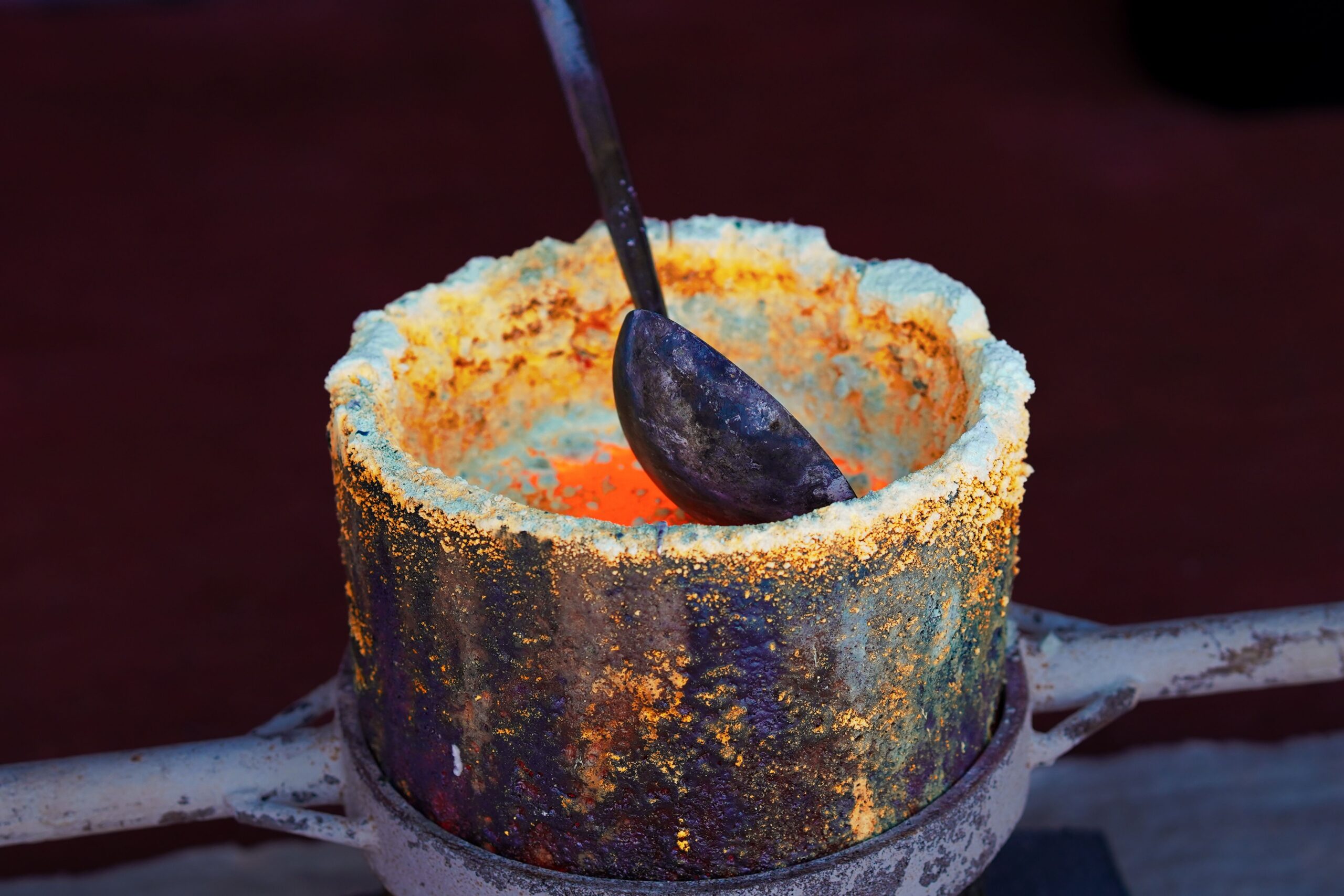
A recycled gold claim says that a stated amount of gold came from eligible recovered material and entered a new production cycle. The useful questions are not simply “Is it recycled?” but “Which definition is being used, is the input pre-consumer or post-consumer, what percentage is claimed, which component does it cover, and what records support that statement?” The phrase alone does not prove a product’s full environmental impact, ethical performance or individual material history.
Recycled gold can be refined to the same fineness needed for jewellery as gold from other eligible sources; “recycled” describes the input history, while karat or fineness describes the gold content of the alloy. A credible claim identifies the material category and scope, gives a percentage where relevant and can be traced through documented supplier and transfer records. Broad wording, workshop photographs or a recycled-style symbol are not evidence by themselves.
Recycled gold is not one undivided category
Industry and environmental-claim frameworks distinguish where recovered material arises. The Responsible Jewellery Council’s 2024 Chain of Custody Standard describes recycled precious metal through categories that include pre-consumer and post-consumer material, material derived from waste, and clearly traceable mixtures of those inputs. CIBJO’s 2025 recommendation similarly defines recycled gold as pre-consumer, post-consumer or a mixture, while excluding ordinary investment bars and coins unless those items were themselves made entirely from eligible recycled input.
Pre-consumer gold
This is eligible material recovered before a finished product reaches an end user—for example, certain refining material generated during jewellery manufacture or fabrication. A precise definition matters: ISO 14021 excludes rework, regrind or scrap that a process can reclaim and reuse within the same process that generated it. Routine internal recirculation should not automatically become a recycled-content claim.
Post-consumer gold
This comes from products recovered from end users after they are no longer wanted, required or usable for their original purpose. Old jewellery may qualify when it follows the applicable definition and evidence route, but a seller still needs records showing the basis on which the material was accepted and classified.
A mixed input is not automatically unclear. It can be described honestly when the categories and proportions are supported. What creates uncertainty is a label such as “recycled gold” with no indication of whether it refers to post-consumer jewellery, manufacturing material, waste-derived input, an attributed amount within a controlled system or some combination of these.
Recycled content and gold purity answer different questions
Gold can be melted and refined repeatedly because the metal itself does not become “second quality” merely by entering another production cycle. Refining removes impurities to reach a target fineness; jewellery manufacture then combines gold with selected alloying metals to obtain the required colour, hardness and working properties. The finished item’s purity is expressed separately through karat or millesimal fineness.
For that reason, “18K recycled gold” contains two different pieces of information. “18K” describes a nominal gold proportion of 18 parts in 24, commonly represented as 750 fineness. “Recycled” describes the claimed source history of some or all of the gold input. Laxmi’s guide to 18K, 14K and 22K gold purity marks explains how fineness language differs from colour, weight and source.
What chain of custody contributes to a claim
A chain of custody is a documented sequence recording how eligible material is identified, transferred and controlled through the supply chain. In an RJC context, the voluntary Chain of Custody standard complements the organisation’s Code of Practices. It sets requirements for eligible material, due diligence, segregation or controlled accounting, transfer documents and product claims. Certification against a standard can add structured assurance, but the exact entity, scope, material and validity period still matter.
Useful evidence may include supplier declarations, invoices, transfer documents, refining records, inventory controls, calculation methods and independent certification where claimed. The documents should connect the stated input category with the organisation making the claim. A generic certificate for a company, a refinery or another product does not automatically establish the composition of the item under consideration.
ISO 14021:2026 places self-declared environmental claims within a documented programme and strengthens the expectation that supporting information is retained. It defines recycled content as a proportion by mass of recycled material in, or attributed to, a product, component or packaging. That last distinction is important: some systems use controlled mass-balance attribution, in which eligible input and output claims are accounted for across a system rather than physically traced as the same atoms into one item. When attribution is used, the seller should explain it; the claimed content may not be guaranteed to be physically present in that individual piece.
Five parts of a claim that can be assessed
A short statement can still be meaningful if it tells the reader enough to understand its boundaries. Look for the material, category, proportion, component scope and evidence route together. If one element is absent, ask rather than supplying the missing meaning yourself.
| Claim element | What clear wording tells you | Useful follow-up |
|---|---|---|
| Material | The statement is specifically about gold, not the complete jewellery item or its packaging. | Does it also cover alloying metals, findings, solder or plating? |
| Category | Pre-consumer, post-consumer, waste-derived or a documented mixture is identified. | Which definition and eligibility rules are being used? |
| Proportion | A percentage indicates how much qualifying content is claimed by the applicable calculation. | Is that percentage physical content or an attributed mass-balance amount? |
| Scope | The claim names the component: gold in the alloy, a specific part, or the whole product where justified. | Are stones, clasps, solder and other non-gold components excluded? |
| Evidence | Records and any certification are linked to the relevant supplier, period and material flow. | Can the seller explain the documents without extending what they prove? |
What recycled gold wording does not establish by itself
A recycled-content statement can answer a useful, limited question. Problems begin when that statement is stretched into unrelated conclusions. It does not automatically show that the finished piece has a lower total environmental footprint, because energy sources, refining efficiency, transport, alloying, manufacture, longevity and end-of-life routes also influence impact. A comparative environmental claim requires a defined method and appropriate evidence beyond the input label.
It also does not prove “mine-free” history. Gold can circulate for generations and may be refined into indistinguishable feedstock; the relevant claim concerns the documented recovery route at a defined point, not a complete biography of every atom. Nor does recycled content establish labour conditions, human-rights performance, conflict-risk controls, gem origin, product durability or repairability. Those are separate questions, even when a responsible business addresses several together.
Be cautious with unqualified words such as “green”, “eco-friendly”, “ethical” or “sustainable”. They can suggest an overall benefit much broader than the evidence supplied. “Made with 100% recycled gold” is more specific, but it still needs scope: does “100%” apply to the gold content, all metals, the entire ring by mass, or an attributed amount? Exclusions and non-qualifying components should be stated rather than hidden.
A buyer’s seven-step recycled gold claim checklist
- Quote the exact claim. Save the full product wording rather than relying on a badge, colour, icon or search-result snippet.
- Identify what is covered. Ask whether the statement applies to the gold content, every metal component or the complete product.
- Find the material category. Confirm whether the input is pre-consumer, post-consumer, waste-derived or a documented mixture.
- Check the percentage and method. Look for the claimed proportion, calculation basis and whether mass-balance attribution is involved.
- Ask which standard is referenced. Note the edition, certification body where relevant, certified entity, scope and current validity.
- Separate adjacent claims. Purity, recycled content, responsible sourcing, carbon impact and gem provenance require different evidence.
- Keep the answer with the item. Retain the invoice, product specification and supporting statement so the wording can be understood later.
A proportionate answer is often a good sign. A seller may not disclose commercially sensitive supplier documents, but should be able to explain what is claimed, what is excluded and what kind of control supports the wording. If the answer continually shifts between recycled input, general responsibility and product quality, the original claim remains unresolved.
From refined metal to a finished piece
Once eligible gold has been refined and its status controlled, jewellery production still involves design decisions, alloy preparation, forming or casting, assembly, finishing and quality checks. Recycled origin does not prescribe one manufacturing method, and the finished object should still be judged for fit, construction, setting security, finish and serviceability.
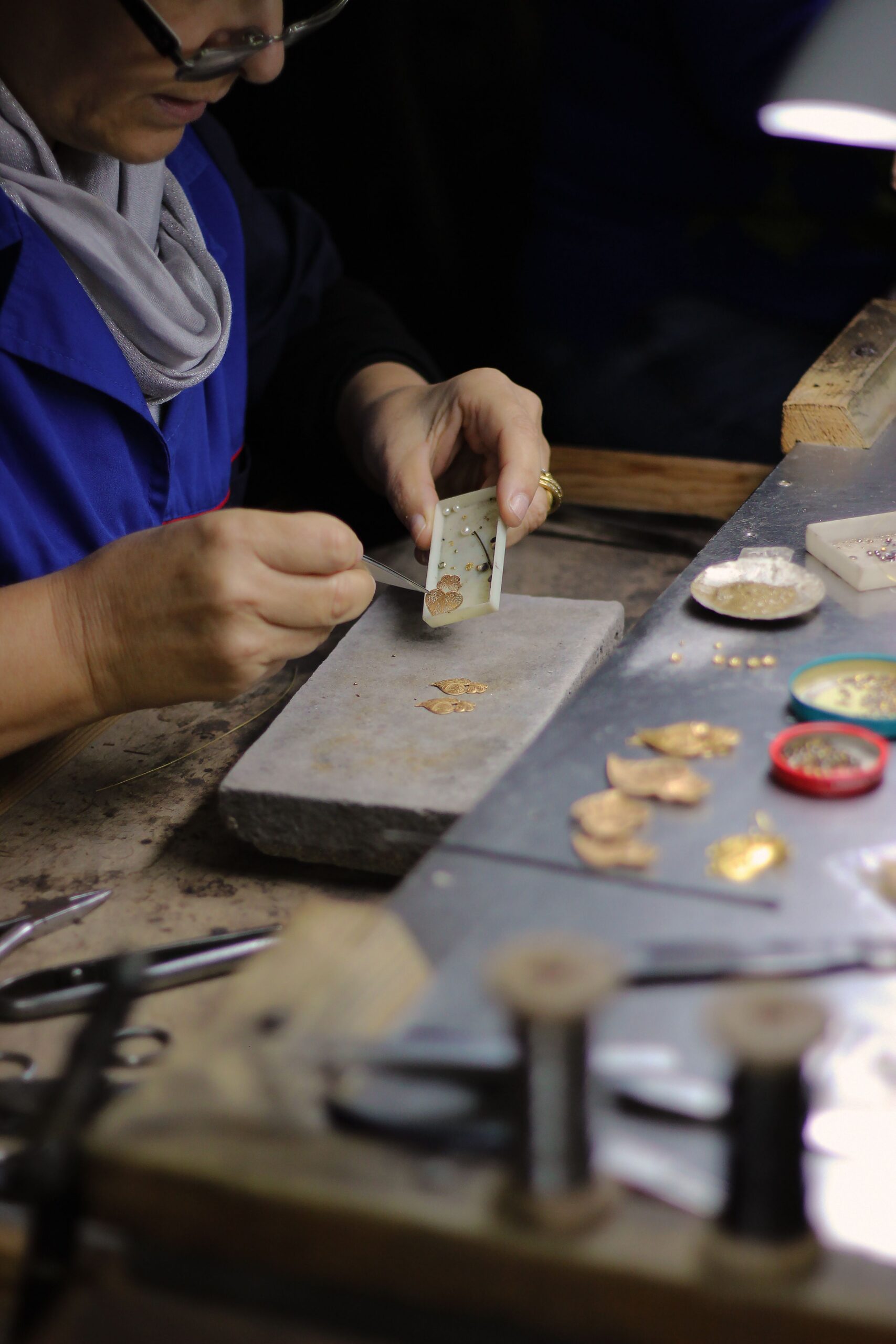
Some workshop material may return to a refiner for a new life cycle; other clean scrap may be recirculated within the same operation. Those routes can look similar in a photograph but are treated differently by environmental-claim definitions. The distinction is one reason why records matter more than visual appearance. For a separate look at how a design moves from a model to a cast object, read Laxmi’s explanation of the lost-wax jewellery casting process.
Recycled gold jewellery FAQ
Is recycled gold lower quality than newly mined gold?
Not inherently. Gold can be refined to a specified fineness regardless of eligible input route. Quality depends on the finished alloy, design, manufacture and inspection. Recycled content describes source history; it is not a quality grade.
Does recycled gold look different?
No reliable visual feature identifies recycled content. Colour and appearance are influenced by alloy composition, surface finish, plating, lighting and wear. Documentation—not colour—is the basis of the claim.
Does a 750 or 18K mark prove recycled gold?
No. Those marks relate to fineness. They do not state whether the gold was recovered, mined or attributed through a custody system. Recycled content and purity need separate evidence.
What is the difference between pre-consumer and post-consumer gold?
Pre-consumer material is eligible recovered input diverted before use by an end consumer, subject to the applicable definition and exclusions. Post-consumer material comes from products recovered from end users after the original use is no longer wanted, required or possible.
Can a recycled gold claim use mass balance?
Some documented systems permit an attributed amount to be calculated across controlled inputs and outputs. When mass balance is used, the claim should make that method understandable because the attributed recycled amount may not be physically guaranteed in the individual product.
Does recycled gold always have a smaller environmental footprint?
A recycled input may avoid some demand for newly extracted material, but the phrase alone is not a complete life-cycle comparison. Refining, energy, transport, alloying, manufacture, use and end-of-life all affect environmental performance.
What should I ask a jeweller for?
Ask for the exact claim, material category, percentage, component scope, calculation method and the standard or records supporting it. Keep the response with the product specification rather than treating a general sustainability page as proof for every item.
Standards and industry guidance reviewed
This guide was prepared from ISO 14021:2026 on self-declared environmental claims, the Responsible Jewellery Council’s 2024 Chain of Custody Standard and supporting guidance, and CIBJO’s March 2025 recommended definition of recycled gold. These sources use carefully bounded definitions; they do not make every claim interchangeable.
Standards, scopes and certification status can change. Check the current edition, the exact certified entity and the wording supplied with the item. Research and image licence pages were reviewed on 4 November 2026.
Choose the piece—and ask for the precise claim
Start with design, fit, construction and the gold specification. If recycled content matters to you, request the category, proportion, scope and evidence in the same clear terms before deciding.
