

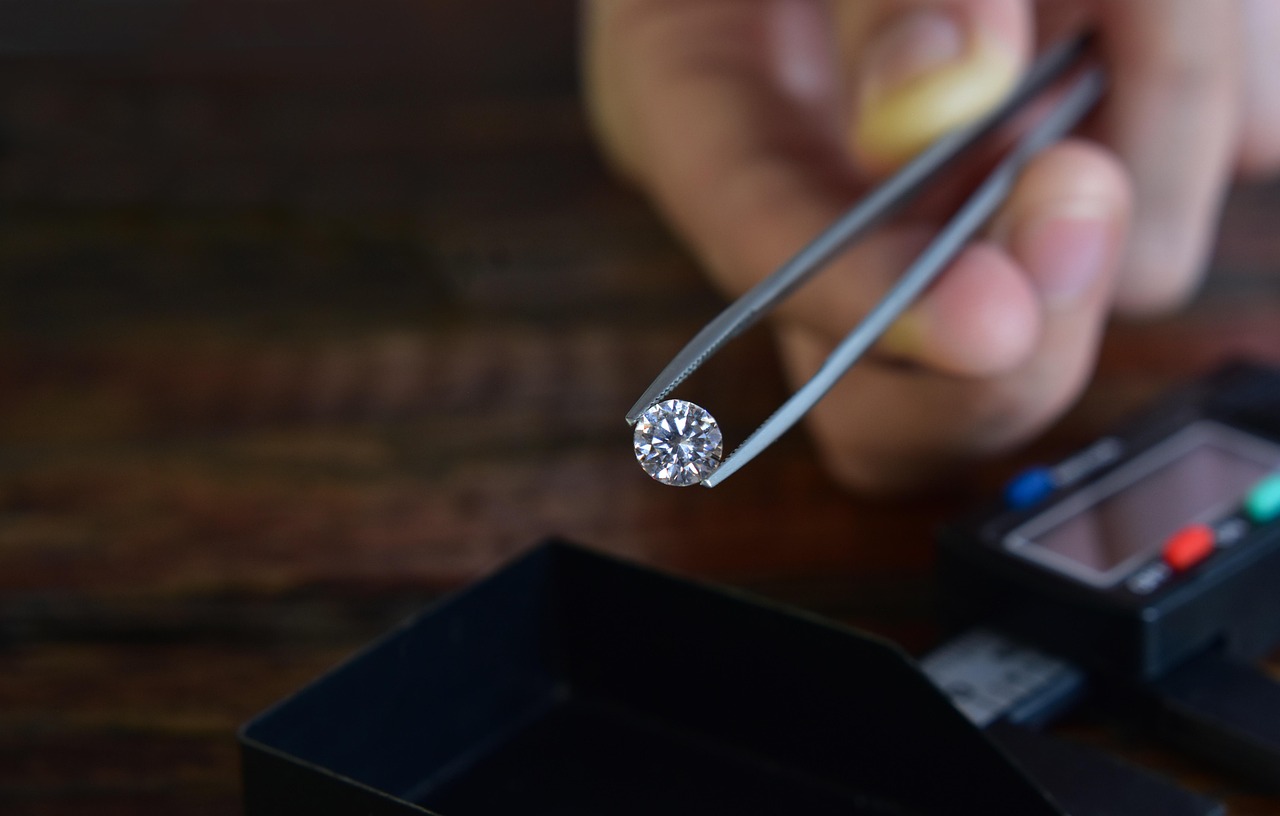
Learn to read diamond sparkle
Diamond Brilliance, Fire and Scintillation Explained
Separate white-light brightness, coloured flashes and movement-driven sparkle, then compare diamonds under repeatable lighting instead of relying on one dramatic showroom moment.
People often use “sparkle” as one catch-all word, yet a polished diamond can show several different effects. The most useful distinction is between white-light return, flashes of spectral colour and the changing light-and-dark pattern seen as the stone, light or viewer moves.
Brilliance commonly means the overall impression of white light returned to your eyes. Fire is white light separated into rainbow colours. Scintillation is the sparkle and shifting pattern of bright and dark areas created by movement. A balanced diamond can show all three, but their visibility changes with cut, lighting, contrast, viewing distance and motion.
GIA uses the more precise term brightness for internal and external white light reflected from a diamond. “Brilliance” remains common in jewellery conversations, so this guide uses it in that everyday sense while keeping GIA’s formal definition clear. None of these words describes a separate natural-versus-laboratory-grown category: they are ways of discussing face-up appearance.
This is a focused visual guide, not a substitute for the broader details found in Laxmi Jewellers’ explanation of what is included in a diamond grading report. A report can establish identity and measured quality information, while viewing the actual diamond helps you judge whether its appearance suits your preferences.
Name what you can see
Brilliance, fire and scintillation are related, not identical
A diamond’s facets act as a coordinated optical system. Light enters, reflects from internal and external surfaces, and returns towards the observer in changing combinations. The three terms below describe different parts of that appearance rather than three independent ingredients that can be scored by eye in isolation.
The impression of white light returned from the diamond. Broad bright areas can make a stone look lively even before you notice colour.
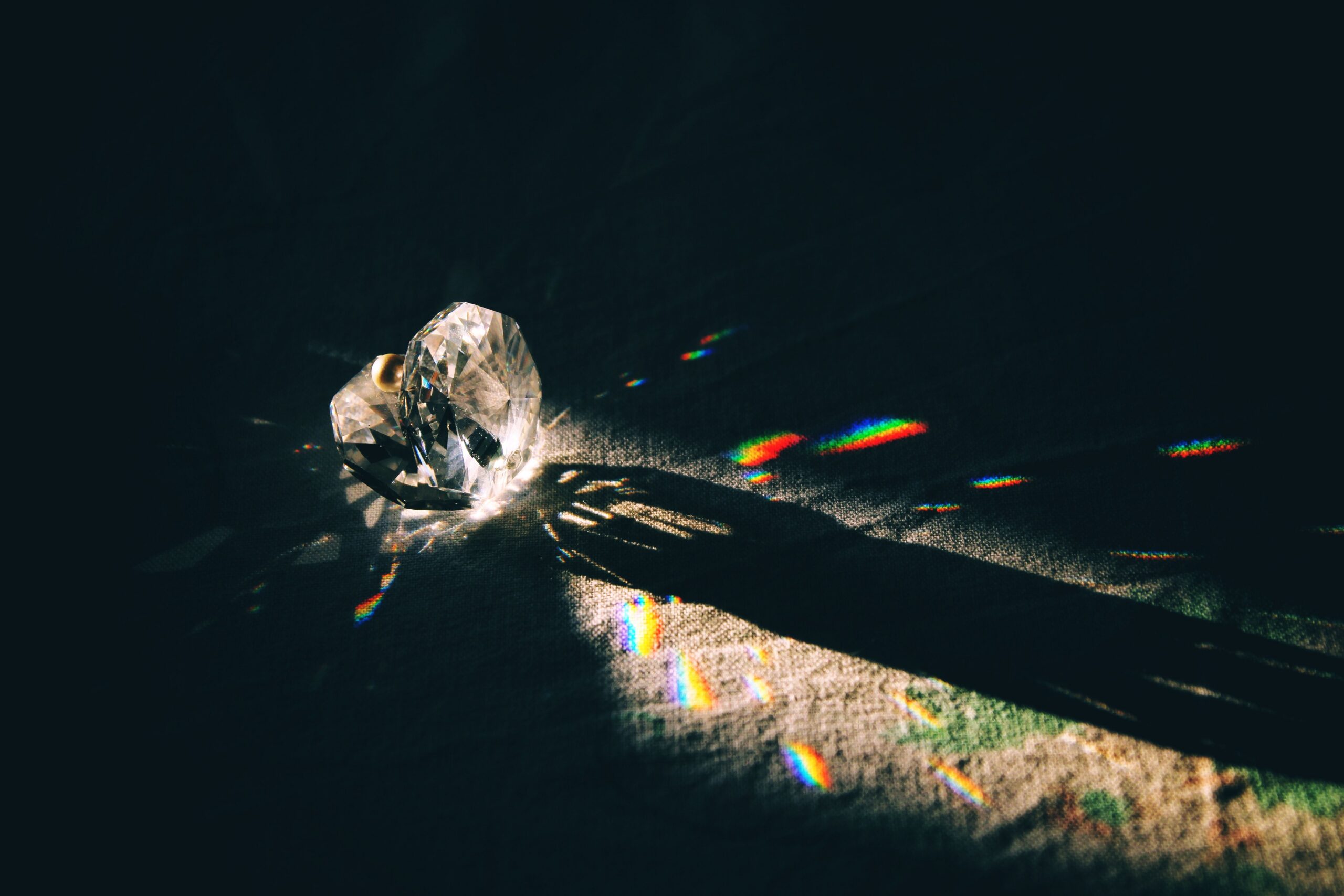
Flashes of spectral colour produced when white light is dispersed. You may see red, orange, yellow, green, blue or violet as angles change.
The sparkle and alternating light-and-dark pattern that becomes especially apparent with movement. Contrast helps individual flashes stand out.
Why white-light return is not simply “more shine”
A polished surface can reflect a bright lamp, but diamond brightness is not just surface gloss. It includes light returned by the faceted structure. The size, placement and evenness of bright areas influence the face-up impression. A stone may look generally bright yet still have a different contrast pattern from another diamond beside it.
Why fire appears as flashes rather than permanent colour
Diamond fire is dispersion: white light separates into spectral colours as it travels through and exits the stone. Those flashes are directional. A slight change in the light, diamond or viewer can make a coloured flash appear, move or disappear. Fire therefore should not be confused with the diamond’s body colour or with coloured light reflected from a nearby wall or garment.
Why darkness can contribute to scintillation
Scintillation needs contrast. As viewing geometry changes, some facets appear bright while others appear dark; then the pattern reverses or shifts. The dark areas are not automatically defects or “dead spots”. Persistent, broad darkness that remains from many normal viewing angles deserves investigation, but momentary contrast is part of the sparkle pattern.
Cut directs the performance
How diamond cut influences the light you see
GIA explains that diamond cut concerns how well the facets interact with light, not merely whether the outline is round, oval, pear or another shape. Proportions, facet angles, symmetry and polish work together. For the standard round brilliant, GIA’s cut system evaluates brightness, fire and scintillation as face-up appearance components, alongside design and craftsmanship factors.
This does not mean that every diamond with the same laboratory cut grade will look identical. A grade summarises a defined assessment range. Within it, individual diamonds can distribute bright areas, coloured flashes and contrast differently. Carat weight, clarity and colour also describe other qualities; they do not replace the appearance questions addressed by cut.
Fancy shapes require particularly careful visual comparison because their facet structures and outline-specific patterns differ. An elongated diamond may show contrast through the centre that changes with movement. If that pattern becomes distracting or remains overly dark, review Laxmi Jewellers’ dedicated guide to the diamond bow-tie effect. That issue is narrower than overall brilliance, fire and scintillation and should be assessed on the individual stone.
Setting design can also influence what reaches your eye. Metal colour, prong position, a halo, neighbouring stones and the cleanliness of the diamond can change the visual context. They do not rewrite the diamond’s facet geometry, but they can make direct comparisons harder. When possible, compare loose diamonds first or view finished rings with closely matched setting styles.
Control the viewing conditions
Why the same diamond changes from one room to another
A diamond cannot return light that is not available around it. Large diffused windows, small spotlights, warm household bulbs and shaded outdoor areas create different mixes of brightness, direction and colour. GIA’s guidance shows that diamond appearance can change substantially with the lighting environment.
Many small, intense light sources can produce numerous sharp flashes. Broad diffused light may make overall white-light return and the pattern of contrast easier to read. Direct sunlight can create dramatic fire but may be uncomfortable and inconsistent for comparison. No single environment tells the whole story.
Your own clothing, phone and face also block or reflect light. That is normal. Hold each diamond at a similar distance and angle, and avoid placing one stone in a brighter patch than the other. A fair comparison is more valuable than the most theatrical sparkle.
Keep fluorescence separate from ordinary fire
Fluorescence is a diamond’s response to ultraviolet radiation, while fire is dispersion of visible white light into spectral colours. They are not the same phenomenon. If a report lists fluorescence and you want to understand when it may be noticeable, use the separate guide to diamond fluorescence rather than judging it from rainbow flashes in normal viewing.
Make the comparison repeatable
How to compare diamond sparkle in person
Begin with two or three diamonds that already meet your essential report, budget and design requirements. Too many options make visual differences harder to remember. Clean the stones, keep the viewing sequence consistent and give your eyes a few moments to adapt when you change locations.
Start still under diffused light
View each diamond face-up without moving it. Compare the amount and distribution of white brightness and note any broad areas that remain dull.
Add gentle movement
Rock each stone through the same small angle. Look for crisp on-and-off flashes and an appealing balance of light and dark across the face.
Change to small light sources
Move beneath normal spot or ceiling lighting and look for coloured fire. Do not declare a winner from one unusually strong flash.
Check realistic daily light
Repeat near a window, in open shade or under ordinary indoor lighting similar to where the ring will often be worn.
Compare at equal distance
Keep stones at the same height, orientation and distance from your eyes so one does not receive a more favourable angle.
Choose the complete impression
Balance light performance with shape, face-up size, clarity appearance, setting suitability and your own response to the diamond.
| Viewing condition | What it can reveal | What to avoid concluding |
|---|---|---|
| Broad diffused light | Overall white brightness, evenness and face-up contrast pattern. | That fewer rainbow flashes mean the diamond has no fire. |
| Small ceiling lights | Sharp scintillation and coloured flashes as the stone moves. | That the most dramatic single flash proves better overall cut. |
| Window light or open shade | A realistic mix of brightness and contrast for daytime wear. | That one moment near a bright reflection represents every angle. |
| Direct sunlight | Strong directional fire and intense flashes. | That an uncomfortable, rapidly changing view is a controlled comparison. |
| Phone video | A record of movement when distance and exposure are kept consistent. | That automatic exposure, focus or editing reproduces what the eye sees. |
If you are comparing engagement-ring designs rather than loose stones, keep the commercial decision separate from the optical test. First identify what you see; then decide how it fits the intended design, comfort and budget. The Laxmi Jewellers engagement-ring collection provides a practical starting point for comparing complete settings after you understand the light effects.
Avoid misleading shortcuts
Five common ways diamond sparkle is misread
1. Treating fire as the diamond’s body colour
A near-colourless diamond can show rainbow fire, and a diamond with a warmer body colour can also disperse light. Body colour and spectral flashes are different observations. Judge colour in suitable neutral conditions and fire during movement.
2. Assuming every dark facet is light leakage
Some dark reflections come from contrast in the environment, including the observer. Scintillation depends on a changing pattern. Look for areas that stay unresponsive across several normal positions rather than labelling every temporary dark facet as a fault.
3. Comparing a clean diamond with a handled one
Oil, lotion and dust can interrupt light at the surface. A recently cleaned stone may look livelier than an otherwise comparable diamond touched repeatedly. Ask for both to be cleaned before making a visual judgement.
4. Using only one spotlight
Retail lighting is useful for revealing flashes, but it is only one environment. A diamond chosen exclusively under strong spotlights may look different at a desk, beside a window or in evening household light. Check more than one realistic condition.
5. Looking for a universal “best” balance
Some buyers prefer strong white brightness; others notice broad coloured fire or a rapid, fine scintillation pattern. Reliable grading and a fair comparison can identify quality concerns, but personal preference still shapes the final choice. The goal is informed consistency, not a slogan.
Clarify the terminology
Diamond brilliance, fire and scintillation FAQs
Is brilliance the same as sparkle?
Not exactly. “Sparkle” is an informal umbrella term. Brilliance usually refers to white-light brightness, while scintillation describes the flashes and shifting light-and-dark pattern seen with movement. Fire describes spectral colour flashes.
Does a higher carat weight create more brilliance?
No. Carat is a measure of weight, not light performance. A larger diamond can offer a larger visual area, but its brightness, fire and scintillation still depend strongly on facet design, proportions, finish, lighting and cleanliness.
Which diamond shape sparkles the most?
Shapes use different facet arrangements and produce different visual patterns. A well-cut round brilliant is evaluated within a mature cut-grading system, but shape rankings can oversimplify. Compare individual diamonds within the outline you actually want.
Can a grading report show how much fire a diamond has?
A report can provide cut information and, for eligible standard round brilliants, a cut grade based partly on face-up appearance factors. It does not replace viewing the individual diamond under controlled and realistic lighting.
Why does my diamond look less sparkly at home?
Your home may have broader, fewer or less intense light sources than a showroom, and the diamond may have picked up skin oils. Clean it safely, compare it near a window and under several household lights, and seek an inspection if appearance changes suddenly or the setting seems loose.
Authoritative references
Compare with a clear method
See the light effects in complete ring designs
Use the same lighting, distance and movement for every comparison, then consider how the diamond’s brightness, fire and scintillation work with the setting you intend to wear.
