

Diamond anatomy, clearly explained
Diamond Culet Explained: Size, Visibility and What to Check
The culet sits at the lowest point of a faceted diamond, yet it can influence what you notice through the table. Learn how laboratories describe it, why historic cuts may show it deliberately, and how to assess it in context.
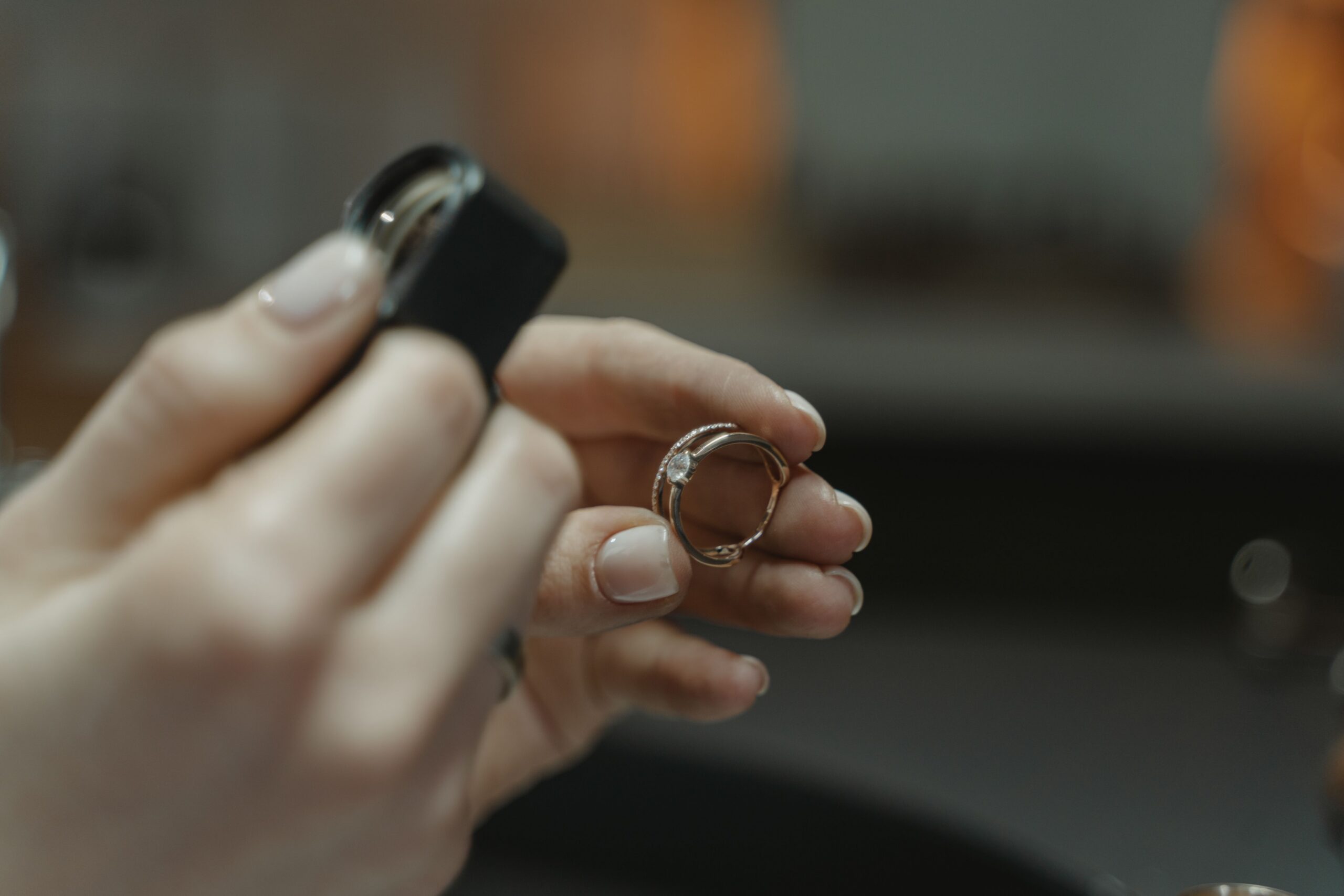
A jeweller holds a diamond ring beside a loupe for close inspection. Photo by Tima Miroshnichenko via Pexels.
A diamond culet is the small facet that may be polished at the very tip of the pavilion, opposite the table. On a modern stone it may be absent as a separate facet, in which case the pavilion facets meet at a point. On some antique-style diamonds, a visible culet is part of the intended character rather than an automatic fault.
Read the culet description as information about facet size, not as a stand-alone verdict on beauty, quality, value or durability. Then look at the complete diamond face-up, in ordinary viewing conditions, to decide whether the centre pattern suits you.
The GIA reference for finish, culet size and girdle thickness defines a culet as a facet placed at the pavilion tip. GIA also explains that culet size can affect its evaluation of face-up appearance in the cut-grading system for standard round brilliants. That does not mean every visible culet is undesirable: shape, cutting style, era and personal preference all matter.
Know the location
Where the culet sits in diamond anatomy
Picture a faceted diamond in profile. The crown forms the upper portion, the girdle defines the perimeter, and the pavilion narrows beneath it. The culet is at the pavilion’s lowest point. GIA’s diamond anatomy guide describes it simply as the facet at the tip of the gemstone.
The word is also used informally for the bottom point even when there is no separate flat facet. A grading report is more precise: “None” means that a reportable culet facet is not present. In a standard round brilliant, all eight pavilion mains can meet at a point, sometimes described as a pointed culet.
A culet is not the same as a girdle, inclusion, chip or hole. It is part of the fashioned diamond. GIA notes that a culet facet was historically used to reduce the risk of damage to the point of a loose diamond. That purpose should not be turned into a sweeping durability claim for a finished ring: security also depends on the complete cut, condition, setting and how the jewellery is worn.
Read the laboratory wording
How GIA describes diamond culet size
GIA uses eight descriptions: None, Very Small, Small, Medium, Slightly Large, Large, Very Large and Extremely Large. These terms form a size sequence. They are not a quality ladder in which the last word automatically means a poor diamond or the first word guarantees a beautiful one.
Laboratory graders assess the culet face-up through the table at 10× magnification. GIA can support that visual judgement with measurements expressed relative to the diamond’s average diameter, but its published guidance says the final call is based on visual observation. Fine measurements, shape irregularities, angle and clarity features can all complicate a purely numerical reading.
There is one technical nuance worth knowing. GIA states that if a facet at the pavilion tip sits at more than a slight angle to the table, it is not treated as a culet for this description; it is considered an extra facet. This is another reason not to diagnose a report entry from a photograph alone.
If you are unfamiliar with where this field appears, use Laxmi Jewellers’ separate guide to what is included in a diamond grading report. That page explains the wider report; the present guide stays deliberately focused on the culet and its visible context.
Appearance, not shorthand
When can a culet be visible face-up?
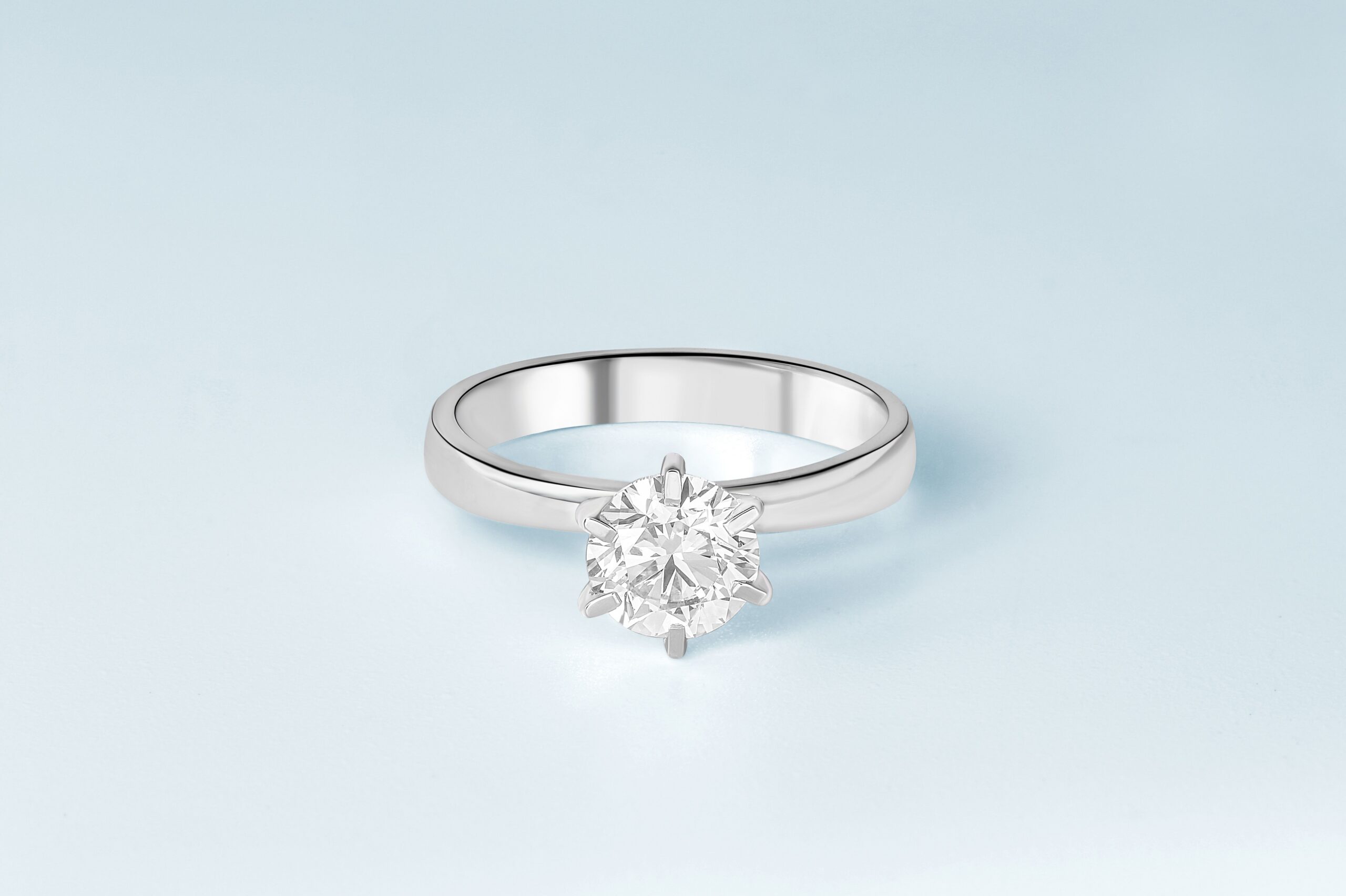
Looking through the table, a sufficiently open culet can appear as a small shape at the centre of the facet pattern. Depending on lighting and what lies behind the diamond, it may read light, dark or transparent. People sometimes call this a “hole”, but the effect is a view through a deliberately polished facet, not an empty cavity.
Visibility is not controlled by the report word alone. It can change with the diamond’s overall size, shape, table and pavilion geometry, facet pattern, contrast, lighting, viewing distance and whether the stone is loose or mounted. A macro photograph can make a feature seem stronger than it does at normal distance, while a still image can conceal how it behaves when the diamond moves.
For that reason, compare the centre in more than one realistic environment. View it face-up in diffused daylight and typical indoor light, then tilt it gently. Keep the question practical: does the culet distract you, complement the cutting style, or disappear during ordinary wear?
Historic and modern context
A visible culet can be part of an antique cutting style
Modern buyers often encounter culet advice written around the standard round brilliant, where a pointed or very small-looking centre is familiar. Applying that expectation to every diamond can erase useful historical context.
GIA’s article on the history of cushion and old mine cuts identifies a large culet, high crown, small table and deep pavilion among the defining features of an old mine cut. These proportions create a light pattern that differs from a modern cushion brilliant. A visible centre can therefore be a coherent part of the diamond’s design language.
This does not make every large culet “better”, nor does it mean every diamond marketed as vintage has historically informed proportions. It means the appropriate comparison is like with like. Assess an antique or antique-inspired cut for the character it intends to create; assess a modern brilliant in relation to its own facet pattern and report.
| Observation | Possible context | Useful next check |
|---|---|---|
| The report says “None” | No reportable culet facet is present; this alone does not describe the entire cut. | Review the face-up pattern, proportions and relevant cut information together. |
| A tiny centre point appears only at 10× | A fine culet or another reflected/clarity feature may be visible under magnification. | Ask the jeweller to identify it and compare with the laboratory report. |
| A central shape is visible unaided | A larger culet may be contributing to the pattern, especially in an older cutting style. | View from normal distance in motion and decide whether the effect suits the design. |
| The centre looks displaced | This may concern symmetry or alignment rather than culet size alone. | Review the report’s symmetry information and obtain a professional explanation. |
Shape also changes the visual framework around the centre. If you are still deciding between outlines, read the Laxmi guide to diamond shapes for engagement rings first; then compare culet appearance within the shape and cutting style you actually prefer.
A calm inspection process
What to check before choosing a diamond
You do not need to turn one small report field into a pass-or-fail rule. Use this sequence to establish what the document says, what your eyes see, and whether both refer to the same diamond.
Confirm the diamond and report match
Ask the jeweller to identify the grading document for the stone you are viewing. Where a report number is inscribed and accessible, it can be checked by a trained person with suitable magnification.
Find the culet description
Read the exact laboratory wording rather than relying on a sales label such as “perfect point” or “open culet”. Report formats vary, so ask where the entry appears if it is not obvious.
View the diamond face-up first
Start at normal reading or wearing distance in neutral light. Notice the complete pattern and only then focus on the centre. A pleasing diamond should not require you to ignore everything except one microscopic feature.
Compare lighting and movement
Look in diffused daylight and ordinary indoor lighting, if practical. Tilt the stone gently rather than judging one enlarged still. Contrast can make the same centre appear different from one moment to the next.
Ask for a magnified explanation
Have the jeweller point out the culet, any nearby clarity characteristic and the central reflections. This helps separate a genuine culet observation from dust, an inclusion, a reflection or a setting detail.
Judge it within the complete design
Consider shape, facet style, symmetry, proportions, setting and personal taste together. If two diamonds meet your broader requirements, the face-up comparison is more useful than choosing automatically from the smaller culet word.
Questions worth asking
- Is the culet visible without magnification?
- Is it centred within the facet pattern?
- Is this an antique, antique-inspired or modern cut?
- Does the report describe a culet or an extra facet?
- Does the feature change noticeably in motion?
- Can I compare a similar diamond beside it?
- Could the setting change how the centre is viewed?
- Does the overall appearance suit the intended ring?
Other shapes can present their own face-up contrast features. For example, elongated brilliants may show a bow-tie pattern for reasons unrelated to the culet; the separate diamond bow-tie effect guide explains that distinction without turning either feature into a blanket rejection rule.
Keep the decision in proportion
What the culet does not tell you on its own
A culet description does not replace the 4Cs, a complete grading report, or an assessment of craftsmanship. It does not tell you whether the outline appeals to you, whether the stone looks lively in motion, whether the clarity characteristics are acceptable, or whether the setting is appropriate for daily wear.
It also should not be used as a simple age test. A large culet can be associated with older cutting styles, but one feature alone cannot establish when a diamond was fashioned. Likewise, a modern diamond can be cut to create antique-inspired optics. Provenance and dating require evidence beyond the centre facet.
For a mounted stone, the basket, prongs and surrounding metal may influence what can be seen through or beneath the diamond. If a view is obscured, do not attempt to remove or loosen the stone yourself. Ask a qualified jeweller to inspect it safely.
Authoritative references
Frequently asked questions
Diamond culet FAQs
Is a diamond culet a hole?
No. A culet is a polished facet at the pavilion tip. When it is visible through the table, it can look like a small opening because you may be seeing through that facet, but it is not a hollow space drilled into the diamond.
Does “None” mean the diamond has no bottom point?
No. “None” means there is no reportable culet facet. The pavilion mains may meet at a point. The pavilion and its lowest point still exist; only the separate flat facet is absent.
Is a large culet always bad?
No. A large culet may be visually prominent and may not suit someone seeking a modern, uninterrupted brilliant pattern. In an old mine or antique-inspired cut, however, a visible culet can be an intentional part of the style. Judge it in context.
Can culet size affect a GIA cut grade?
For standard round brilliant diamonds, GIA includes culet size within its cut-grading system because an eye-visible culet can influence face-up appearance. The final cut grade is not determined by the culet alone.
Is an off-centre culet the same as a large culet?
No. Size and position are different observations. GIA treats an off-centre culet as a symmetry-related feature. A culet can be small yet displaced, or larger and centred.
Should I reject a diamond because I can see its culet?
Not automatically. Confirm the report, view the stone at normal distance and in motion, and consider its cutting style. Reject it only if the visible effect does not suit your preferences or the complete diamond fails your wider requirements.
Compare the complete ring
See diamond details in their proper setting
Use the report to ask better questions, then assess the diamond, setting and ring together. Explore Laxmi Jewellers’ engagement-ring designs when you are ready to compare complete pieces.
