

Ring setting guide · Laxmi Jewellers Dubai
Pavé vs Channel-Set Diamond Rings: Sparkle, Structure, Wear and Resizing
Compare how tiny beads and continuous metal rails hold accent diamonds, what each construction changes in daily wear, and which details to inspect before you choose.
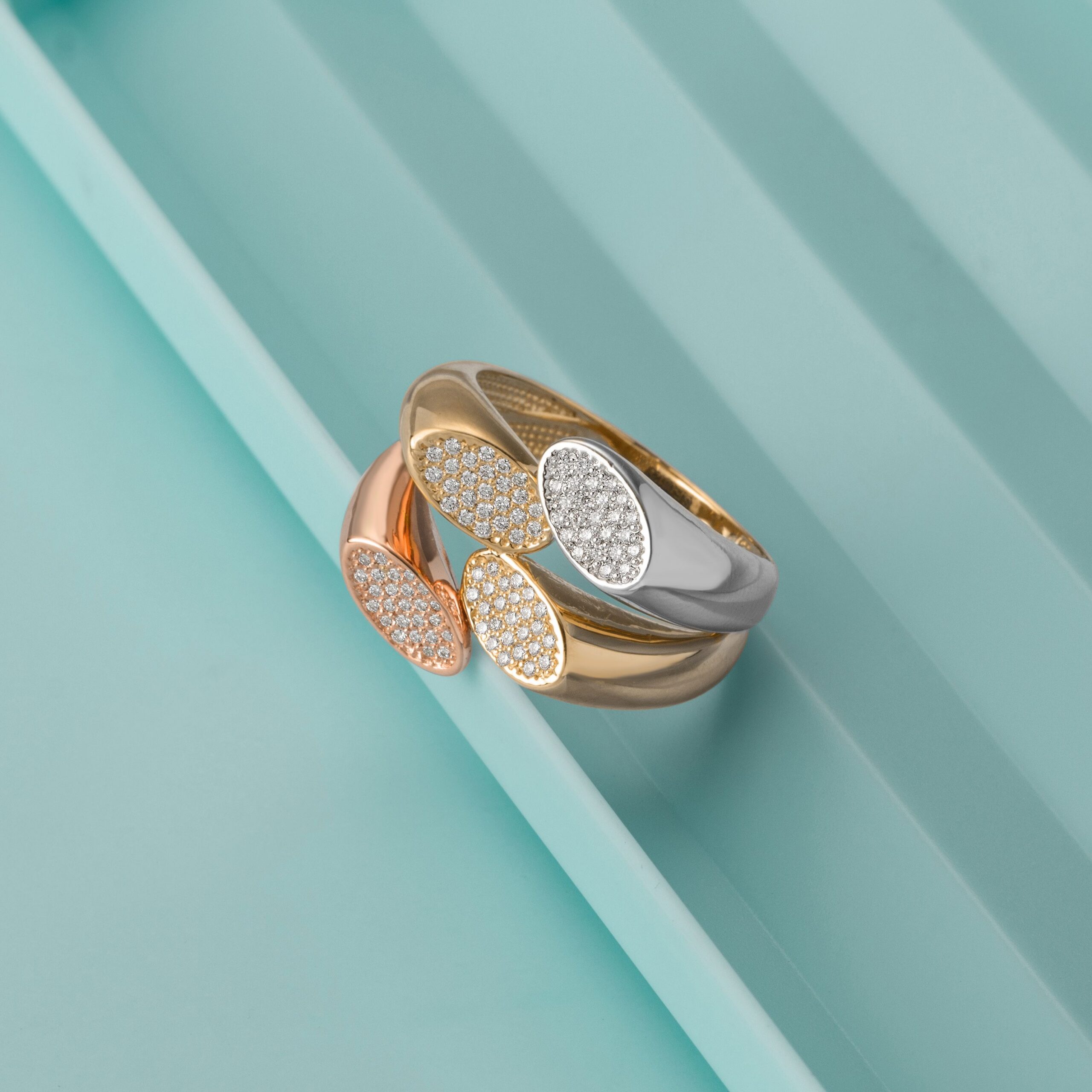
Pavé and channel settings can both create a bright line of accent diamonds, but their supporting metal works differently. Pavé places small stones closely across a metal surface and secures them with tiny beads or prongs. A channel places a row of stones inside a groove between two continuous metal walls. The visible difference affects texture and metal presence; the structural difference affects snag points, stone protection, cleaning access, repair and how much resizing may be practical.
Choose pavé when you want a fine, diamond-forward surface with minimal visible metal and accept close attention to tiny settings. Choose channel when you prefer a smooth, structured row with protective rails and a stronger geometric outline. Neither name is a universal quality or security grade. Stone matching, metal thickness, workmanship, coverage around the band and the wearer’s routine decide how a specific ring performs.
How pavé and channel settings hold diamonds
Pavé: beads around small stones
Small diamonds sit in closely spaced seats cut into the ring’s surface. Tiny raised beads or miniature prongs are pushed into contact with the stones. From above, the many stones and small holding points can make the metal recede visually.
Channel: rails around a row
Stones sit edge-to-edge in a groove bounded by two parallel metal walls. The rails hold the row at its sides, creating a clear border. Round, princess, baguette and other shapes may be used when the channel is engineered for them.
GIA’s current engagement-ring setting guide describes channel-set stones as sitting between continuous walls, while pavé uses closely set small stones secured by tiny metal points. These definitions describe construction, not the entire ring style. An engagement ring can have a prong-set centre diamond and a pavé or channel-set shank; a wedding band may use the same accent technique without a centre stone.
Pavé vs channel setting at a glance
| Feature | Pavé | Channel |
|---|---|---|
| Visual effect | A fine field or ribbon of sparkle with little visible metal. | A clean, ordered row framed by visible metal rails. |
| Surface feel | Tiny beads or prongs may create more texture. | Continuous edges can feel smoother when well finished. |
| Stone edge exposure | More of each small stone may remain visually open. | Channel walls protect the outer sides of the row. |
| Inspection focus | Bead contact, missing stones, lifted metal and worn high points. | Rail thickness, straightness, gaps, stone alignment and damage to the channel. |
| Resizing | Can be difficult when stones extend far around the shank. | Can be difficult because changing the circle can alter rail tension and alignment. |
| Best decided by | The actual design, workmanship, metal dimensions, coverage, stone size and intended wear—not the setting name alone. | |
A channel is often described as snag-resistant because it has no individual prongs projecting along the outer edges. That does not make every channel ring indestructible. Thin or damaged rails can lose support, and a hard impact can affect several adjacent stones. Pavé can also be secure when correctly engineered, but each tiny holding point needs sufficient metal and good contact.
Which setting looks more brilliant?
Pavé generally gives the strongest impression of a surface covered in diamonds because the beads are small and the stones can be placed in multiple rows or curved areas. Channel setting creates a more linear look: the row is bright, but the upper and lower rails remain part of the design. White metal may visually blend with colourless diamonds, while yellow or rose metal can create a clearer border.
That comparison is visual, not a promise of light performance. The brightness of each small diamond still depends on its cut, condition, cleanliness and lighting. Stone size, spacing and matching influence whether the row looks even. GIA’s jewellery-design guidance notes that even small differences in melee dimensions can be visible when uniformity is intended.
If the term “melee” is new, read the separate melee diamond guide. It explains the small stones themselves; this article focuses on the architecture holding them.
Protection, snagging and maintenance
Channel walls can shield the outside edges of a row and create a smooth outline, which is useful where a lower-snag profile matters. Pavé keeps more metal visually hidden, but raised beads and exposed surface stones may meet clothing, neighbouring rings and hard objects. The bottom of a fully decorated shank receives frequent contact from desks, handles and tools, regardless of the technique.
GIA’s quality-assurance guidance emphasises adequate metal and correct contact. It gives professional design benchmarks for borders around pavé or bead-and-bright work and for the walls supporting channel-set stones. Those measurements are workshop references, not home inspection instructions; a buyer should ask whether the specific ring was designed for its stone sizes and intended use.
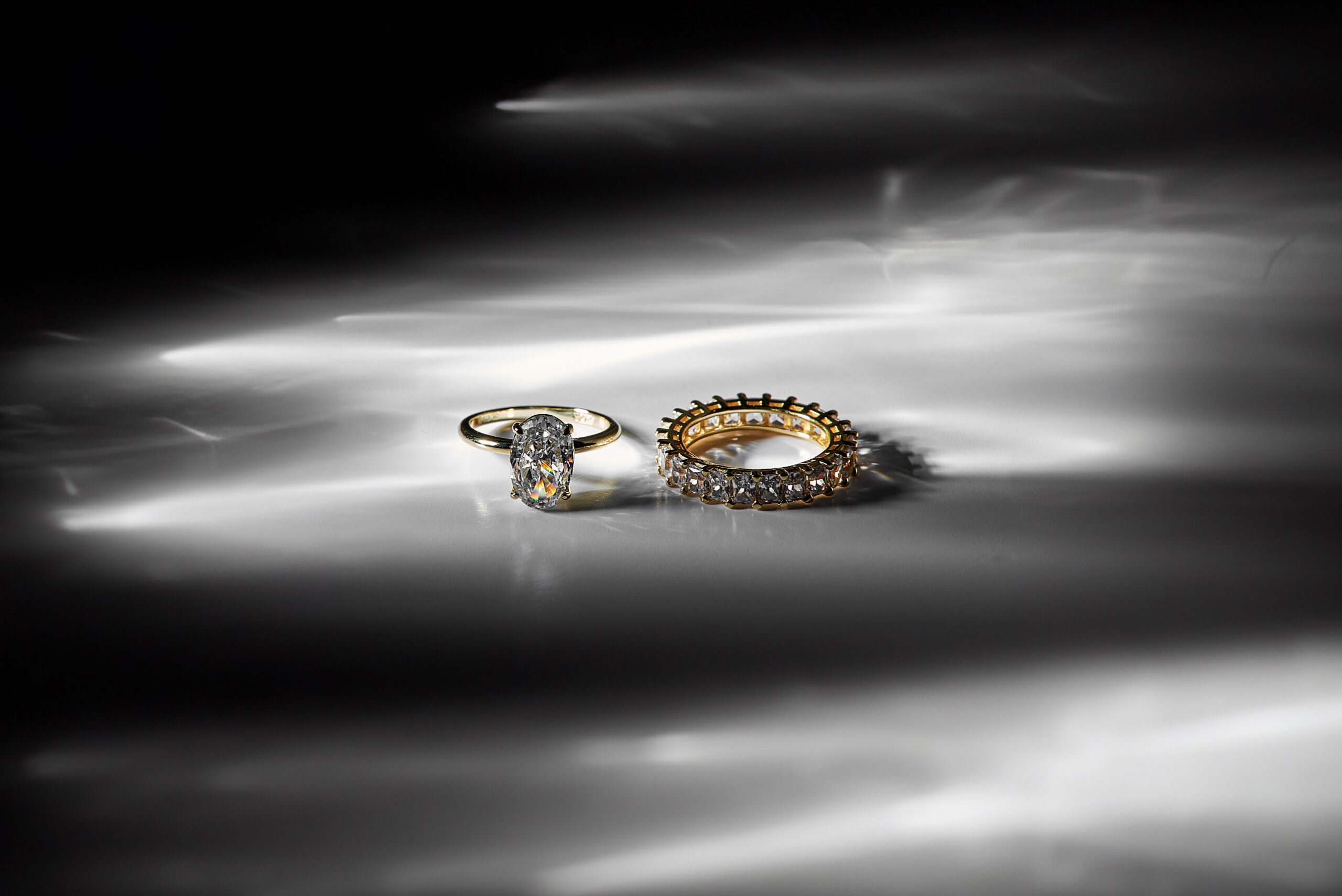
Remove fine diamond rings for activities that can bend metal, strike the setting or force residue into small openings. Cleaning instructions must suit the complete piece, including its metal, stones, finishes and any repairs. A soft brush may reach open areas of one ring more easily than another; ultrasonic or steam cleaning is not automatically suitable for every item. Laxmi’s diamond jewellery cleaning guide provides general precautions, but product-specific advice comes first.
Why resizing may be limited
Changing ring size means changing the shank’s circumference. When accent diamonds extend far around that circle, bending or cutting the band can disturb seats, bead contact, rail alignment or gaps between stones. A short half-pavé area may leave more plain metal for adjustment than a full-eternity layout, but the feasible range still depends on metal, stone coverage, construction and condition.
GIA advises that pavé and channel-set rings can be difficult to resize. That is a reason to confirm fit before purchase, not a reason to assume resizing is always impossible. Ask a jeweller about the exact ring and the direction and amount of the proposed change. A design created to size may be safer than forcing a substantial alteration into a continuous stone-set band.
Use a professional measurement and consider width, profile and stacking. Laxmi’s ring-size guide explains measurement limitations, while the wedding-band width guide covers how width changes the fit.
A six-point ring inspection
- Confirm the actual setting name. Ask what holds the stones. Do not identify channel, pavé or shared prongs from a distant image.
- View the row from above and both sides. Look for a consistent line, even spacing and metal that appears deliberately finished rather than distorted.
- Check texture and snag points. Gently assess how the ring feels; do not pull fabric across it as a test.
- Ask how far the diamonds extend. Quarter, half, three-quarter and full coverage change future sizing options and where daily wear is concentrated.
- Compare with the adjoining ring. In a bridal stack, high edges or exposed stones can rub a neighbouring setting. The engagement-ring anatomy guide helps name the shank, shoulders and head.
- Get care and service guidance in writing. Ask when the setting should be inspected and what conditions are excluded from routine cleaning or repair.
Stop wearing a ring if a stone moves, a gap appears, a rail bends, a bead lifts, the surface begins catching unexpectedly, or the ring has taken a hard blow. A professional can inspect magnified contact points. For related warning signs around centre-stone prongs, see the prong inspection guide.
Which setting should you choose?
Choose pavé when the priority is a delicate, diamond-rich surface, fine sparkle and design flexibility across curves, halos or multiple rows. Be comfortable with close inspection of many tiny holding points and with possible resizing limits when coverage is extensive.
Choose channel when you prefer a crisp row, visible metal borders and a smoother outer outline. It can be a practical choice for daily wear, but still needs adequate rails, correctly matched stones and professional assessment after impact.
Choose neither by label alone. A strong, beautifully finished pavé ring can suit one routine better than a thin or damaged channel ring, and vice versa. Compare examples in person, try the complete stack and discuss serviceability. Explore engagement rings or wedding bands, then ask for the construction details of the exact design.
Pavé and channel-setting FAQ
Is channel setting more secure than pavé?
Channel walls protect the sides of a row and can reduce snagging, but security is design-specific. Rail thickness, stone fit, workmanship, impacts and wear matter. Pavé can also be secure when its seats and beads are correctly engineered.
Which setting shows more diamond and less metal?
Pavé usually minimises visible holding metal and creates a diamond-covered effect. Channel setting deliberately shows two metal borders framing the row.
Can pavé or channel-set rings be resized?
Sometimes, within a range assessed by a jeweller. Extensive stone coverage makes both more difficult because changing the ring’s circle can disturb seats, beads, rails and alignment.
Is channel setting completely snag-free?
No setting is guaranteed snag-free. Well-finished rails can provide a smooth outline, but damage, rough finishing, adjacent ring contact or a lifted edge can still catch.
Can a missing pavé diamond be replaced?
Often it can, but the jeweller must assess the remaining metal, match the stone and restore the holding points. Repeated loss may signal wear or a structural issue that needs more than simple replacement.
Which is better for a full-eternity band?
Both can be used, but full coverage increases the importance of accurate sizing, comfort, stone matching and future serviceability. Compare the exact design rather than assuming one technique always wins.
Authoritative sources
- GIA 4Cs: Complete guide to engagement ring settings
- GIA 4Cs: Side-stone settings for engagement rings
- GIA: Melee—building blocks of contemporary design
- GIA 4Cs: Ring size guide and resizing considerations
Source pages and Pexels licence terms were rechecked on 26 October 2026. Setting terminology can vary by maker, so the observable construction and item-specific advice take priority.
Compare the sparkle and the structure
Ask to see each ring from above, from the side and beside its intended stack, then confirm sizing and service options before choosing.
