

Inspect the connection, not only the front
Pendant Bail Types Explained: Fixed, Hidden, Hinged and Slide Designs
Learn how the small connection between a pendant and its chain affects compatibility, movement, orientation, appearance and future servicing.
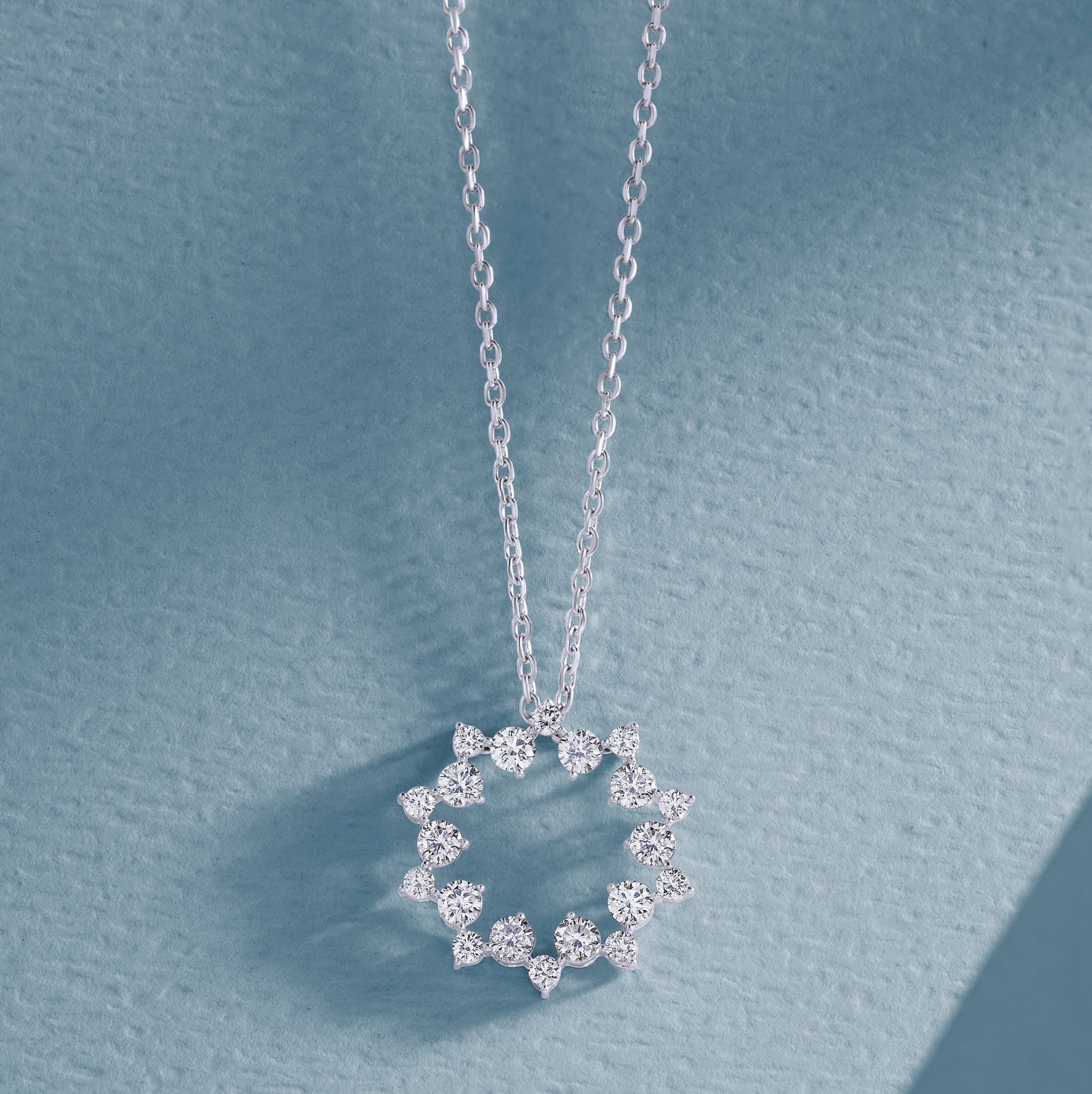
A pendant’s bail is easy to overlook because product photographs usually emphasise the front design. Yet the bail carries the pendant, creates the path for the chain and helps determine how the piece hangs. A beautiful pendant can still be frustrating if its opening will not pass over the chain end, its edges rub the chain or its geometry encourages the design to tip.
This guide explains buyer-facing differences rather than teaching jewellery assembly. A bail should be engineered for the pendant’s weight, material and intended chain by a qualified jeweller. Strength cannot be inferred from one photograph or a style name alone.
A small part with several jobs
What a pendant bail does
A bail, also written as bale in some references, is the part through which a chain or cord passes, or the fitting that connects the pendant to that chain. It transfers the pendant’s load, creates clearance for the chain and its end fittings, and influences how freely the pendant can rotate or swing.
The bail may be a separate component secured to the pendant, an articulated fitting joined by a link, or a channel built into the design. A pendant can also be fixed directly between two chain sections without a removable bail. Those structures should not be grouped together merely because they look similar from the front.
Fire Mountain Gems’ finding guide illustrates that bail covers several components, including standard, hinged and hidden-loop forms. Retail terminology is not perfectly standardised. One seller’s “slide” may describe a hidden channel, while another uses it for a pendant designed to travel along the chain. Ask how the chain actually passes through the piece.
Names describe different mechanisms
Common pendant bail types
These categories help comparison, but they are not quality grades. Two fixed bails can differ greatly in thickness, opening, finishing and attachment.
A visible loop is attached directly to the pendant or to a connecting ring. Its opening may be round, oval, triangular or decorative. A fixed structure has no hinge, but the pendant may still move along the chain.
A joint allows the bail and pendant to move relative to one another. Articulation can help the piece settle, but the hinge or link adds surfaces that should be checked for wear and alignment.
The chain passage is placed behind the pendant so little or no connector is visible from the front. The clean look can conceal a narrow opening, making side and back dimensions important.
The chain passes through a tube, tunnel or openings built into the pendant. Some slides move freely; others sit between chain sections. Confirm the exact chain path and removability.
A small ring joins the pendant to the chain or to another bail. Seam condition, wire dimensions and professional assembly matter more than the simple circular shape.
The connector is intentionally visible and may include engraving, stones, a motif or a broad cap. It still needs adequate clearance, smooth interior surfaces and proportionate support.
The clasp must pass too
How to check bail and chain compatibility
The chain’s link width is only the first measurement. For a removable pendant, the largest end component that must pass through the bail often determines compatibility. That may be a clasp, end cap, tag, jump ring or decorative terminal wider or thicker than the chain.
Measure the bail’s usable inner height and width at its narrowest point. Compare those figures with the maximum height, width and diagonal of the chain end. Curved or irregular openings can reduce practical clearance, so a nominal measurement is not a guarantee. A jeweller should test the exact pieces without forcing them.
A very fine chain may move through a large bail but allow the pendant to tilt or travel excessively. A broad or textured chain may fit on paper yet rub a sharp interior edge. Laxmi Jewellers’ guide to box, cable, rolo and wheat chains explains link structures as a separate choice.
| Check | Why it matters | Confirm |
|---|---|---|
| Usable opening | Decorative outside size does not show the available space. | Minimum inner height and width. |
| Largest chain end | The clasp or fitting may be wider than the links. | The complete end passes without force. |
| Interior finish | Roughness can rub metal, plating or links. | Smooth contact surfaces and clearance. |
| Proportion | A fitting chain may still be visually or mechanically unsuitable. | Balanced scale and maker guidance. |
| Removability | Some hidden or fixed designs require bench work to change chains. | Whether the pendant can be removed. |
Freedom of movement is a trade-off
How bail geometry affects orientation
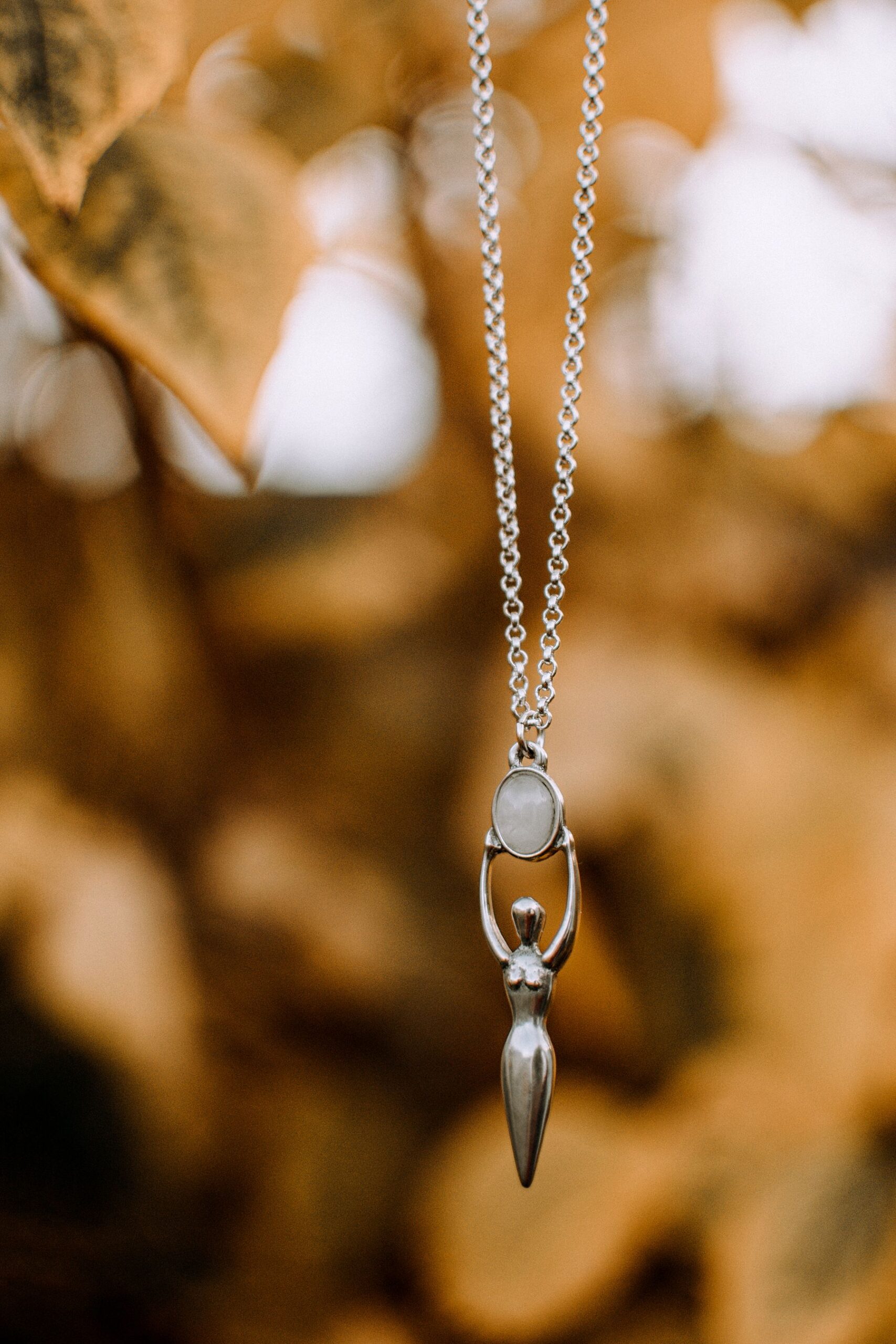
A freely moving bail can let a pendant find a comfortable position as the wearer turns. The same freedom can allow more rotation. A hidden channel may keep the front visually clean, but its behaviour depends on channel position, weight distribution, chain shape and contact with the body.
A pendant that tips forward is not always fixed by changing only the bail. A heavy front, attachment point, shallow back, flexible chain or unsuitable length can contribute. A pendant that slides off centre may be responding to normal movement, a rotating clasp or an asymmetric chain path.
Test the complete necklace at the intended wearing length. Stand naturally, turn, sit and move the shoulders. Check whether the pendant returns face-up, catches clothing or pulls the chain into a sharp angle. A flat tray does not predict on-body wear.
Fixed-chain necklace versus removable pendant
A fixed-chain design attaches the motif between chain sections, often at two points. This can control position and create a floating look, but the motif is not freely transferable. A removable pendant offers more flexibility if its opening clears the chain hardware. Neither is universally better.
Hidden does not mean maintenance-free
A hidden bail can still wear, collect residue or develop a rough contact surface. Inspect behind the pendant under good light and ask how the passage can be cleaned and serviced.
A six-point buyer check
How to inspect a pendant bail
Use the same sequence whether the pendant is sold alone or with a chain.
Name the structure
Ask whether it is fixed, hinged, hidden, a slide, a jump ring or part of a permanent chain.
Measure the inside
Record the smallest usable opening and compare it with the full chain end.
View every side
Check alignment, seams, rough edges, thin areas and points that may catch.
Test movement
Wear it at the intended length and observe centring, tipping and rotation.
Confirm service
Ask whether repair or a chain change would require soldering or bench work.
Document the pair
Keep pendant dimensions, chain style, length, metal and care guidance.
Watch the contact surfaces
Cleaning, wear and professional servicing
The bail and chain move against each other, so inspect their contact area. Look for thinning, an opening seam, distortion, an uneven hinge, a widened ring or a sharp groove. Stop wearing the necklace if the connection looks open, cracked or unusually thin.
Residue can collect inside openings or behind hidden fittings. Follow guidance for the complete piece, including its metal, gemstones, treatments and finishes. Laxmi Jewellers’ diamond jewellery cleaning guide explains general precautions, but product-specific advice takes priority.
Do not close, solder or reshape a fine-jewellery bail with household tools. The connector may sit close to stones or finishes requiring controlled handling. A professional can assess metal loss, joint condition, compatibility and whether repair would change the balance.
Store the necklace fastened and laid flat or supported separately. Avoid pulling the pendant to adjust its position. For a heavy or frequently worn piece, ask for an inspection interval appropriate to the construction.
Common connection questions
Pendant bail FAQs
What is the difference between a bail and a jump ring?
A bail is the chain passage or connector. A jump ring is a specific ring that can connect components and may serve as a simple pendant connection.
Will any pendant fit any chain?
No. The opening must clear the largest chain end, and the chain should suit the pendant’s scale, weight and movement.
Is a hidden bail stronger?
Visibility does not determine strength. Metal dimensions, attachment, craftsmanship, wear and load all matter.
Why does my pendant flip?
Attachment point, weight distribution, bail freedom, chain structure, length and how the piece rests on the body can all contribute.
Can a bail be changed later?
Sometimes. Feasibility depends on whether it is separate, soldered, hinged, hidden or integrated. A jeweller should assess it first.
Reference sources
Terminology was cross-checked with Fire Mountain Gems’ guide to jewellery bails and Black Bow Jewelry Company’s overview of standard, hidden, slide, jump-ring and decorative bail styles. Trade names vary, so this guide focuses on observable construction and measured clearance.
Compare the complete necklace
See the pendant from the front, side and back
Review the bail opening, chain fittings, movement and service needs together, then confirm the exact specifications.