

Jewellery buying guide · Laxmi Jewellers Dubai
Jewellery Weight Explained: Gold Grams, Diamond Carats and Total Diamond Weight
Learn which part of a piece each weight describes, why grams and carats answer different questions, and how to compare jewellery specifications without mistaking total weight for an individual diamond.
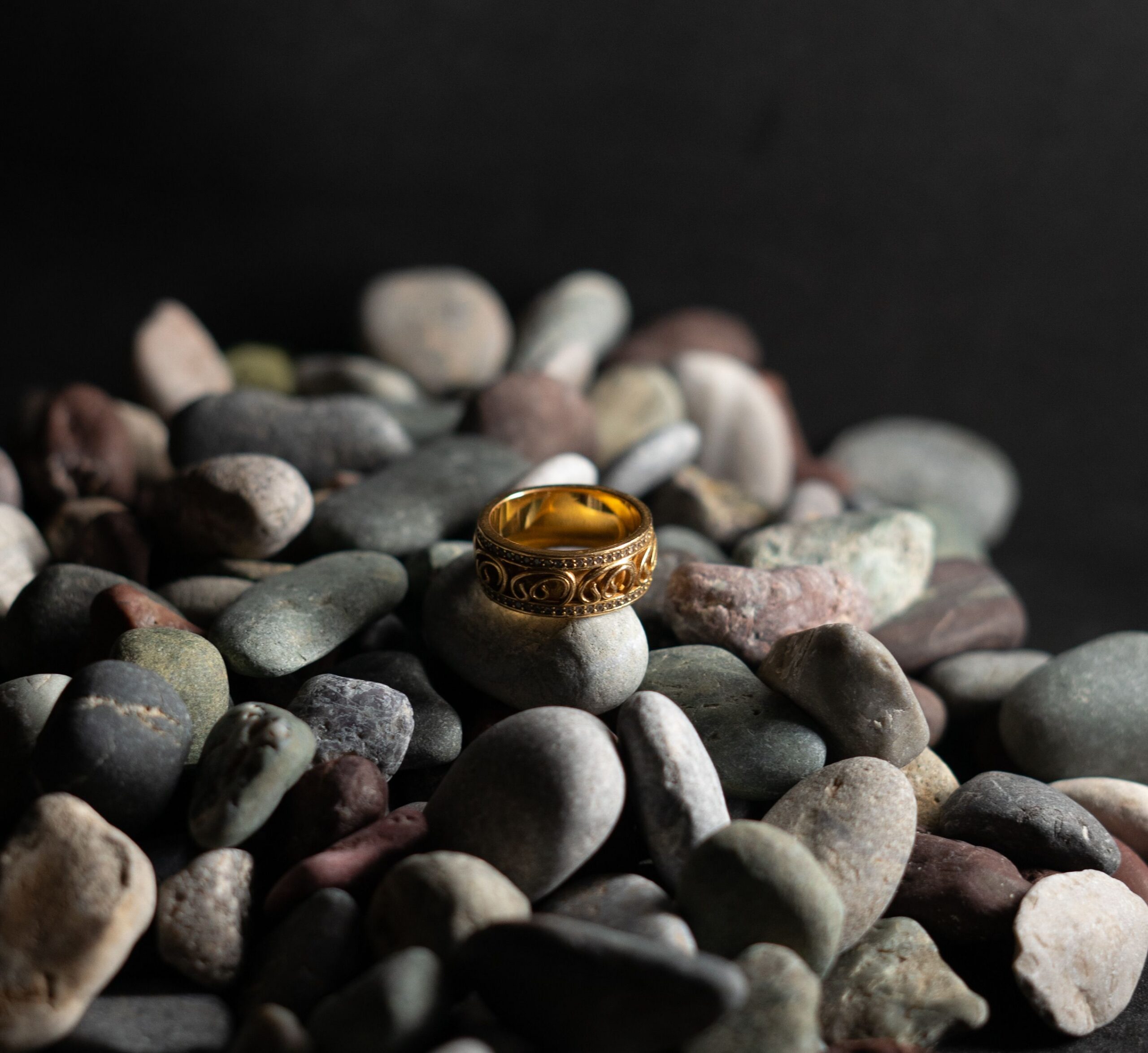
Jewellery weight is only useful when the label tells you what was weighed. Grams usually describe a finished piece or a metal component, while metric carats describe the mass of diamonds and other gemstones. Total diamond weight combines the weights of all diamonds included in the stated item or set. These numbers are not interchangeable, and none of them alone describes dimensions, purity, craftsmanship, diamond quality or value.
Keep the unit attached to the object. Ask whether a gram figure is the complete item, the gold or another defined component; whether a diamond figure is for one stone or every diamond; and whether an earring or cufflink figure covers one item or the pair. Compare like with like only after those definitions match.
Four weight lines that may appear in a jewellery specification
A single piece can legitimately have several weight figures because each figure may describe a different part of the design. The safest reading method is to name the measured object before interpreting the number.
Item or gross weight
Often intended to describe the complete article as presented, including metal, stones and fitted components. Terminology is not universal, so confirm the seller’s definition.
Gold or metal weight
May describe the gold alloy or other precious-metal portion. It does not automatically equal the physical weight of the finished jewellery.
Individual carat weight
Describes the mass of one named diamond or gemstone, such as a centre stone. One metric carat equals 0.20 gram.
Total diamond weight
Adds the weights of every diamond included in the stated piece, pair or set. It does not state that any one diamond has that weight.
Labels such as “approx.” or “estimated” also matter. A stone that is already mounted may not be removable for direct weighing, so a seller may rely on supplied records or estimate weight from measurements. That can be useful information, but it is not the same as a loose stone placed on a calibrated balance. Ask whether each number is measured, documented or estimated.
Product pages do not always use the same field names. “Metal weight”, “gold weight”, “net weight”, “gross weight”, “diamond weight”, “stone weight”, “ct”, “ctw”, “tcw” and “TDW” can appear in different combinations. Treat the nearby heading, footnote and item description as part of the number. A bare “5.2” without a unit and scope is incomplete information.
Grams versus carats: related by mass, different in jewellery use
A gram and a metric carat are both units of mass, so they can be converted mathematically. In jewellery descriptions, however, they normally serve different roles. Grams are commonly used for the metal or complete article. Carats are used for diamonds and most other gemstones. Converting every figure into one unit rarely makes two products more comparable because the figures may still cover different components.
One carat contains 100 points, so a 0.25 ct diamond may also be called a twenty-five-point diamond.
The Gemological Institute of America explains that carat measures how much a diamond weighs. It does not measure its visible diameter, length, brightness or quality. Likewise, a gram figure for a ring says nothing by itself about the width of its shank or the way the weight is distributed. Two objects with equal mass can have different dimensions because their shape, thickness, materials and construction are different.
Do not confuse diamond carat with gold caratage. In British English and parts of the international trade, “carat” may also be used in a gold-purity expression such as 18 carat gold. That purity statement describes a proportion in an alloy, not a mass. On a specification, “18K gold” and “0.50 ct diamond” answer completely different questions. The separate guide to gold purity marks explains 18K, 14K, 22K and fineness numbers without turning purity into a weight claim.
What a gold-weight figure does—and does not—tell you
A stated gold or metal weight can help compare physical substance when the two listings use the same definition. It may also help a jeweller record a piece for service or explain why two visually similar designs feel different in the hand. But the number needs the metal specification beside it. Ten grams of a finished 18K ring is not a statement that the ring contains ten grams of pure gold; 18K describes an alloy in which gold is the stated 18 parts out of 24.
Weight also does not replace construction detail. A wide-looking ring can be made with a hollowed interior, an open gallery or a lighter profile. A smaller-looking ring may feel substantial because more metal sits in the shank or setting. Clasps, posts, springs, solder, findings and settings can contribute to total mass. Product photography may not show those differences clearly.
The retail price of finished jewellery can include design, manufacturing, gemstones, setting, finishing, taxes, service and other factors. A gram figure alone is not a valuation, and a current bullion quote is not the retail price formula for a finished piece. Request the seller’s item-specific breakdown when it matters to the purchase.
The World Gold Council distinguishes gold caratage, which measures alloy purity, from the physical weight of gold. That distinction is the practical key: a gram value answers “how much mass?”, while a purity mark answers “what stated proportion of this alloy is gold?” Neither answer substitutes for the other.
For a commercial weighing claim, the measuring instrument matters too. The UAE Ministry of Industry and Advanced Technology identifies scales used for gold and jewellery transactions among legal measurement tools subject to conformity requirements. A buyer does not need to operate the scale, but can reasonably ask what was weighed, which unit was used and whether the figure is measured or approximate.
Why “gross weight” and “net weight” need a seller definition
In many listings, gross weight is intended to mean the complete jewellery article and net weight is intended to mean the metal after an allowance for stones or other components. That sounds straightforward, but field labels, deductions and calculation methods vary between sellers and software systems. “Net” may refer specifically to gold alloy, to all precious metal, or to another in-house definition.
Do not assume that subtracting a displayed diamond carat figure from a displayed gram figure will reproduce the seller’s net value. The diamond figure may be rounded, may represent an estimate, or may exclude non-diamond stones. Other components can also be treated differently. Moreover, carats must first be converted to grams before any mass comparison is meaningful.
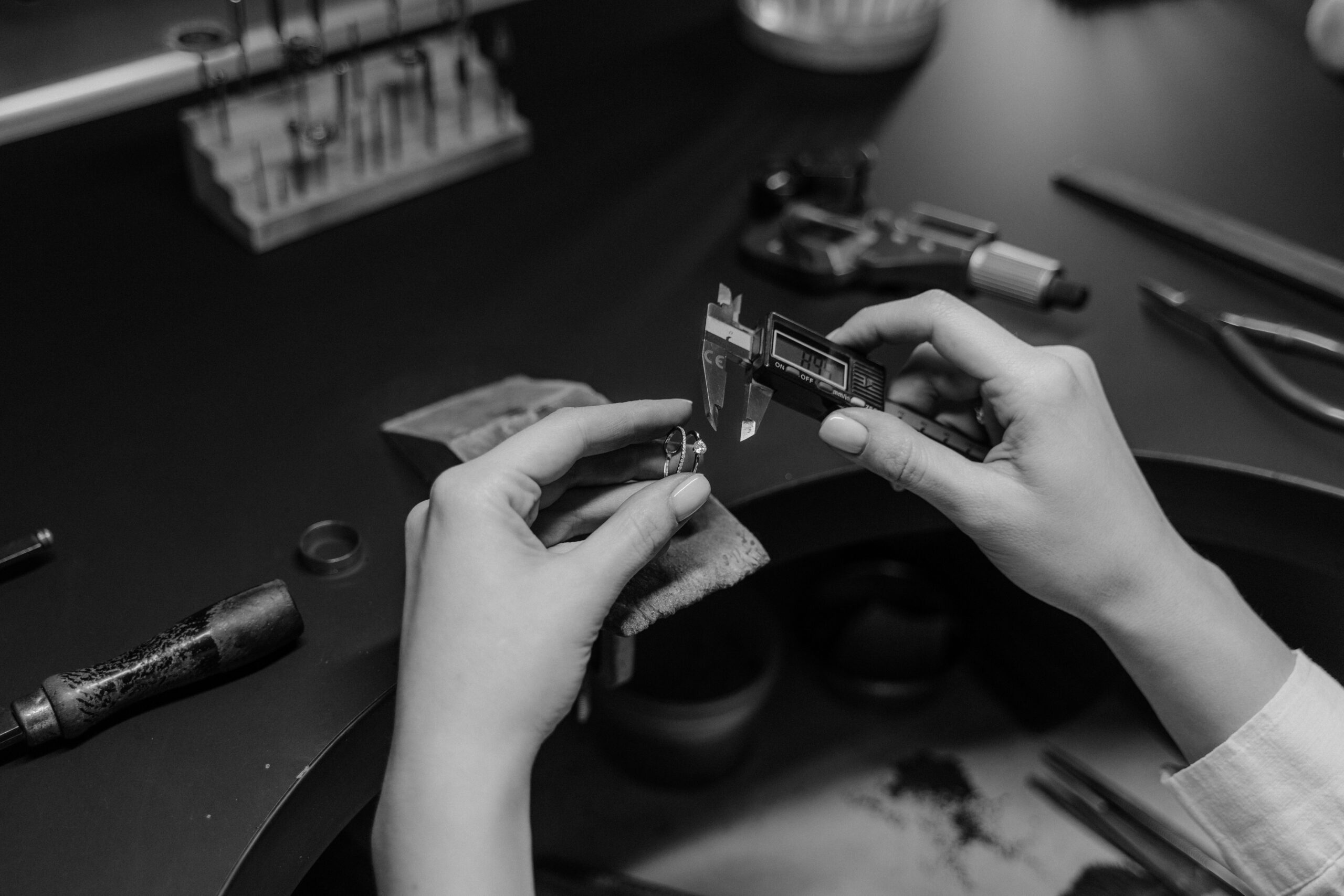
Ask for a plain-language sentence: “This number includes the complete ring,” or “This number is the stated weight of the gold alloy excluding the stones.” Then keep that definition with the product record. If two sellers use different definitions, their net or gross fields should not be placed side by side as though they were identical.
How total diamond weight, centre-stone weight and accent weight differ
Total diamond weight—often abbreviated TDW, CTW or TCW in retail descriptions—normally refers to the combined mass of all diamonds within the stated scope. A ring described as 1.00 ct total could contain a centre diamond plus many smaller accent diamonds. It does not follow that the centre weighs 1.00 ct, or that each stone has the same colour, clarity or individual weight.
A useful specification separates the important groups. It might identify the centre diamond, the combined side-stone or accent weight, and the total for the whole ring. The arithmetic should make sense after rounding, but small displayed differences can arise when component weights and totals are rounded to different decimal places. Ask for clarification instead of silently assigning the difference to one stone.
Scope becomes especially important for paired jewellery. An earring description can state a total for both earrings, a total per earring, or an individual-stone weight. The existing guide to diamond earring carat weight per pair covers that narrow case. For pavé, halos and other small accents, the guide to melee diamonds explains why a group of small stones should not be interpreted like one large diamond of equal combined weight.
| Displayed line | What it may describe | Question to ask |
|---|---|---|
| Gold weight: 5.8 g | The stated gold-alloy component, depending on the seller’s method | Does this exclude all stones and non-gold components? |
| Centre: 0.50 ct | One identified centre diamond | Is this measured loose, supported by a report, or estimated while mounted? |
| Accent diamonds: 0.28 ct | The combined weight of a defined group of small diamonds | How many accents are included, and is the number total or approximate? |
| TDW: 0.78 ct | All diamonds in the stated ring if centre and accents are both included | Does the total cover the centre, every accent and only this one item? |
| Pair TDW: 1.00 ct | All diamonds across two earrings when the listing expressly says “pair” | Is each earring approximately 0.50 ct total, and how is that divided among stones? |
These examples teach label reading; they are not a universal dictionary. Retail abbreviations can overlap, so the product’s written definition controls. If a centre-stone weight is essential, require it as its own line rather than trying to infer it from TDW.
Equal weight does not guarantee equal visible size or feel
Diamond carat is mass, while face-up dimensions describe how much outline is visible from above. Two diamonds with the same carat weight can distribute that mass differently through diameter, length, width, depth, girdle and shape. A deeper stone may carry more mass below the girdle and appear smaller face-up than another stone of equal weight. The diamond length-to-width ratio guide shows how measurements add outline information that carat cannot supply.
The same principle applies to finished jewellery. Two equal-weight chains may distribute material through different link profiles. Two equal-weight rings may have different shank widths, settings and internal contours. Weight can influence the sensation of substance, but balance, flexibility, contact area and fit influence comfort. A try-on remains more informative than treating the highest gram number as automatically best.
Diamond quality also cannot be collapsed into weight. Colour, clarity and cut-related characteristics affect appearance and evaluation independently of carat. A total weight made from many small diamonds is not economically or visually equivalent to a single diamond at the same combined mass. If a listing sits close to a round-number threshold, read the separate explanation of diamond carat rounding and magic sizes before assuming that a tiny numerical difference will be obvious on the hand.
A repeatable way to compare two jewellery listings
- Copy every number with its unit. Record “g”, “ct”, “TDW” and “per pair” exactly as shown. Do not copy a bare number into a comparison note.
- Name the measured component. Mark each figure as complete item, gold alloy, centre diamond, accent group, all diamonds, one earring or pair. If the scope is not stated, ask.
- Check measured versus approximate. Note whether a weight comes from direct weighing, a grading report, supplier records or an estimate for mounted stones.
- Match the metal specification. Compare gram figures only after confirming metal type, stated purity and whether the same components are included.
- Match the diamond scope. Separate the centre stone from total diamond weight and confirm how a pair or set is counted.
- Add dimensions and construction. Review ring width, chain length, stone measurements, setting style and other product-specific dimensions alongside weight.
- Judge the complete piece. Consider fit, finish, workmanship, gemstone quality, service needs and documentation. The largest number is not a complete buying conclusion.
- Units are shown beside every figure.
- Gross and net have written definitions.
- Gold weight and gold purity are separate.
- Centre and accent diamonds are separated.
- Pair or set scope is explicit.
- Approximate values are labelled.
- Dimensions accompany weight where useful.
- The invoice matches the agreed specification.
Jewellery weight FAQs
Is jewellery weight normally measured in grams or carats?
Both units can appear, but they normally describe different components. Grams commonly describe the complete article or its metal portion. Metric carats describe diamonds and most gemstones. Always check the field label and unit before comparing products.
What does total diamond weight mean?
Total diamond weight is the combined mass of every diamond included within the seller’s stated scope. It may cover one ring, both earrings in a pair or a defined set. It does not mean that one diamond has the total weight, so ask for centre and accent weights separately when that distinction matters.
Is 1 carat the same as 1 gram?
No. One metric carat equals 0.20 gram, or 200 milligrams. The conversion is exact, but jewellery listings still use carats for gemstone mass and grams for metal or item mass, so the measured component must remain attached to the number.
Does a heavier gold ring contain more pure gold?
Not necessarily. You need both the defined gold-alloy weight and the stated purity. A finished-item weight may include diamonds and other components, while two pieces at different purities contain different proportions of gold within their alloys. Construction and documentation also need consideration.
Why can two diamonds of equal carat weight look different in size?
Carat measures mass, not face-up area. Shape and the distribution of depth, diameter, length, width and girdle thickness affect visible size. Compare accurate dimensions, cut-related information and the actual stones instead of using carat alone.
Can I calculate net gold weight by subtracting diamond weight?
Do not do so unless the seller confirms the definitions and all included components. Diamond carats first require conversion to grams, the stone total may be rounded or estimated, and other stones, clasps or findings may be treated separately. Request the seller’s stated net metal figure and method.
Authoritative sources
- Gemological Institute of America: Diamond carat weight
- GIA: Understanding carat weight on diamond grading reports
- World Gold Council: Gold jewellery, caratage and purity
- UAE Ministry of Industry and Advanced Technology: Legal measurement tools
This guide explains common specification language. It does not replace the seller’s item-specific definition, grading documents, a calibrated measurement or an independent professional assessment.
Review jewellery with each weight in context
Explore Laxmi Jewellers’ current designs, then ask our team to clarify the metal, diamond and item-weight fields for the specific piece you are considering.
