

Ring craftsmanship guide · Laxmi Jewellers Dubai
What Is Milgrain on a Ring? Beaded Edges, Wear and Repair
See how a line of tiny metal beads changes a ring’s borders, how the detail may be made, and what to ask about wear, cleaning and future restoration.
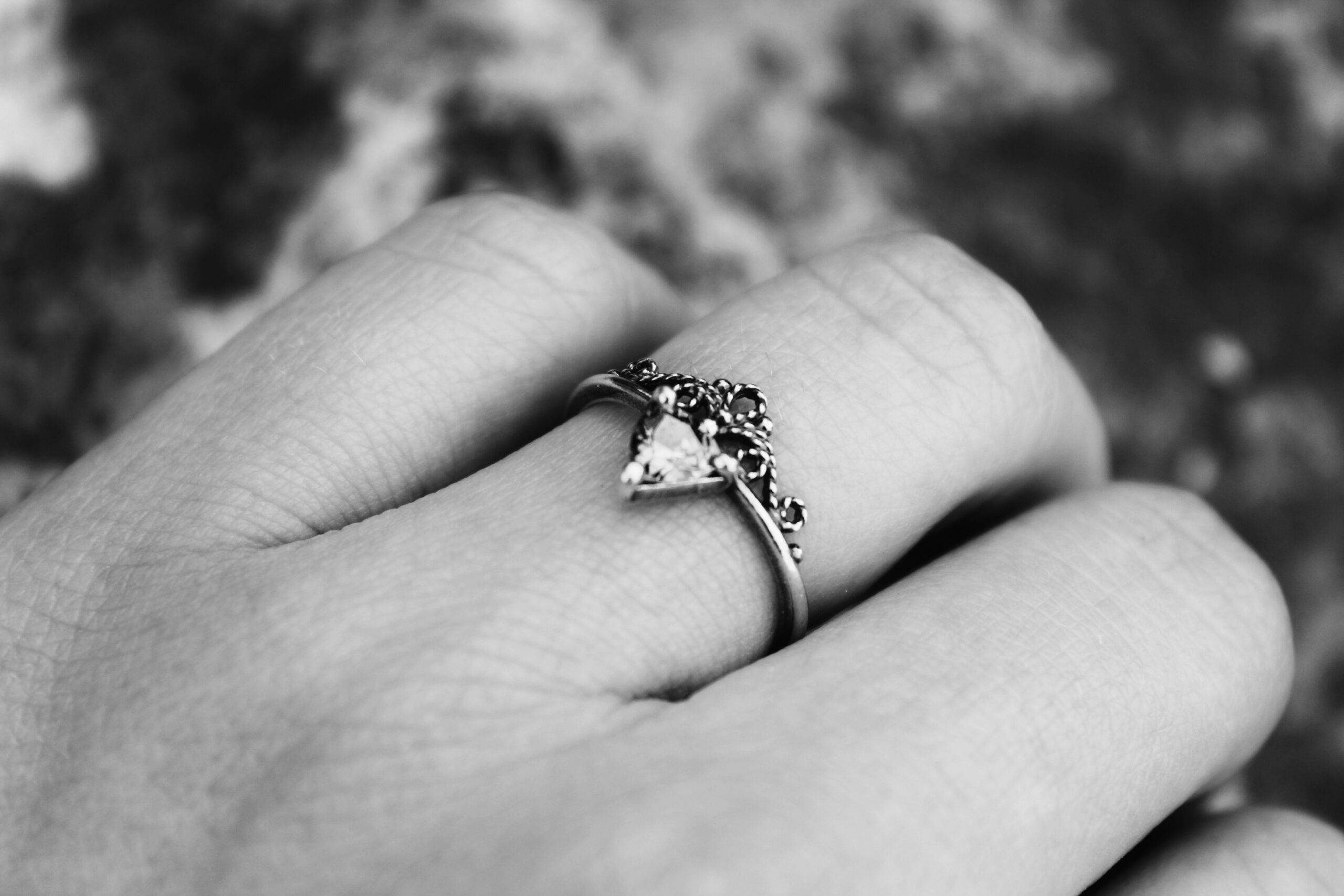
Milgrain is a narrow row of tiny rounded impressions or beads formed along a metal edge. On a ring, it can outline a bezel, halo, shoulder, engraved panel or band border. The technique gives a crisp edge a finely textured, often vintage-inspired character without changing the centre stone’s identity or the ring’s basic setting type.
Milgrain is decorative metalwork, not a line of tiny diamonds. A jeweller can create it with a small toothed wheel or other controlled process, while modern designs may also begin with cast or CAD-modelled bead detail. Ask where the milgrain will sit, how fine and regular it should look, and how cleaning or future refinishing could affect it.
What milgrain means on a ring
The visual idea is simple: a continuous dotted line replaces or accents a plain metal edge. Under close viewing, the dots resemble minute grains or domes. Ganoksin’s stone-setting tool reference describes the traditional milgrain tool as a miniature roller that presses ornamental dots into the edge of a setting. Stuller demonstrates ring equipment that guides a milgrain tool around even, angled or perpendicular surfaces.
The detail is small, but its placement changes how a ring reads. A narrow line can separate polished metal from a diamond-set section, soften the boundary of a halo, trace the shoulders or give a broad panel a more intricate perimeter. GIA’s guides to antique and vintage engagement rings show milgrain alongside delicate open work and period-inspired settings, particularly in Edwardian and other vintage-style designs.
Milgrain does not prove that a ring is antique. A newly made ring can use the same visual language, and an original antique ring may show softened or partly worn beadwork. “Vintage-inspired” describes an aesthetic; “antique” describes age. If age, maker or provenance matters, it needs separate evidence.
How milgrain detail may be made
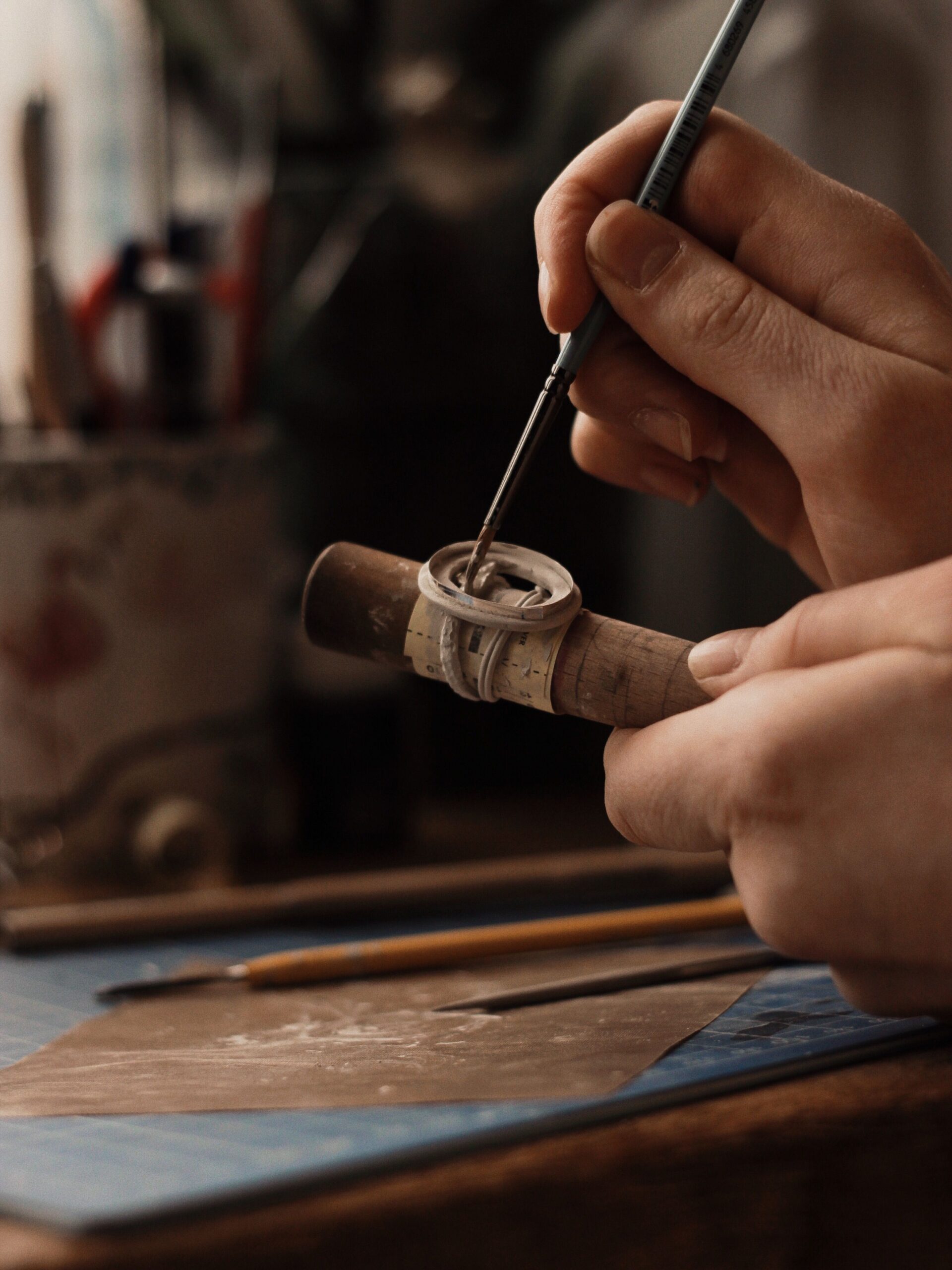
Traditional milgrain is produced by moving a hardened wheel with a toothed edge along prepared metal. The wheel displaces or impresses the surface into a repeating bead pattern. The result depends on the tool size, the ridge or border being worked, the metal, the pressure and the maker’s control. A straight, consistent path is easier to read as intentional; crowded corners and sharp changes in direction demand more care.
Not every modern beaded border is created entirely by hand after casting. A design may include milgrain-like beads in the wax, mould, casting or CAD model, with hand finishing used to sharpen or regularise the effect. Other workshops may apply the detail only after the ring has been formed and stones set. These routes can produce different depth, spacing and service options, so “handmade milgrain” should not be assumed from appearance alone.
Hand or tool-applied detail
A roller or related tool forms the bead row on a prepared metal edge. The maker controls pressure, alignment and continuity around the finished form.
Cast or modelled detail
The bead pattern begins in the model or casting and may then be cleaned and refined. Ask how much finishing is done after casting and how the detail can be restored later.
Sequence matters. Sizing, stone setting, engraving, polishing, plating and milgrain can affect neighbouring surfaces. A workshop should plan which operations happen first and which edges must remain protected. For a custom design, record the requested bead scale and locations rather than relying on the single word “milgrain”.
Milgrain, engraving, filigree and pavé are not the same
These terms often appear together because vintage-style rings combine several decorative techniques. They still describe different things. Separating them helps a buyer understand what is metal texture, what is cut decoration, what is open structure and what actually holds gemstones.
| Detail | What it describes | Question to ask |
|---|---|---|
| Milgrain | A narrow repeating row of tiny metal beads or impressions along an edge. | Is the line tool-applied, cast or modelled, and how can it be refreshed? |
| Engraving | Lines, motifs or texture cut into or formed on a metal surface. | How deep is the design, and which later polishing operations must avoid it? |
| Filigree | Delicate wire or openwork metal construction that creates airy patterns. | Which sections are structural, and how should open areas be cleaned? |
| Pavé | Small stones set closely together and held by minute beads or prongs. | Which metal beads secure stones, and which are only decorative borders? |
| Bezel edge | A continuous rim of metal that holds or surrounds a gemstone. | Is milgrain decorating the rim, or is the rim itself the stone-setting element? |
Laxmi’s engagement-ring anatomy guide explains the head, gallery, shoulders and shank. Milgrain can decorate several of those parts, but it is not another structural part of the ring. Likewise, Laxmi’s guide to pavé and channel settings owns the gemstone-setting comparison; the focus here is the decorative metal border.
Where milgrain sits and how it affects appearance
Fine beads can make a narrow border look delicate and precise. Larger or deeper beads create a more visible rhythm and may read as deliberately rustic. One line can frame a centre section; two parallel lines can emphasise a channel or panel. On a slim ring, even a small bead row occupies a meaningful portion of the visible metal, while a broad band offers more space around it.
Contrast also matters. Milgrain catches small highlights, so it can remain visible beside a satin area or break up a highly polished border. Around a halo, it can reinforce the outline without adding more stones. On shoulders or geometric panels, it can help separate one motif from another. The effect should be judged on a ring close to the intended width and scale, not only on an enlarged screen image.
Ask for close views from more than one angle. Confirm whether the bead line continues around corners, stops before the shank or appears only on the face-up section. If two rings are intended to sit together, check whether raised detail can rub against the neighbouring band. The wedding-ring finishes guide explains broader polished, satin, brushed and hammered surfaces; milgrain is a local edge treatment that must be planned alongside them.
How milgrain wears and how to clean it
Milgrain is raised or impressed surface detail, so contact can gradually soften its crispness. The amount of change depends on bead depth, placement, metal, ring profile, frequency of wear and contact with other objects. Beads on a protected upper border may retain definition longer than detail exposed on the palm side or a surface that rubs against another ring.
Dirt, lotion and polishing compound can collect around fine texture. Use the cleaning method recommended for the ring’s complete construction—metal, stones, plating and any openwork—not a harsh method chosen only for the milgrain. The National Association of Jewellers recommends regular inspection and professional advice where catches, settings or other parts show wear. Avoid scraping between beads with hard points and avoid abrasive home polishing, which can flatten detail or change adjacent finishes.
- Use a soft brush only when the jeweller confirms it is suitable for every stone and setting.
- Rinse and dry carefully so residue does not remain around the bead line.
- Remove the ring for impact-heavy work, chemicals or machinery according to professional guidance.
- Store it so textured edges do not repeatedly rub other jewellery.
- Request inspection if the ring is bent, a bead line looks broken, or nearby stones feel loose.
Milgrain wear is cosmetic until it is associated with a structural problem nearby. A softened decorative border is different from a thinning prong or cracked setting. Laxmi’s prong inspection guide covers the warning signs that concern stone security.
What repair and refinishing can change
A jeweller may be able to reapply or sharpen worn milgrain, but the correct approach depends on how the original detail was made, how much metal remains and what sits beside it. Re-rolling a border, rebuilding a ridge or touching one section can produce a visible difference if the original beads are unusually fine, irregular by design or softened across the whole ring.
General polishing can also affect milgrain. Removing scratches from an adjacent surface means removing or redistributing a small amount of metal. If tools cross the bead line, they may blur its edges. Plating and soldering introduce additional sequence questions, while nearby gemstones may limit access or heat. A restoration plan should identify which surfaces will be polished, which details will remain untouched and whether stones need to be removed or protected.
For an antique or estate ring, condition may be part of its value and story. GIA advises careful assessment of thinning prongs and shanks in older rings. Seek someone experienced with vintage construction before authorising aggressive refinishing, resizing or replacement of detailed sections.
A practical milgrain ring checklist
- Mark every location. Specify the halo, bezel, shoulders, gallery, panel borders or band edges that should receive milgrain.
- Choose the scale. Compare fine, medium and bold bead rows on a ring close to the intended dimensions.
- Confirm the production method. Ask whether the detail is tool-applied, cast, modelled or refined through a combination of processes.
- Check corners and stopping points. Decide how the line turns, meets another detail and ends near the shank.
- Plan neighbouring finishes. Record polished, satin, engraved, plated and stone-set areas separately.
- Discuss daily contact. Consider adjacent rings, the palm side and any raised edge that may catch or rub.
- Ask about future service. Confirm how the bead line can be cleaned, protected during resizing and refreshed if it softens.
For a new ring, a clear design brief is more reliable than a heavily enlarged reference photo with no dimensions. Laxmi Jewellers’ bespoke design service can help translate the requested border, setting and finish into one complete specification.
Milgrain ring FAQ
Is milgrain made from tiny diamonds?
No. Milgrain is a row of tiny metal beads or impressions. It can sit beside diamonds or outline a pavé area, but the bead line itself is decorative metalwork.
Is every milgrain ring handmade?
No. Traditional detail may be rolled onto prepared metal by hand, while modern rings may begin with cast or CAD-modelled beads and receive hand finishing. Ask how the specific ring was produced.
Does milgrain mean a ring is antique?
No. Milgrain appears in antique and vintage jewellery, but new rings can use it to create a period-inspired look. Age and provenance require separate documentation.
Can milgrain wear smooth?
Yes. Fine raised detail can soften through friction, polishing and years of wear. Placement, depth, metal and contact with adjacent jewellery all influence the rate of change.
Can worn milgrain be repaired?
Often it can be refreshed or reapplied, but feasibility depends on remaining metal, the original method, nearby stones and access. A jeweller should inspect the actual ring before promising an identical restoration.
Is milgrain the same as engraving?
No. Milgrain is a repeating beaded border. Engraving cuts lines or motifs into a surface. A design can use both techniques together.
Is milgrain difficult to clean?
Fine texture can hold residue, but gentle cleaning may be straightforward when it is suitable for the ring’s metal and stones. Avoid sharp tools and abrasive home polishing; request professional guidance for delicate, plated or antique pieces.
Sources used for this guide
- GIA: How to shop for antique and vintage engagement rings
- GIA: Antique diamond cuts and vintage-inspired settings
- Ganoksin: Stone-setting tools FAQ and milgrain-tool description
- Stuller: Millgrain machine demonstration
- National Association of Jewellers: Caring for jewellery
Sources and the Pexels licence were checked on 30 October 2026. Workshop methods and service options vary, so confirm the process for the exact ring and metal being considered.
Compare the border as part of the complete ring
Choose milgrain scale, placement, setting and finish together, then record how the detail should be protected during future care.
