

Cluster vs Solitaire Diamond Earrings: Which Style Suits You?
Compare a multi-stone cluster with one principal diamond per ear by visual pattern, stone-weight wording, matching, profile, care and the way each design fits your routine.
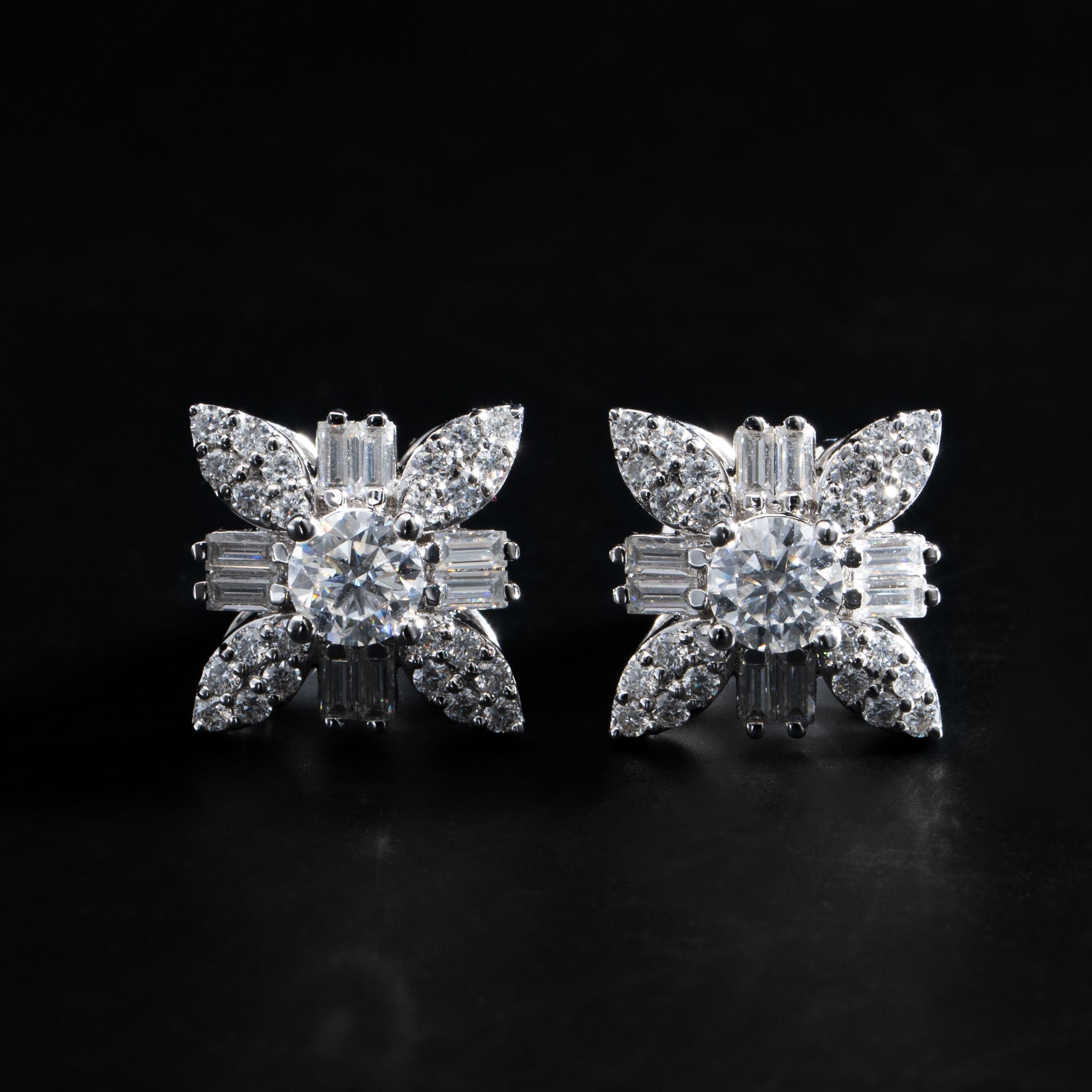
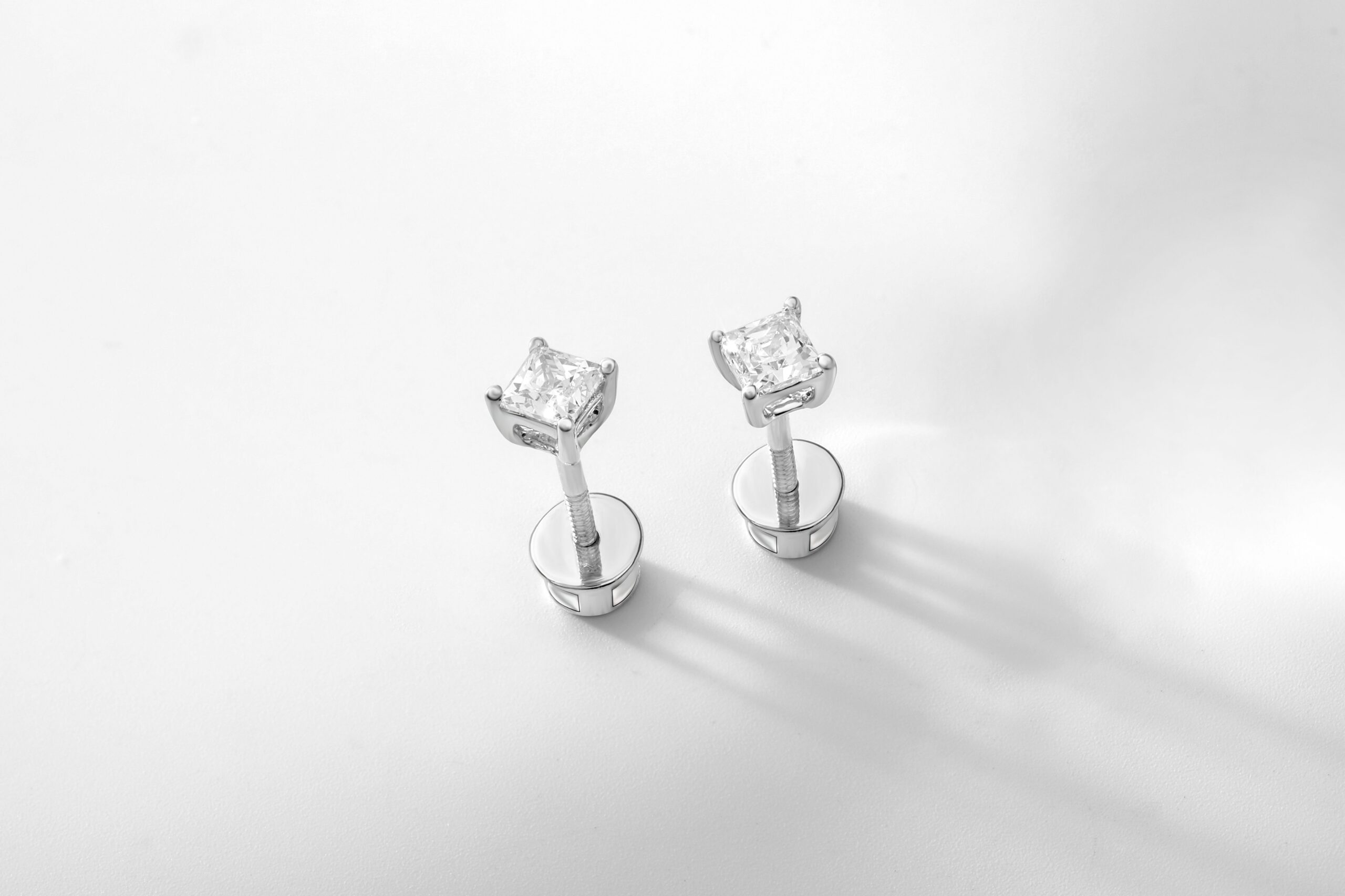
The clearest difference is the visual unit. A solitaire-style stud presents one principal diamond on each ear, so the eye reads a distinct stone and its outline. A cluster arranges several smaller diamonds into one composed shape, so the eye first reads the pattern, border and combined spread. Neither format is automatically brighter, larger-looking or easier to wear: those results depend on the actual stones, metalwork, dimensions and fit.
Choose a solitaire if you want each principal diamond to remain visually legible and simple to compare. Choose a cluster if you prefer a floral, geometric or composite face-up pattern made from several stones. In either case, confirm whether quoted weight is per stone, per earring or for the pair, compare the two earrings together, and inspect the finished construction rather than relying on a style name.
This guide compares design architecture rather than prong, bezel, basket or martini construction. Those are separate setting questions covered in Laxmi Jewellers’ diamond stud setting guide. Here, the useful decision is how one-stone and multi-stone compositions behave as complete earrings.
One principal stone or a composed cluster?
“Solitaire” usually describes a design dominated by one diamond. In a pair of earrings, that means one principal stone on each ear. Its shape, facet pattern and outline remain easy to identify. A cluster brings several stones close together so they form a larger visual arrangement. The composition may be floral, circular, star-like, geometric or deliberately irregular.
One clear centre
The eye can follow the outline and light pattern of each principal diamond. Metal remains part of the design, but the single stone is the main visual reference.
One coordinated motif
Several stones, their spacing and the metal between them combine into a pattern. From normal viewing distance, the motif may be read before its individual components.
That distinction matters more than a generic idea of “classic” versus “statement”. A compact cluster can be discreet, while a large solitaire can be prominent. Compare the earrings at conversational distance, not only in a magnified photograph. Magnification reveals workmanship; ordinary distance reveals the effect you will actually wear.
Face-up presence is not the same as individual diamond weight
A cluster can occupy a broad face-up area because several diamonds and the surrounding metal share the footprint. That does not mean it contains one diamond equal to the cluster’s visible diameter. A solitaire’s face-up dimensions belong mainly to one principal stone, although prongs or a bezel can slightly alter the apparent outline.
Compare the overall millimetre dimensions of the finished earrings as well as the stones. A floral cluster may extend farther from edge to edge than a solitaire with the same stated total carat weight; another cluster may use more metal and smaller gaps, producing a different balance. There is no reliable conversion from cluster diameter to an “equivalent” solitaire carat weight.
Camera distance, cropping, dark backgrounds and enlarged product views can change perceived scale. Request the finished earring dimensions and the wording used for stone weight, then compare photographs taken under consistent conditions.
Total weight, pair weight and individual stone weight
Carat is a unit of diamond weight, not a direct measurement of diameter. Earring descriptions also use totals in different ways. A quoted figure may refer to one diamond, one earring, all diamonds in one cluster, or both earrings together. In a cluster, the total may combine many small stones; in a solitaire pair, it may combine the two principal diamonds.
Ask for the number of diamonds, the weight of the important individual stones when available, and the total for the complete pair. This prevents an accidental comparison between one solitaire stone and all stones across two cluster earrings. Laxmi Jewellers’ guide to diamond earring carat weight per pair explains that labelling question in detail.
Weight alone still does not settle the style decision. Shape, depth, setting coverage, spacing and the cluster outline all influence face-up size. Treat carat information as one part of a complete specification rather than as a shortcut for how large the earrings will look.
Matching and documentation differ between the designs
GIA’s guidance on diamond studs emphasises matching the two principal diamonds for an even appearance. Exact identity is unnecessary, but conspicuous differences in outline, face-up dimensions, colour impression or light pattern can make a pair look unbalanced. View both earrings beside each other, then in their intended left and right orientation.
A cluster adds another level: the individual melee diamonds should work together within each motif, and the two completed motifs should correspond. Compare their outer dimensions, stone count, spacing, symmetry and the way light and dark areas move. A tiny variation may be invisible in wear; a shifted border stone or noticeably uneven gap may disrupt the pattern.
Documentation must be read for what it actually covers. A grading report for a loose principal diamond is not the same as a jewellery report describing a finished item with mounted stones. IGI explains that jewellery reports identify the article and provide information about mounted gemstones within the scope of the service. Confirm the report type, item description, stone quantities and any stated limitations rather than assuming every small diamond has an individual report.
Keep any invoice, report or specification with the pair. If earrings are later serviced, that paperwork helps distinguish a recorded design from an informal verbal description.
How the design may feel on the ear
Comfort depends on more than cluster versus solitaire. Overall diameter, depth, weight, post position, backing, ear-lobe anatomy and how closely the earring sits all matter. A wide cluster may spread its visual area across the lobe but can catch on a collar if it projects at the edge. A deep solitaire setting may stand farther from the ear even when its face-up diameter is smaller.
Try the pair with the clothing and activities that resemble real wear. Turn your head, put on glasses, use a phone and test a scarf or high collar. Check whether the earring tilts, whether the motif stays in the intended orientation and whether the backing feels secure without being overtightened. For the mechanics of backings, use the separate screw-back versus push-back guide.
Occasion labels are personal. A restrained solitaire often integrates easily with other jewellery because it contributes one clean point of light. A compact cluster can be equally versatile but offers more texture and a defined motif. Larger examples of either style can become the focal point. Choose according to scale, wardrobe and comfort rather than assuming one design belongs only to daytime or formal wear.
What ownership looks like over time
Both styles collect skin oils, cosmetics and dust around the stones and metal. A cluster has more stone-to-metal junctions and narrow spaces, so residue can be harder to see and reach. A solitaire may offer a simpler visual inspection, but its exposed principal stone and supporting metal still need attention. Construction, not the label alone, determines the correct cleaning method.
- Inspect both earrings in bright, diffuse light before cleaning.
- Look for a changed gap, tilted stone or snagging metal.
- Check that the two motifs still sit in matching orientation.
- Use only a method suitable for every stone and metal present.
- Rinse over a secured bowl, never an open drain.
- Stop wearing the earring if a stone or component seems loose.
Do not use an ultrasonic cleaner simply because the stones are diamonds. The complete item, any treatments, the condition of the setting and the manufacturer’s guidance all matter. When uncertain, ask a jeweller to inspect the earrings before cleaning them. Multi-stone designs particularly reward regular checks because one changed component may be less obvious within the overall sparkle.
Cluster vs solitaire diamond earrings at a glance
| Question | Cluster design | Solitaire design |
|---|---|---|
| What does the eye read first? | A combined floral, circular or geometric motif. | One principal diamond and its individual outline on each ear. |
| How should size be compared? | Use finished outer dimensions, stone count and clear total-weight wording. | Use principal-stone dimensions, individual weights and pair total. |
| What needs matching? | The stones within each motif and the two completed clusters. | The two principal diamonds and their completed settings. |
| What affects comfort? | Outer spread, profile, total weight, post position and motif balance. | Stone size, setting depth, weight, post position and backing. |
| What needs inspection? | Several stone-to-metal junctions, gaps and overall symmetry. | The principal stone, its supporting metal, post and backing. |
| Best reason to choose it | You genuinely prefer a composed, textured pattern. | You genuinely prefer the clarity of one dominant stone per ear. |
A practical decision checklist
Compare candidates with the same viewing conditions and ask for complete specifications. The following sequence keeps appearance, documentation and wearability in one decision.
- View both styles at normal distance and under the same light.
- Record the finished width, height, depth and pair weight.
- Clarify whether carat weight is per stone, per earring or per pair.
- Compare the left and right earring together, not separately.
- Read the exact scope of any grading or jewellery report.
- Check profile, post position, backing and lobe balance.
- Inspect every visible contact point and narrow cleaning area.
- Choose the pattern you prefer when the earrings are actually worn.
If the multi-stone composition is the clear preference, explore Laxmi Jewellers’ current cluster earring designs. If a single principal diamond reads more naturally to you, compare the solitaire earring collection. These category pages remain the places to browse products; this guide exists to make the design choice more informed.
Cluster and solitaire earring FAQs
Do cluster earrings look larger than solitaire studs?
A cluster can cover a broad face-up area because several stones and metal form one motif, but the result depends on its dimensions and layout. Compare finished millimetre measurements rather than assuming that a given total carat weight will look larger.
Is a cluster’s total carat weight the size of one diamond?
No. A cluster total combines the weights of multiple stones. Confirm whether the stated figure covers one earring or the pair and ask for the number and sizes of the component diamonds.
Are solitaire earrings easier to match as a pair?
They may be simpler to assess because there are two principal stones to compare, but good matching still requires attention to outline, dimensions, colour impression and light pattern. A cluster must be compared both within each motif and across the pair.
Are cluster earrings harder to clean?
They often contain more narrow gaps and stone-to-metal junctions, which can retain residue, but safe cleaning depends on the actual construction and condition. Follow the jeweller’s guidance and arrange inspection if any part appears loose.
Which style is better for everyday wear?
Neither label guarantees comfort or durability. Compare overall dimensions, profile, weight, post position, backing and how the earrings interact with your routine. A compact example of either style may suit frequent wear.
Can a finished cluster earring have a laboratory report?
Jewellery reports may describe a finished item and mounted stones within the issuing laboratory’s service scope. Read the exact document and its limitations; do not assume it is equivalent to an individual loose-diamond grading report for every small stone.
Sources and further reading
The comparison principles were checked against current primary gemmological guidance on stud selection, melee design and finished-jewellery documentation.
Compare cluster designs as complete earrings
Review face-up dimensions, stone-weight wording, profile and pair matching together, then see how each multi-stone motif looks at a normal wearing distance.
