
When Should Diamond Ring Prongs Be Checked and Repaired?
When Should Diamond Ring Prongs Be Checked and Repaired?
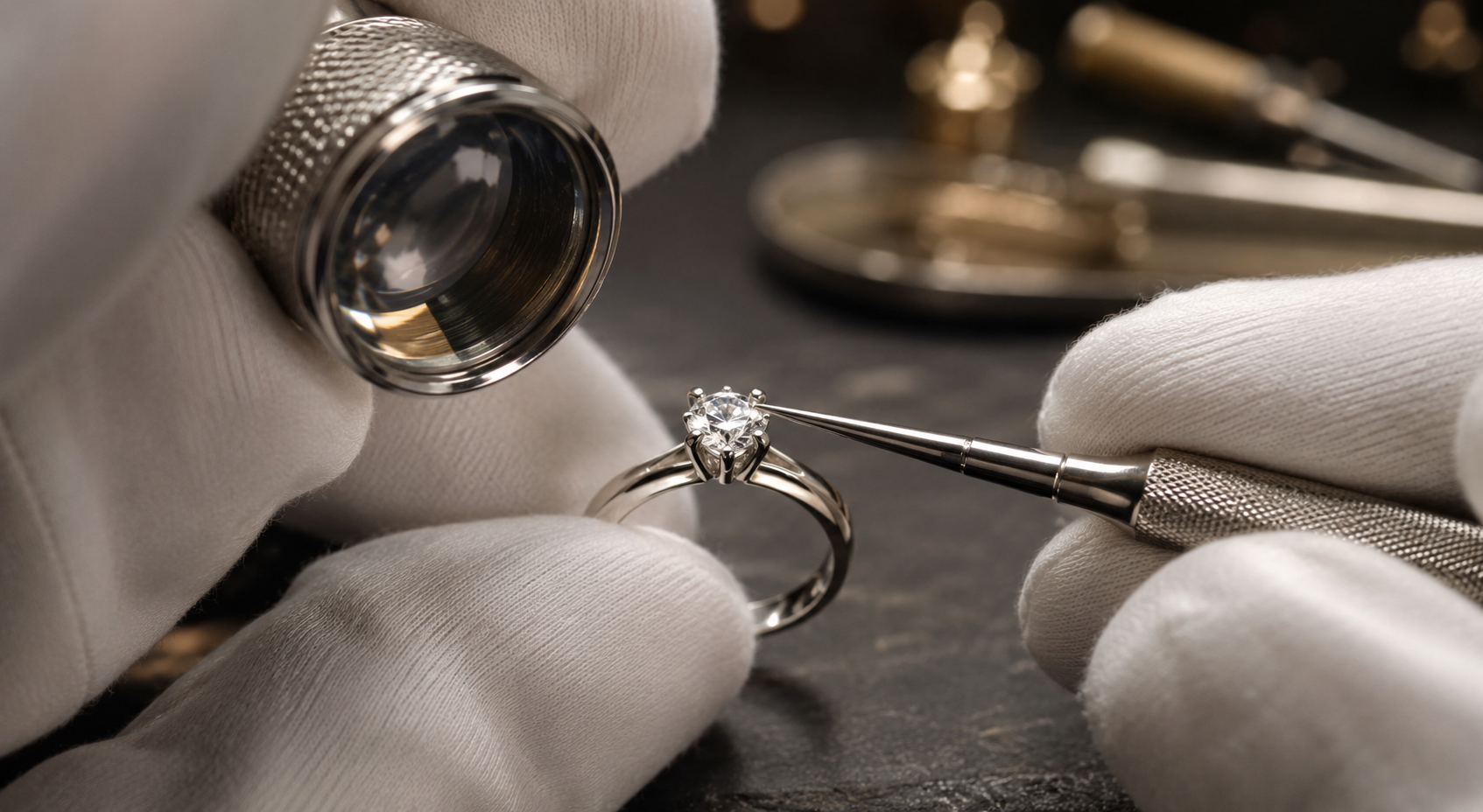
A diamond ring may be designed to last for generations, but the small metal prongs securing its stones are exposed to wear every time the ring is worn. Prongs can gradually become thin, bent, lifted or damaged without creating an obvious change in the ring’s appearance. If a weakened prong is not repaired, the diamond may loosen or fall out.
Regular diamond ring prong inspection is therefore an essential part of responsible jewellery care. For a diamond ring worn daily, we generally recommend arranging a professional inspection approximately every six to twelve months. Earlier examination is advisable whenever the ring receives an impact, catches on clothing or shows signs of a loose stone.
At Laxmi Jewellers Dubai, we inspect prongs, settings and surrounding metal carefully to identify wear before it develops into a more serious repair.
What Are Diamond Ring Prongs?
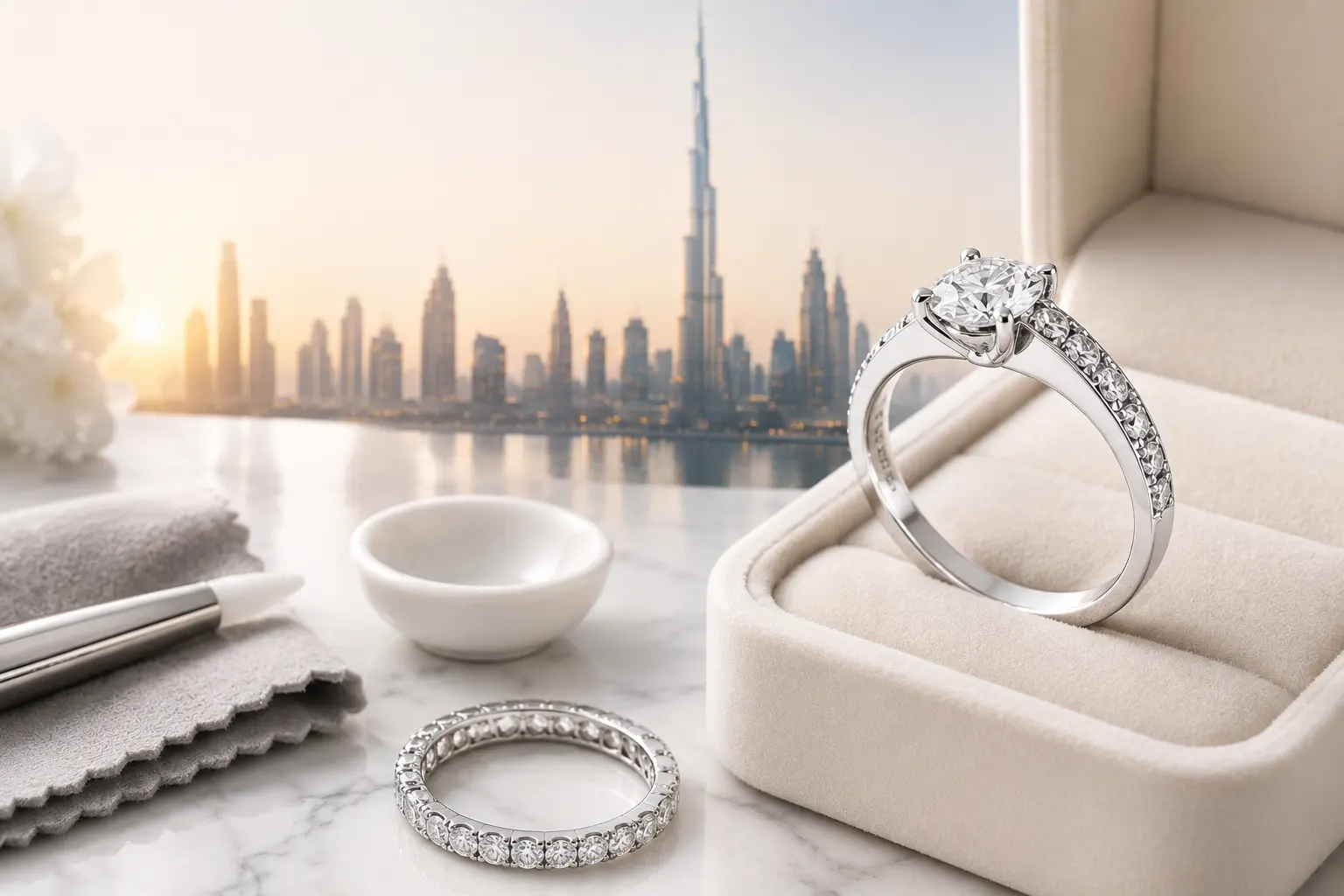
Prongs are the small metal claws that hold a diamond or gemstone securely within a ring setting. They extend from the mounting and curve over the edge of the stone to keep it in position.
A traditional solitaire engagement ring commonly uses four or six prongs. Other designs, including halo, trilogy, pavé and multi-stone rings, may contain many smaller prongs securing the centre and accent diamonds.
Prongs are designed to be discreet so they do not cover more of the diamond than necessary. Their size allows light to enter the stone, but it also means they can be more vulnerable to gradual wear than heavier parts of the ring.
The security of a diamond depends on the condition, position and balance of all its supporting prongs. Even if most of them appear secure, one worn or lifted prong may allow the stone to move within its setting.
How Often Should Diamond Ring Prongs Be Inspected?
There is no single inspection schedule suitable for every ring. Frequency depends on the ring’s design, metal, age, condition and how often it is worn.
As a practical guideline, we recommend:
- Every six months for engagement rings and diamond rings worn daily
- Every twelve months for rings worn occasionally and stored carefully
- Immediately after a significant impact or fall
- Before and after international travel
- Before an important event, especially if the ring has not been inspected recently
- As soon as the stone feels or sounds loose
- After resizing, restoration or other structural work
Rings with delicate pavé settings, raised centre stones or fine claw prongs may require more frequent attention. Older or inherited rings should also be examined regularly because previous wear may not be visible without magnification.
A professional inspection is particularly important in Dubai, where jewellery may be exposed to frequent travel, active lifestyles, swimming pools, cosmetics and regular transitions between hot outdoor conditions and air-conditioned interiors.
Warning Signs That Ring Prongs Need Attention
Prong damage is not always obvious. A ring may look normal while one claw has already become thin or partially lifted.
The Diamond Moves in Its Setting
A properly secured diamond should not move when the ring is handled gently. If the stone rotates, rocks or shifts, one or more prongs may no longer be applying sufficient pressure.
Do not continue wearing a ring with a moving stone. Place it in a protective jewellery box and arrange a professional inspection.
A Rattling Sound Is Noticeable
A faint clicking or rattling sound can indicate that a diamond is moving inside its setting. This may be easier to notice in a quiet room when the ring is moved close to the ear.
The absence of a sound does not confirm that every prong is secure, but any unusual sound should be treated as a warning.
A Prong Catches on Fabric or Hair
Healthy prongs should normally feel smooth. If a claw repeatedly catches on clothing, towels, bedding or hair, it may have become raised, bent or damaged.
A catching prong can be pulled further away from the diamond, increasing the risk of stone loss. It can also damage delicate fabrics.
One Prong Looks Shorter Than the Others
Prongs should appear balanced around the diamond. A shorter, flatter or visibly thinner prong may have worn down and could require rebuilding or re-tipping.
Comparison is easier on symmetrical settings, but professional magnification is still required for an accurate assessment.
A Gap Appears Between the Prong and Diamond
Each prong should make secure contact with the diamond. A visible gap may mean the prong has lifted or moved away from the stone.
Even a small gap can allow the diamond to shift, especially if another prong is also worn.
The Ring Has Been Knocked or Dropped
A hard impact can bend a prong without breaking it. The ring should be inspected after being dropped onto a hard surface or struck against furniture, gym equipment, a door, worktop or other solid object.
It is safer to check the setting promptly than to assume that no visible damage means the ring remains secure.
What Causes Diamond Ring Prongs to Wear Out?
Prongs experience continuous contact with everyday surfaces. The rate of wear depends on the ring’s construction and the wearer’s activities.
Common causes include:
- Repeated contact with desks, handles and worktops
- Wearing the ring while exercising or lifting weights
- Household cleaning and manual work
- Catching the ring on fabric
- Accidental knocks and falls
- Previous resizing or setting repairs
- Natural thinning of the metal over time
- Wearing several rings that rub against each other
- Exposure to harsh chemicals
- Improper cleaning methods
- A setting that was already too light for the stone
Gold is durable enough for fine jewellery but remains a workable precious metal. White, yellow and rose gold prongs can gradually lose material at their tips through friction. Platinum prongs may behave differently because displaced platinum tends to move rather than wear away in exactly the same manner, but platinum settings still require inspection.
Can Diamond Ring Prongs Be Checked at Home?
A careful home check may help identify obvious warning signs, but it cannot replace a professional inspection.
Under bright lighting, examine the ring from the top and sides. Look for uneven prongs, gaps, bent claws or a diamond that appears tilted. Move the ring gently near your ear and listen for movement.
You can also pass the ring lightly across a soft, lint-free cloth. If a prong repeatedly catches, stop wearing the ring and have it examined. Do not use force, push the stone or attempt to bend the prong back into position.
Avoid using needles, tweezers or other tools to test the stone. These can scratch the metal, damage the setting or make an existing weakness worse.
Home checks are useful between appointments, but a jeweller can examine areas that are difficult to see without magnification. Professional inspection also allows the gallery, shoulders, shank, side stones and previous repair points to be assessed.
What Happens During a Professional Prong Inspection?
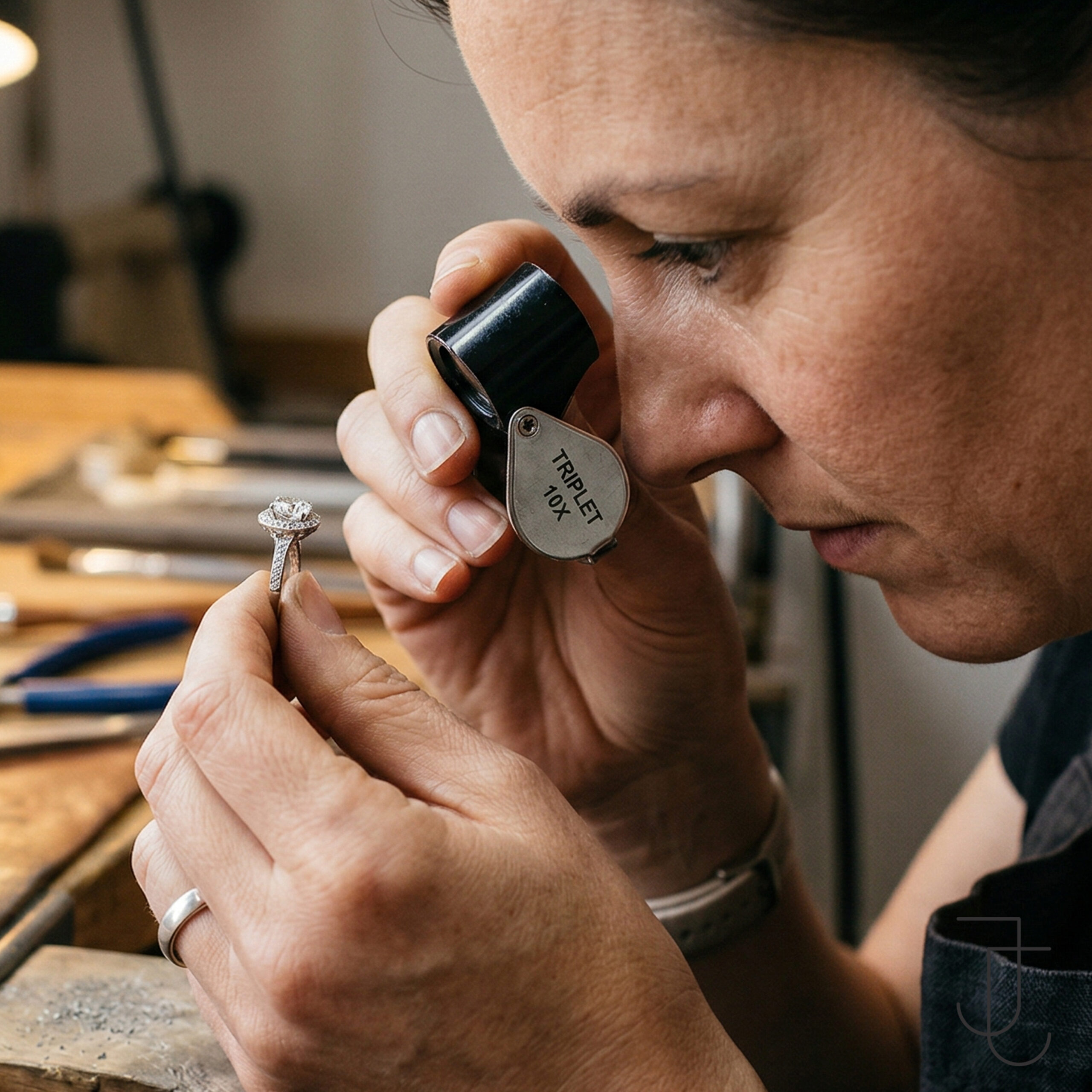
During a professional diamond ring prong inspection, we examine more than the visible tips of the setting.
The assessment may include:
- Checking whether the centre and accent stones move
- Examining the thickness and height of each prong
- Looking for lifted, bent, cracked or missing claws
- Checking that each prong makes proper contact with the diamond
- Inspecting the seats where the diamond rests
- Examining the gallery and supporting structure
- Assessing pavé and side-stone settings
- Checking the ring shank for thinning or distortion
- Reviewing previous soldering or resizing points
- Identifying dirt that may be hiding damage
A ring can then be cleaned carefully so that the setting and stones are easier to examine. The GIA diamond care guide also advises using appropriate cleaning methods and avoiding harsh procedures that may damage jewellery settings.
When Does a Prong Need Re-Tipping?

Re-tipping is used when the upper part of a prong has become worn but the remaining structure is still suitable for repair.
The jeweller adds compatible metal to rebuild the worn tip and restore secure contact with the diamond. The repaired area is then shaped and finished so it holds the stone correctly without covering an unnecessary portion of it.
Re-tipping may be appropriate when:
- The prong tip has become thin or flat
- The claw no longer covers enough of the diamond
- One or more prongs have worn unevenly
- The stone remains suitable for its existing setting
- The lower portion of the prong is still structurally sound
Early re-tipping can be simpler than waiting until a prong breaks completely or the setting requires more extensive rebuilding.
When Is Complete Prong Replacement Necessary?
A heavily damaged prong may need to be rebuilt or replaced rather than simply re-tipped. This can happen when the damage extends below the tip or when the supporting structure has become too weak.
More extensive work may be required if:
- A prong has broken or is missing
- The claw is deeply cracked
- Wear extends into the lower setting
- Several neighbouring prongs are damaged
- A previous repair has failed
- The setting is distorted
- The diamond no longer sits correctly
- The existing mounting is unsuitable for the stone
If widespread wear affects the entire head or setting, replacing the complete setting may provide better security than repairing individual prongs repeatedly.
The appropriate solution depends on the ring’s metal, construction, age and diamond shape. A professional assessment should be completed before deciding between tightening, re-tipping, rebuilding or replacing the setting.
Do All Diamond Shapes Require the Same Prong Care?
Different diamond shapes place different demands on a setting.
Round diamonds are commonly secured by four or six evenly positioned prongs. Fancy-shaped diamonds may include points and corners that require additional protection.
Pear, marquise and heart-shaped diamonds often use V-shaped or specialised prongs around vulnerable points. Princess-cut diamonds have four corners that should be protected carefully. Emerald, radiant and cushion-cut stones require properly positioned prongs that hold the diamond securely without interfering with its shape.
If a protective corner or point prong becomes damaged, the diamond may be more exposed to impact. Fancy-shaped diamonds should therefore be inspected promptly if a corner prong appears lifted or worn.
Customers selecting a new setting can explore our lab-grown diamond rings in Dubai and discuss the most suitable setting for their preferred diamond shape.
Should a Ring Be Worn When a Prong Is Damaged?
No. A ring with a suspected loose or damaged prong should not be worn until it has been examined.
Continuing to wear it can cause the prong to catch, bend further or break. Movement can also allow the diamond to rub against the setting, affecting the surrounding metal.
Place the ring separately in a lined jewellery box or soft pouch. Avoid placing it loosely with other jewellery because the pieces may rub against one another.
Do not secure the stone using glue, tape or another temporary material. Adhesives can make professional repair and cleaning more difficult and may not provide reliable protection.
How to Reduce Prong Wear
Prong wear cannot always be prevented, but careful habits can reduce unnecessary damage.
Remove your diamond ring before:
- Exercising or lifting weights
- Swimming
- Gardening
- Cleaning with chemicals
- Moving furniture
- Carrying heavy objects
- Applying hand cream or cosmetics
- Showering or washing dishes
- Performing manual or mechanical work
Store the ring separately in a lined compartment rather than placing it with bracelets, earrings or other rings. Avoid using abrasive cleaners, hard brushes or unverified ultrasonic cleaning methods.
For safe routine care, use lukewarm water, a small amount of mild washing-up liquid and a soft brush. Rinse carefully and dry with a lint-free cloth. If the diamond already feels loose, do not clean it at home before inspection.
Prong Inspection After Ring Resizing
Resizing changes the shape and tension of a ring. Although professional resizing is completed with careful control, the stones and setting should still be checked after the work.
This is especially important for pavé, eternity and multi-stone rings because altering the circumference can affect several small settings. Each diamond should be examined before the ring is returned to regular wear.
Custom rings may also require design-specific maintenance. Through our bespoke jewellery service in Dubai, we consider diamond shape, setting construction and long-term wear when developing personalised designs.
Frequently Asked Questions About Diamond Ring Prongs
How often should an engagement ring be professionally checked?
For an engagement ring worn daily, a professional inspection every six to twelve months is a sensible schedule. More frequent checks may be required for delicate, older or heavily worn settings.
How can I tell whether my diamond is loose?
Possible signs include visible movement, a faint rattling sound, an uneven position or a gap between the diamond and a prong. Stop wearing the ring if any movement is suspected.
Can a bent prong be repaired?
In many cases, a bent prong can be repositioned or rebuilt. The jeweller must first determine whether the metal remains strong enough to provide secure support.
Can a missing prong be replaced?
Yes, but the correct repair depends on the condition of the remaining setting. A single prong may be rebuilt, while extensive wear may require replacement of the entire head.
Does cleaning a ring tighten its prongs?
No. Cleaning removes dirt and surface residue, but it does not repair worn or loose prongs. Cleaning may actually reveal damage that was previously hidden.
Should a newly purchased ring be inspected?
A professionally made ring should be inspected before delivery. Regular inspections should then continue according to how frequently it is worn.
Protecting Your Diamond Ring at Laxmi Jewellers Dubai
A timely diamond ring prong inspection can identify worn metal before a diamond becomes loose or falls out. Daily-wear rings should generally be inspected every six to twelve months, while any ring that catches, rattles, moves or receives a significant impact should be checked immediately.
At Laxmi Jewellers Dubai, we carefully examine the prongs, diamond setting and surrounding structure before recommending appropriate work. Depending on the condition of the ring, this may involve tightening, smoothing, re-tipping, rebuilding a prong or replacing a weakened setting.
Laxmi Jewellers is a trade name owned and operated by Amit Verma Jewellery LLC, a company registered in the UAE. Customers can visit our Dubai jewellery store or contact Laxmi Jewellers to request guidance about a diamond ring inspection or repair.